Toggle light / dark theme

Get the latest international news and world events from around the world.

Log in for authorized contributors

Fungal allies arm plant roots against disease by rewriting the rules of infection

Scientists have discovered that beneficial root-dwelling fungi boost plant resilience to disease by remodeling the plant cell membrane at pathogen infection sites—offering critical new insights into how plants coordinate defenses in complex natural environments.

This new research reveals that the membrane interface between plant cells and invading pathogen microbes is not fixed. Instead, it can be reshaped by co-colonizing symbionts, fundamentally altering how plants interact with pathogens and potentially improving resistance to disease.

The study is published in the journal Cell Reports.

Destructured Drug Discovery: How Sequence-Based AI Speeds and Expands the Search for New Therapeutics

Predictive computational methods for drug discovery have typically relied on models that incorporate three-dimensional information about protein structure. But these modeling methods face limitations due to high computational costs, expensive training data, and inability to fully capture protein dynamics.

Ainnocence develops predictive AI models based on target protein sequence. By bypassing 3D structural information entirely, sequence-based AI models can screen billions of drug candidates in hours or days. Ainnocence uses amino acid sequence data from target proteins and wet lab data to predict drug binding and other biological effects. They have demonstrated success in discovering COVID-19 antibodies and their platform can be used to discover other biomolecules, small molecules, cell therapies, and mRNA vaccines.

Safe and effective in vivo delivery of DNA and RNA using proteolipid vehicles

Current genetic medicines are limited by tolerability, scalability, and immunogenicity issues. Utilizing components from viral and non-viral delivery platforms, we developed a lipid-based delivery vehicle formulated with a chimeric fusion protein that delivers nucleic acid cargo inside cells effectively and with broad distribution and low immunogenicity. This proteolipid vehicle platform is suitable for safe and effective repeat dosing of DNA and/or RNA in vivo.

Abstract: The antibody Teplizumab can delay type 1 diabetes, but therapeutic responses are heterogeneous

Here, Conny Gysemans & team find variable patient responses align with specific immune gene signatures, offering a tool to predict treatment success or resistance.


Address correspondence to: Conny Gysemans, Leuven Diabetes Lab, Clinical and Experimental Endocrinology (CEE), CHROMETA, KU Leuven, Leuven, Belgium. Phone: 32.16.377454; Email: [email protected].

New materials could boost the energy efficiency of microelectronics

MIT researchers have developed a new fabrication method that could enable the production of more energy efficient electronics by stacking multiple functional components on top of one existing circuit.

In traditional circuits, logic devices that perform computation, like transistors, and memory devices that store data are built as separate components, forcing data to travel back and forth between them, which wastes energy.

This new electronics integration platform allows scientists to fabricate transistors and memory devices in one compact stack on a semiconductor chip. This eliminates much of that wasted energy while boosting the speed of computation.

Proton therapy shows survival benefit in Phase III trial for patients with head and neck cancers

A study published in The Lancet showed a significant survival benefit for patients with oropharyngeal cancers who were treated with proton therapy (IMPT) compared to those treated with traditional radiation therapy (IMRT).

Soft ‘cyborg’ cardiac patches could improve stem cell heart repair

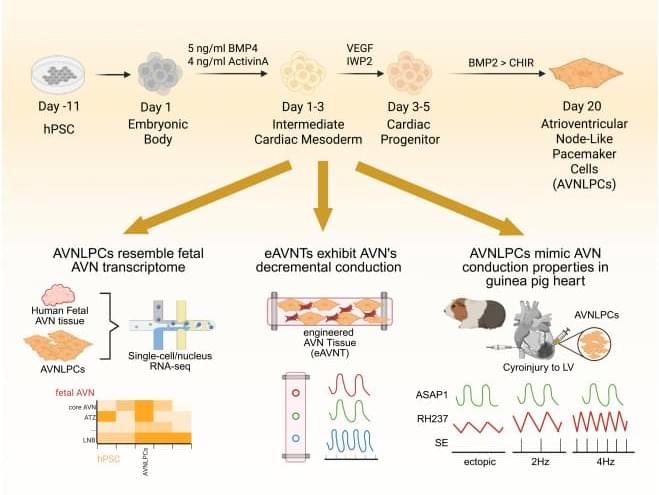
Heart muscle cells grown from patient stem cells—known as human induced pluripotent stem cell–derived cardiomyocytes, or hiPSC-CMs—are a promising way to repair hearts damaged by heart attacks and heart failure. But transplanted hiPSC-CMs often have trouble syncing to the rhythm of native heart cells, which can cause dangerous arrhythmias after transplantation.

For years, stem cell biologists and cardiac researchers have been looking for ways to improve how implanted hiPSC-CMs mature and integrate into the heart. The challenge is that once the hiPSC-CMs are implanted in vivo, it’s hard to monitor how they integrate.

Now, Harvard University researchers have developed the first platform capable of continuously monitoring how transplanted cells mature, communicate, and synchronize with native tissue inside the body. Using this system, the researchers identified a self-assembling peptide that accelerated the maturation of hiPSC-CMs and improved the electrical coupling of the transplanted cardiac organoids. The research is published in Science.

Oncogenic Ras activation in permissive somatic cells triggers rapid-onset phenotypic plasticity and elicits a tumor-promoting neutrophil response

Ras mutations drive tumorigenesis yet persist in normal tissues. Elliot et al. explore this paradox, finding that HRASG12V induces bifurcating cell fates in the zebrafish larval epidermis, with lamc2+krt18+ cancer stem cell-like cells emerging from permissive cells at the preneoplastic stage and expressing neutrophil-modulating cytokines that instigate reciprocal tumor-supportive crosstalk.

High-Power Vortex Lasers Could Transform Manufacturing and Imaging

A major European research effort is beginning as Tampere University leads a €4.4 million Doctoral Network focused on high-power optical vortices, a form of twisting light with remarkable potential. The HiPOVor initiative will train 15 doctoral researchers to develop, amplify, and apply these stru

/* */