Using this method showed “the largest improvement in memory” anyone has ever found, according to one expert.
Go to https://ground.news/sabine to get 40% off the Vantage plan and see through sensationalized reporting. Stay fully informed on events around the world with Ground News.
Human brains are roughly 100,000 times more energy-efficient than current AI systems. So why don’t we build computers using human brain cells? Don’t worry, researchers are one step ahead of you there – different teams across the globe are racing to develop neuron computers; processors that integrate living brain neurons into their chips. Let’s take a look at how this technology is developing and when we might see brain cells chips in the future.
Paper 1: https://www.cell.com/neuron/fulltext/.… 2: h https://www.frontiersin.org/journals/.… 👕T-shirts, mugs, posters and more: ➜ https://sabines-store.dashery.com/ 💌 Support me on Donorbox ➜ https://donorbox.org/swtg 👉 Transcript with links to references on Patreon ➜ / sabine 📝 Transcripts and written news on Substack ➜ https://sciencewtg.substack.com/ 📩 Free weekly science newsletter ➜ https://sabinehossenfelder.com/newsle… 👂 Audio only podcast ➜ https://open.spotify.com/show/0MkNfXl… 🔗 Join this channel to get access to perks ➜
/ @sabinehossenfelder 📚 Buy my book ➜ https://amzn.to/3HSAWJW #science #sciencenews #tech #neuroscience.
Paper 2: h https://www.frontiersin.org/journals/.…
👕T-shirts, mugs, posters and more: ➜ https://sabines-store.dashery.com/
💌 Support me on Donorbox ➜ https://donorbox.org/swtg.
👉 Transcript with links to references on Patreon ➜ / sabine.
📝 Transcripts and written news on Substack ➜ https://sciencewtg.substack.com/
📩 Free weekly science newsletter ➜ https://sabinehossenfelder.com/newsle…
👂 Audio only podcast ➜ https://open.spotify.com/show/0MkNfXl…
🔗 Join this channel to get access to perks ➜
/ @sabinehossenfelder.
📚 Buy my book ➜ https://amzn.to/3HSAWJW
#science #sciencenews #tech #neuroscience
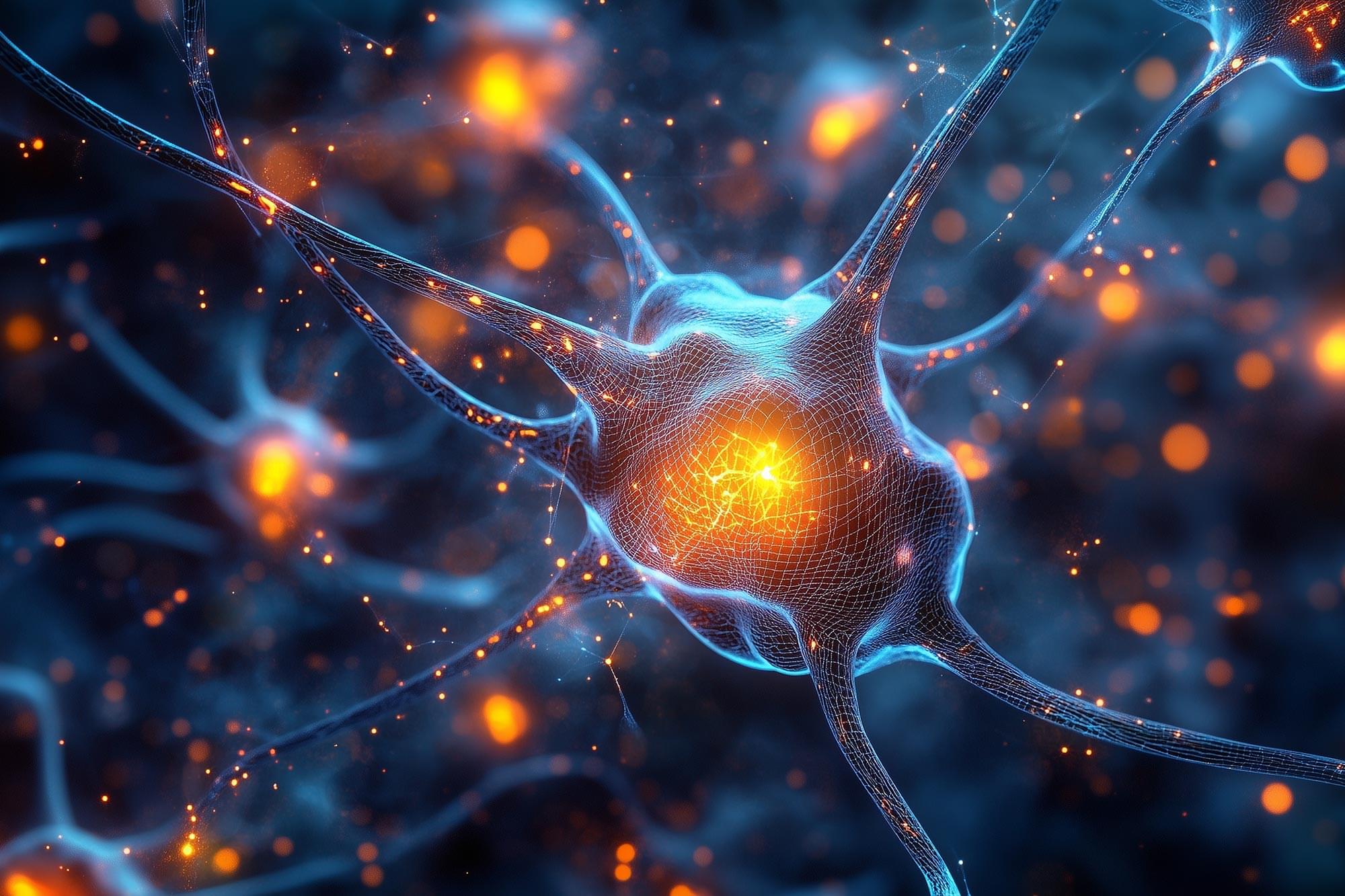
Scientists have turned brain cells into tiny light sources, revealing the brain at work like never before.
In this video, we dive into Darwin Gödel Machine (DGM), introduced in a recent paper from Sakana AI and the University of British Columbia.
Darwin Gödel Machine takes self-improving AI a step froward, by introducing a mechanism for an AI agent to self-improve itself.
Paper — https://arxiv.org/abs/2505.22954
Written Review — https://aipapersacademy.com/darwin-go… 🔔 Subscribe for more AI paper reviews! 📩 Join the newsletter → https://aipapersacademy.com/newsletter/ Patreon — / aipapersacademy The video was edited using VideoScribe — https://tidd.ly/44TZEiX ___________________ Chapters: 0:00 Introduction 1:54 Darwin Gödel Machine 3:59 Results.
___________________
🔔 Subscribe for more AI paper reviews!
📩 Join the newsletter → https://aipapersacademy.com/newsletter/
Patreon — / aipapersacademy.
The video was edited using VideoScribe — https://tidd.ly/44TZEiX
Home.
Process Worldview.
Community.
Art and Music.
Whitehead and Process Thinking.
Edward Witten, widely regarded as one of the greatest living theoretical physicists, sits down with Brian Greene to explore the deepest questions at the frontiers of modern science. From string theory and quantum gravity to black holes, cosmology, and the nature of consciousness, Witten reflects on what physics has revealed—and what remains profoundly mysterious.
The only physicist to receive the Fields Medal, Witten discusses why unifying quantum mechanics and general relativity has proven so difficult, how string theory forces gravity into its framework, and why decades of progress have still not revealed the fundamental principles underlying the theory. He also examines powerful ideas such as duality, extra dimensions, and the controversial anthropic principle, offering rare insight into how physicists grapple with uncertainty at the edge of human understanding.
The conversation moves beyond equations into philosophy, addressing questions about free will, the quantum measurement problem, and whether consciousness plays a role in how reality is observed. Witten reflects candidly on discovery, doubt, beauty in mathematics, and what it feels like to work at the limits of knowledge.
This discussion is essential viewing for anyone interested in theoretical physics, cosmology, quantum theory, and the future of our understanding of the universe.
This program is part of the Rethinking Reality series, supported by the John Templeton Foundation.
Participant: Edward Witten.
Moderator: Brian Greene.
0:00:00 — Introduction: Free Will, Physics, and the Quest to Unify Reality.
It may cause us to geneticly engineer ourselves to live in dangerous environments too.
Throughout human history, we have associated our spirituality, myths, and religions with the sky. Constellations are peppered with sky stories, from Orion to Warepil (the eagle constellation of aboriginal Australians). The Lakota Native Americans associated the Milky Way as a path for departed souls. Jesus ascended to the heavens. The primary god of ancient Egyptians was Ra, the god of the Sun. And the entire Universe was seen inside Krishna’s mouth.
Jason Batt, a science fiction author, mythologist, and futurist, has spent a lot of time thinking about stories like this, and how our relationship with the heavens will change when we become a space-faring race. “So what happens to humanity?” Batt, who is also a co-founder of Deep Space Predictive Research Group and a Creative Manager of 100 Year Starship, pondered while speaking to Big Think. “What is going to change in us? What is going to transform?”
Even though we often associate our space travel with feats of engineering and science, there is an undeniable connection with our myth as well. We see this in how we name our rockets destined for space: Gemini, Apollo, Artemis. Going to space is big, not just for our technology, but for our spirits.