Toggle light / dark theme

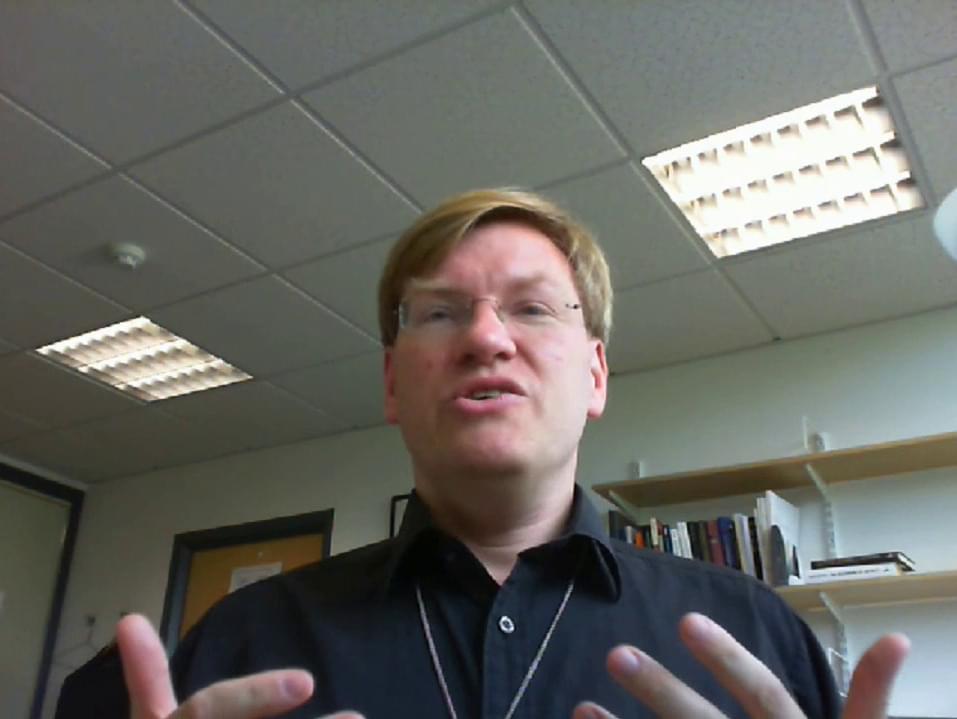
David Simpson on PostHuman, TransHuman and The God Killers

2011, I sat down with a young sci-fi writer from Vancouver named David Simpson.

Nobody was talking about AGI at dinner parties back then. There was no ChatGPT. No trillion-dollar AI race. Just a handful of us asking questions most people found eccentric at best.

David had written Post-Human and Trans-Human, novels imagining a world where artificial superintelligence remakes what it means to be human. He was also doing something the publishing industry considered heresy: ditching his traditional publisher to sell his books as 99-cent ebooks, betting that technology would flip the entire business on its head.

Fifteen years later, one of those bets looks obvious. The other one, well, you’ll have to watch the interview and judge for yourself.

We talked about why he writes, what science fiction owes to technology and what technology owes to science fiction, the authors who shaped him, and the meaning behind titles like The God Killers.

What strikes me most, rewatching it now, is not what we got right or wrong. It’s the questions themselves. The best #scifi doesn’t predict the future. It interrogates it. And the questions David was asking in 2011 about #AI, posthumanism, and human purpose are the same ones the entire world is scrambling to answer today.
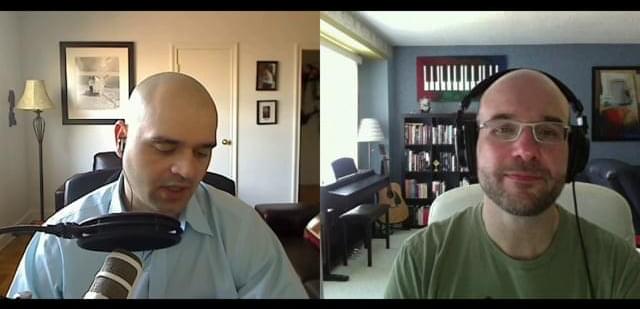
George Dvorsky: Specialization is for Insects

Fourteen years ago, I sat down with George Dvorsky for almost 1 hour and 40 minutes. We argued about everything: transhumanism and the paleo diet, animal uplift and non-human person rights, mass extinction, SETI, and whether alien intelligence would be friendly or hostile.

One quote from that conversation has stayed with me ever since. Robert A. Heinlein:

“A human being should be able to change a diaper, plan an invasion, butcher a hog, conn a ship, design a building, write a sonnet, balance accounts, build a wall, set a bone, comfort the dying, take orders, give orders, cooperate, act alone, solve equations, analyze a new problem, pitch manure, program a computer, cook a tasty meal, fight efficiently, die gallantly. Specialization is for insects.”

In 2012, that sounded like a provocation. In 2026, in the age of AI, it sounds like a survival strategy. When machines out-specialize us at everything, what is left for humans? Perhaps precisely this: to be generalists. To be whole.

Was George right then? Is Heinlein right now?

Watch the full interview and judge for yourself: [ https://snglrty.co/4pU2ZtQ](https://snglrty.co/4pU2ZtQ)

Karl Schroeder: The Singularity is an Old Idea. Keep Moving Forward!

Fourteen years ago, a science fiction author looked me in the eye and told me the singularity was already old news.

This was 2012. Almost nobody outside a small circle was talking about it. And Karl Schroeder, one of Canada’s sharpest minds in #ScienceFiction and foresight, was telling me to stop staring at it.

His words stuck with me: take the singularity, use it, it’s a lens. Then develop other lenses. Keep hunting for blind spots.

At the time, I thought he was just being contrarian. Today, with #AI swallowing every headline and every boardroom, I think he saw something most of us are still missing.

Schroeder doesn’t hand you easy answers. We got into the technological maximum, the Rewilding, why he believes “technology is legislation,” and why he rates the singularity as possible but not probable. He picked apart almost every assumption I walked in with.

Here is what keeps nagging me. The blind spot he warned me about in 2012 might be the exact thing everyone is fixated on in 2026.

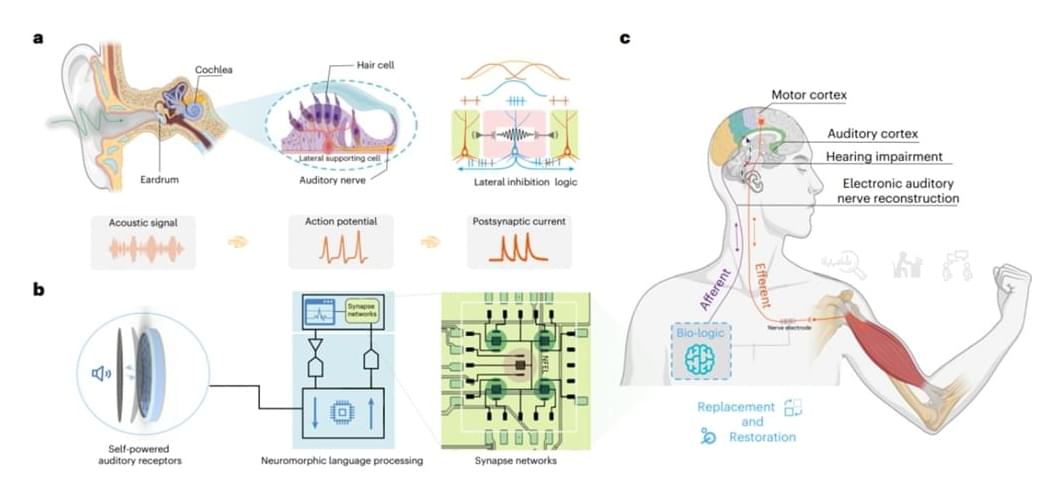
Chinese scientists develop world’s first bionic auditory neural interface, enabling artificial auditory nerve to ‘understand’ sounds

Chinese scientists have successfully developed the world’s first bionic auditory neural interface, enabling conventional cochlear implants to progress from helping users hear sounds to helping them understand what they hear, marking a major advance from restoring hearing perception to rebuilding auditory function, the Global Times learned from the research team on Monday.

Beyond traditional cochlear implants, this research led by Xu Wentao, professor from the College of Electronic Information and Optical Engineering, Nankai University, provides a new technological pathway for auditory reconstruction through an innovative electronic replacement and restorative solution. The research results were recently published in the international academic journal Nature Materials.

The most Massive Mechanical gods ever Created in Sci-Fi

What if machines could truly live, evolve, think, and even become gods? In this video, we explore the biggest mechanical lifeforms ever created in science fiction, ranging from towering biomechanical titans to universe-spanning artificial intelligences that completely redefine the meaning of life itself. These are not ordinary robots, piloted mechs, or simple automatons. They are genuine living machine entities whose metallic bodies function just like biological organisms, possessing consciousness, intelligence, and in many cases, unimaginable cosmic power. From the ancient Mechanical Gods of Mazinger and the divine alien Machine Gods of Fate to Harbinger leading the terrifying Reapers of Mass Effect, every entry showcases beings that blur the line between technology and life. We also dive into the colossal mechanical fortress Alexander from Final Fantasy XIV, the mighty Cityformers of Transformers, the mysterious Broken God Mekhane from SCP, the legendary Mechonis from Xenoblade Chronicles, the wish-granting cosmic machine Galactic Nova from Kirby, and the enormous alien intelligence known as the Tet from Oblivion. The scale only becomes more unbelievable as we reach Mata Nui from BIONICLE, whose body contains an entire civilization, the omniscient Aeon Nous from Honkai: Star Rail, and the eternal rivals Primus and Unicron, whose planet-sized forms have shaped the destiny of the Transformers universe for billions of years. We then move beyond planets into truly mind-bending territory with V’ger from Star Trek, the ever-growing Getter Emperor that expands beyond galaxies, and finally the Atlas from No Man’s Sky, an entity whose existence encompasses an entire simulated universe. Every entry is carefully explained with lore, origins, abilities, and scale comparisons to help you understand just how enormous and powerful these mechanical gods and monsters truly are. Be sure to watch until the very end to discover which living machine claims the number one spot, and let us know in the comments which mechanical lifeform you think deserves to be on this list.
.

FAIR-USE COPYRIGHT DISCLAIMER Copyright Disclaimer under Section 107 of the Copyright Act 1976, allowance is made for \.

DiGem- Digital Twin

🧬 What if every human had their own Digital Twin?

Not in 100 years.

Not in science fiction.

But within our lifetime.

For the past months, I’ve been building DiGem — a project focused on creating a Human Digital Twin: a digital representation of a person that combines health data, AI, lifestyle habits, and gamification into one system.

Imagine:

⚡ Your body displayed as a dashboard 🧠 AI acting as your personal health coach 📈 Real-time monitoring of your health and performance 🎮 Improving yourself through levels, XP, and achievements 🧬 A digital twin that evolves together with you.

Transhumanist Anders Sandberg: Embrace Strangeness

“That which does not kill us only makes us stranger.”

14 years ago, I sat down with Dr. Anders Sandberg, computational neuroscientist and research fellow at Oxford’s Future of Humanity Institute, for his second appearance on my podcast. His twist on Nietzsche has stayed with me ever since.

This was 2012. Before ChatGPT, before CRISPR babies, before Neuralink implants in human skulls. And yet listen to what we covered:

The ethics of transhumanism and the limits of being human The Epic of Gilgamesh and humanity’s oldest obsession: immortality Enhancement arms-races and the risk of conflict between transhumanists and neo-luddites Hive-minds, distributed intelligence, and whether the Borg should scare us Mind uploading and what survives when the body doesn’t.

What strikes me now, rewatching it, is how little the fundamental questions have changed. The technology raced ahead. The philosophy is still catching up.

Anders argued that embracing strangeness is not a bug of the human future; it’s the feature. The question was never whether we would change. It’s whether we will change wisely.

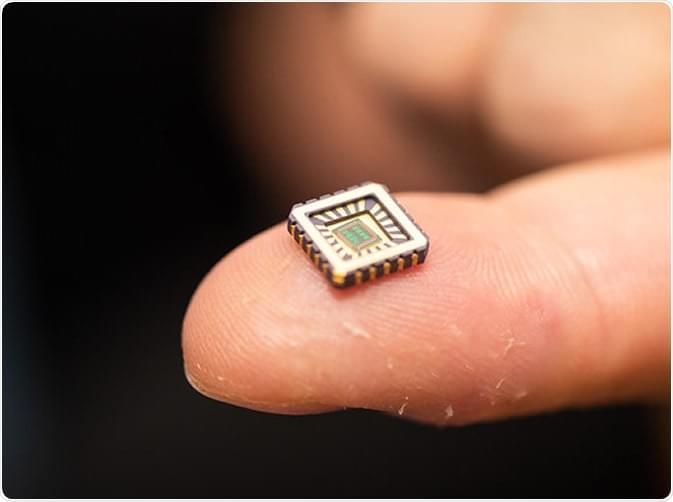
Scientists create artificial neurons that help cure chronic diseases

Artificial brain cells could now be implanted in the brain to repair the damage caused by chronic diseases, such as Alzheimer’s disease and other neurodegenerative conditions, thanks to a team of scientists who created bionic neurons that work like the real thing.

A team of scientists at the University of Bath created artificial neurons that could potentially help overcome paralysis, connect minds to machines, and restore failing brain circuits.

The new technology can help patients who have degenerative diseases affecting the brain.

China Just Dropped An Ultra-Bionic AI Human Replica Robot

China just revealed the U-World U1, a full-size ultra-bionic humanoid robot built for mass production. But the real story is not just movement, skin, or AI. It is the plan to make robots that can read emotions, remember people, and even recreate someone’s face and voice.

📩 Brand Deals \& Partnerships: [email protected].
✉ General Inquiries: [email protected].

📌 What You’ll See:
China reveals the U-World U1 humanoid robot.
SOURCE: https://www.techradar.com/ai-platform… pricing starts at 119,800 yuan with over 13,361 orders SOURCE: https://global.chinadaily.com.cn/a/20… Customized robots may recreate faces and voices SOURCE: https://www.prnewswire.com/news-relea… Walker S2 robots are already entering real border checkpoints SOURCE: https://interestingengineering.com/ai… 🚨 Why It Matters This is bigger than one robot launch. Humanoids are moving from factories into homes, borders, elder care, emotional support, and even human replicas. That could change how people live with machines. #ai #robots #humanoid.
U1 pricing starts at 119,800 yuan with over 13,361 orders.
SOURCE: https://global.chinadaily.com.cn/a/20
Customized robots may recreate faces and voices.
SOURCE: https://www.prnewswire.com/news-relea
Walker S2 robots are already entering real border checkpoints.
SOURCE: https://interestingengineering.com/ai

🚨 Why It Matters.
This is bigger than one robot launch. Humanoids are moving from factories into homes, borders, elder care, emotional support, and even human replicas. That could change how people live with machines.

#ai #robots #humanoid

WILL AI Turn Humanity Into BORG?

The Borg were never terrifying because they had advanced technology. They were terrifying because they erased individuality itself.

As brain-computer interfaces move from science fiction into reality, humanity may be approaching a question once reserved for Star Trek: What happens when technology no longer just helps us… but changes what it means to be human?

In this video, we explore the unsettling possibility that artificial intelligence, neural implants, and human enhancement technologies could eventually create something disturbingly similar to the Borg Collective.

🔹 Brain-computer interfaces and neural implants.
🔹 Human enhancement and transhumanism.
🔹 AI integration with the human mind.
🔹 Social and economic pressure to augment.
🔹 The loss of individuality and autonomy.
🔹 Whether technological evolution can be resisted.

If humanity could become smarter, faster, stronger, and more connected than ever before… would we resist? Or would we choose to become something else?

Resistance… may not be futile, but history suggests that enhancement rarely remains optional for long.

/* */