A plan to export solar power from Australia to Singapore is advancing.
Development backed by billionaires aims to export clean power from the Northern Territory via a 2,600-mile high-voltage undersea cable.
The need to find alternative sources for fertilizer have become urgent as chemical fertilizer shortages from the Ukrainian war threaten countries globally.
A Chinese military analyst suggested countermeasures for the Starlink satellite system developed by Musk’s SpaceX – including ways to hack or destroy the service.
The company aims to be 100% SAF certified by 2030.Airbus carried out the first-ever helicopter flight using 100 percent sustainable aviation fuel (SAF).
Pdf 239.95 KB
An Airbus H225 has performed the first ever helicopter flight with 100% sustainable aviation fuel (SAF) powering both Safran’s Makila 2 engines.
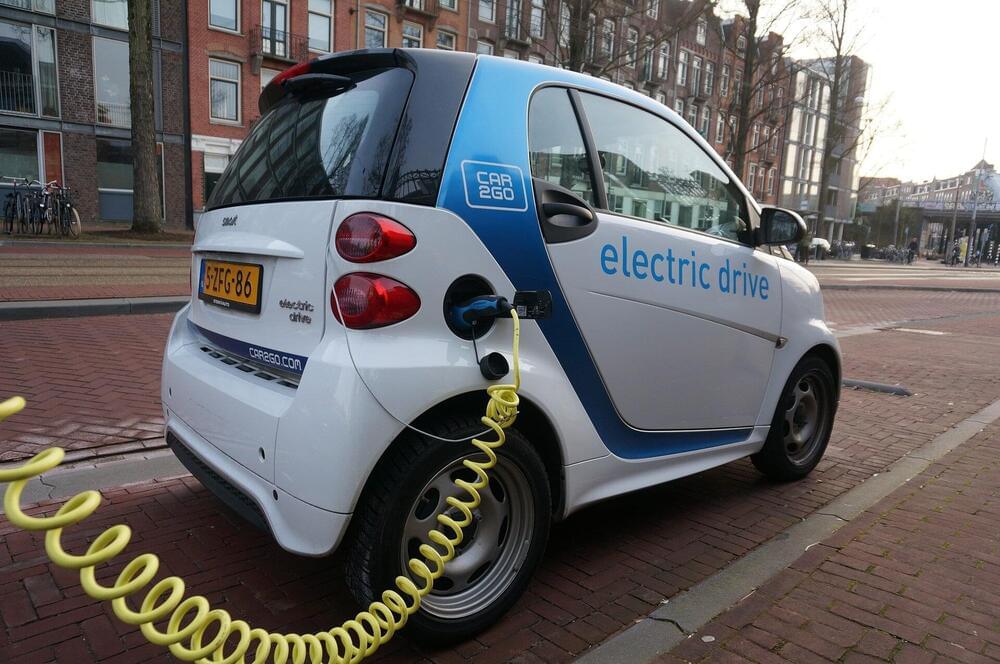
As electric vehicles have become more popular across America, Texas is now putting forward a plan to expand charging infrastructure.
Vitamins are sometimes overlooked in the fight against aging compared to the vast variety of creams and serums, but research shows that vitamins are a key part of slowing the aging process. While topical serums and creams may slow the appearance of aging in areas where they are applied, they cann.
An international team of scientists, led by the University of Leeds, have assessed how robotics and autonomous systems might facilitate or impede the delivery of the UN Sustainable Development Goals (SDGs).
Their findings identify key opportunities and key threats that need to be considered while developing, deploying and governing robotics and autonomous systems.
The key opportunities robotics and autonomous systems present are through autonomous task completion, supporting human activities, fostering innovation, enhancing remote access and improving monitoring. Emerging threats relate to reinforcing inequalities, exacerbating environmental change, diverting resources from tried-and-tested solutions, and reducing freedom and privacy through inadequate governance.
With a more sustainable world goal, MIT researchers have succeeded in developing a new LEGO-like AI chip. Imagine a world where cellphones, smartwatches, and other wearable technologies don’t have to be put away or discarded for a new model. Instead, they could be upgraded with the newest sensors and processors that would snap into a device’s internal chip – similar to how LEGO bricks can be incorporated into an existing structure. Such reconfigurable chips might keep devices current while lowering electronic waste. This is really important because green computing is the key to a sustainable future.
MIT engineers have developed a stackable, reprogrammable LEGO-like AI chip. The chip’s layers communicate thanks optically to alternating layers of sensing and processing components, as well as light-emitting diodes (LEDs). Other modular chip designs use conventional wiring to transmit signals between layers. Such intricate connections are difficult, if not impossible, to cut and rewire, making stackable configurations nonreconfigurable.
Rather than relying on physical wires, the MIT design uses light to transfer data across the AI chip. As a result, the chip’s layers may be swapped out or added upon, for example, to include extra sensors or more powerful processors.
AUSTIN, Texas — Texas is planning to add enough electric vehicle charging stations throughout the state to support 1 million electric vehicles with dozens of new stations to allow for easier long-distance travel.
In a draft plan released this month, the Texas Department of Transportation broke down a five-year plan to create a network of chargers throughout the state, starting along main corridors and interstate highways before building stations in rural areas.
The plan is to have charging stations every 50 miles along most non-business interstate routes.
Why we need to adopt an abundance mindset.
Peter Diamandis shared an email blast about dire headlines that keep us on edge: the war in Ukraine, food and gasoline prices, climate change, and the neverending pandemic. Getting away from bad news is difficult, it appears, because of the way we are wired. Mass media feeds the bad far more than the good.
In his missive, Peter talks about Matt Ridley, a zoologist, who wrote and published The Rational Optimist in 2010. The book takes a profoundly optimistic view of human progress, a counterblast to the prevailing pessimism of our day. Ridley coined the phrase “moaning pessimism” to describe the current state.
The following summarizes Peter’s talking points joined by some editorializing on my part. I welcome your optimism, less so your pessimism in any comments you wish to share with my subscribers and casual visitors and readers.
Is there any reason for optimism today asks Peter? A glance at current headlines is enough to set anybody on edge. And with an endless media stream of bad press that includes online and hard copy, it’s hard to be optimistic. What makes all of this worse is that evolution has shaped us to be acutely aware of danger so the bad gets larger mindshare than anything good and our ability to appreciate the positive that is happening is compromised.