Toggle light / dark theme

Comcast Xfinity Wants to Use Your Wi-Fi as a Motion Sensor in Your Home

Comcast on Monday announced Xfinity Shield, a home-security platform that taps into Xfinity Wi-Fi in new ways. It adds WiFi Motion, which uses compatible Xfinity Wi-Fi routers to detect movement in the home without cameras or dedicated motion sensors. WiFi Motion and other Shield features are available at no additional cost to eligible Xfinity customers, although compatible equipment and other requirements apply.

I know it sounds eerie to think about a Wi-Fi router that can see you, but I’ve covered this presence-sensing technology before, and the goal is the opposite of invasive surveillance. This kind of technology uses algorithms to monitor changes in Wi-Fi frequencies and identify small patterns of interference, like the kind a person makes when they enter a room.

That means Xfinity Shield can detect people without traditional motion sensors, cameras or video, better preserving privacy while still sending alerts via the Xfinity app if the router notices unexpected human movement. The technology requires not only an Xfinity Gateway device, but also at least one connected Wi-Fi device on the Xfinity platform. I’ve seen it used in standalone sensors, new smart light bulb kits and systems used for aging-in-place arrangements in nursing homes, but never as a free router upgrade.


Why the Intelligence Community Is Betting on Biotechnology | Dr. Jessica Dymond, Ph.D. — In-Q-Tel

Dr. Jessica Dymond, Ph.D. — Vice President of Technology, In-Q-Tel.


The same technologies that could transform medicine, agriculture, and manufacturing could also reshape global security. Understanding the future of biotechnology requires scientists who can bridge discovery, engineering, and responsibility.

Today on Progress, Potential, and Possibilities, we’re joined by a true pioneer at the nexus of biotechnology and national security. Dr. Jessica Dymond, Ph.D is the Vice President of Technology at In-Q-Tel (https://www.iqt.org/), a not-for-profit venture fund that invests in companies advancing the strategic priorities of U.S. Intelligence Community, where she provides technical and strategic leadership to accelerate emerging biotechnologies that address some of the most critical challenges to national and global security.

Before In-Q-Tel, Dr. Dymond served as Chief Scientist for Physical and Life Sciences at the Johns Hopkins University Applied Physics Laboratory, where she led an interdisciplinary portfolio spanning biological sensing, genomic surveillance, microbiome engineering, and synthetic biology. She founded the Lab’s Biological Sciences group and spearheaded initiatives to anticipate, assess, and mitigate emerging biological threats while strengthening global health security.

Formally trained as a synthetic biologist, Dr. Dymond earned her Ph.D. from the Johns Hopkins University School of Medicine, completed a postdoctoral fellowship in functional genomics at the U.S. Department of Agriculture, and has contributed to groundbreaking research, including the design of synthetic yeast genomes and combinatorial genomic diversity. She also serves on the editorial board of Synthetic Biology from Oxford University Press.

Hotel Wi-Fi attacks use custom malware to breach Microsoft 365 accounts

Microsoft has linked a global campaign targeting hospitality Wi-Fi networks to the Russian threat actor Midnight Blizzard, also known as APT29.

The activity was previously disclosed in a report from cybersecurity company ReliaQuest, which detailed how the attacker changed DNS settings on Wi-Fi devices to steal Microsoft 365 accounts.

Besides attributing the campaign to Russian hackers tracked as Storm-2945 — a sub-cluster of Midnight Blizzard, Microsoft identified two malware families called CornFlake and ChocoShell with capabilities for persistent access, credential theft, surveillance, and data exfiltration.

Moisture-driven tech can power green batteries—and destroy spy gear

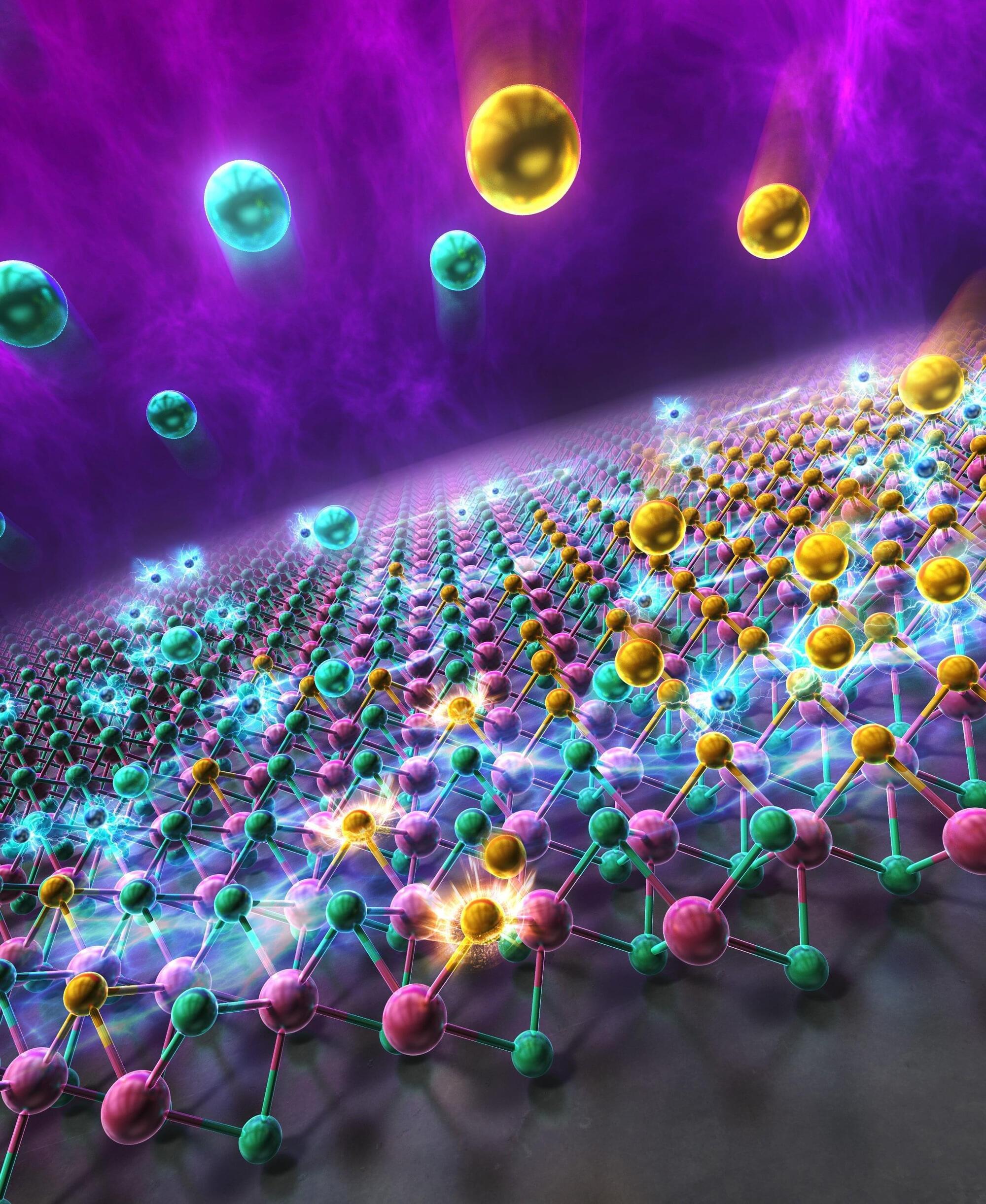
Researchers from North Carolina State University and Rice University have created a nontoxic, stretchable battery that operates by extracting moisture from the ambient environment—even in climates as dry as the desert. The batteries could be useful in Internet of Things (IoT) applications ranging from wearables to advanced surveillance monitors with built-in kill switches. The study is published in the journal Science Advances.

Emerging technologies like wearable monitors, miniature robotics and other IoT devices require lightweight, flexible power sources. Conventional batteries, which represent the best power source options, are often too rigid and heavy to be useful, and they contain toxic materials that can leak. Energy harvesters, so called because they capture energy from the surrounding environment and convert it into electrical power, are lighter, but their performance is limited.

Running on moisture and salt The new moisture-activated battery (MAB) includes a magnesium anode and a silver/silver chloride cathode, with a cellulose membrane loaded with lithium chloride salts that serves as a separator. The separator harvests moisture from ambient air, which dissolves the salts and creates the electrolyte, allowing charge to flow through the battery.

Iridium folds Aireon aviation safety service into Rocket Lab-bound business

TAMPA, Fla. — Iridium Communications has completed its takeover of Aireon, bringing the aircraft-tracking venture fully in-house ahead of the satellite operator’s planned $8 billion sale to Rocket Lab.

McLean, Virginia-based Iridium said July 6 it had bought the remaining 61% of Aireon it did not already own from air navigation service providers in Canada, England, Denmark, Ireland and Italy.

Aireon, which has provided an aviation safety service since 2019 using Iridium satellites and the Automatic Dependent Surveillance-Broadcast (ADS-B) signals aircraft broadcast, will continue to operate as a wholly owned subsidiary following the $367 million deal.

Innovative algorithm makes genomic surveillance faster and more affordable for global disease outbreaks

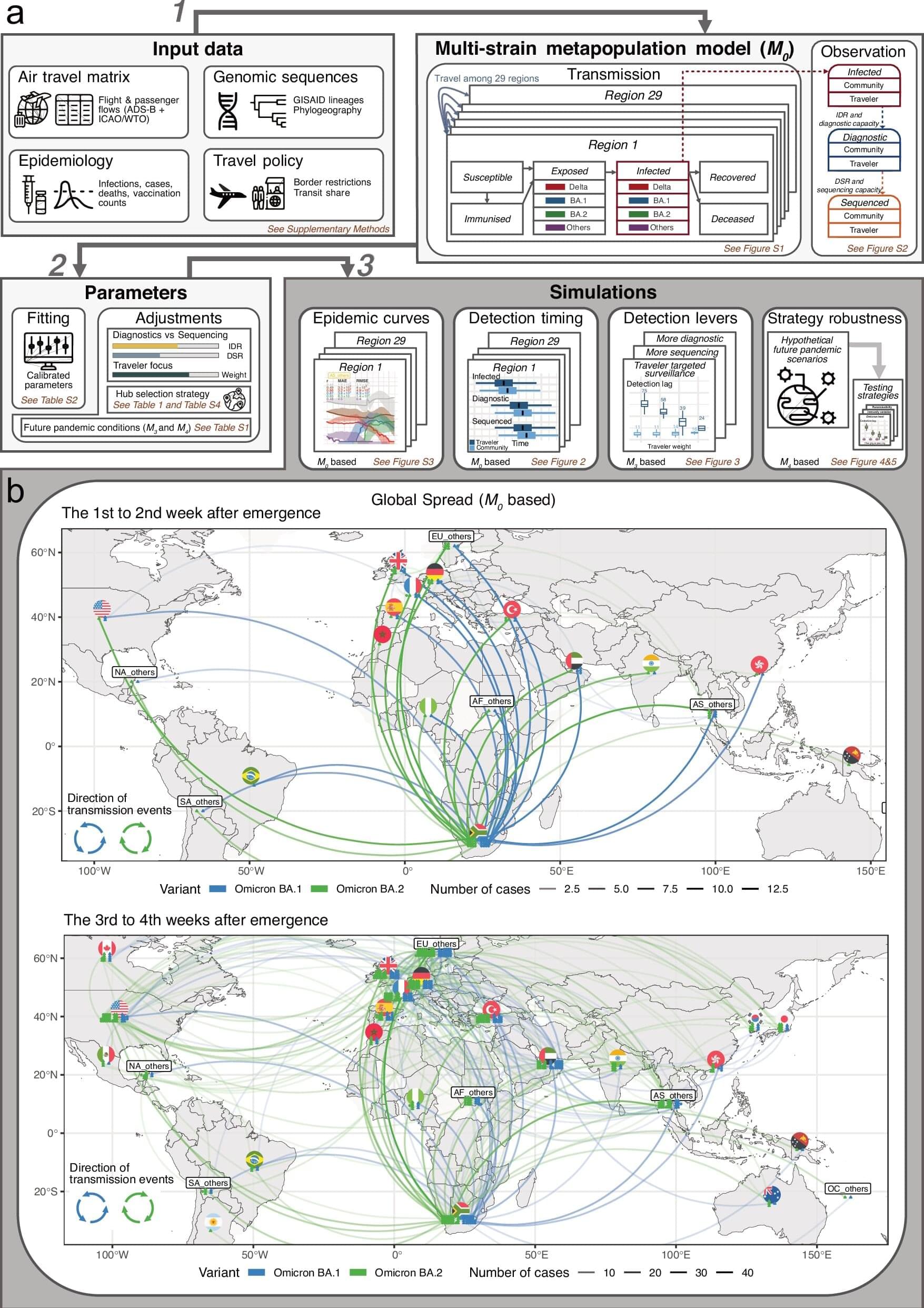
Genomic surveillance—the process of monitoring and sequencing pathogens—is one of the most important tools for detecting emerging viral threats. But global surveillance systems remain costly, unevenly distributed and often are too slow to identify dangerous variants before they spread internationally, amplifying future disease outbreak threats.

A recently published research paper in Nature Communications, co-authored by Dr. Patricia Ning, assistant statistics professor, and Jifan Li, a doctoral candidate in the Department of Statistics, along with collaborators from multiple international institutions, introduces a new framework to address these issues while using fewer resources, making genomic surveillance rapid and cost-effective in preparation for new strains of COVID-19.

Ning’s algorithm works to strengthen local, community-based surveillance capacity in all regions in anticipation of future pandemics.

Cory Doctorow on AI: The Singularity Is A Progressive Apocalypse

Fourteen years ago, Cory Doctorow told me the #Singularity is a progressive apocalypse.

I have not stopped thinking about that phrase since.

We like to imagine the future as one clean break. A line crossed. A god booted up in a server farm. Cory saw something stranger. The end of the world, sold to us as the perfection of the world. Rapture for the people who swapped faith for code.

His sharpest point was about stories. Good #ScienceFiction does not predict the future. It predicts the present. The genre is not a telescope. It is a mirror.

Re-listening in 2026, the reflection is uncomfortable.

The surveillance he warned about is now infrastructure. The platforms he distrusted now mediate almost everything we do. We still treat the internet as a glorified video-on-demand service, and we still pour everything we are onto it anyway.

Explosive cytotoxicity of ruptoblasts bridges hormone surveillance and immune defense

Ruptoblasts are a cytotoxic glandular cell type that undergoes explosive cell death, ruptosis, releasing potent, broad-spectrum agents capable of killing nearby cells. Ruptosis is triggered by the hormone and cytokine activin and driven by ER-derived calcium release amplified by the actomyosin cytoskeleton.

/* */