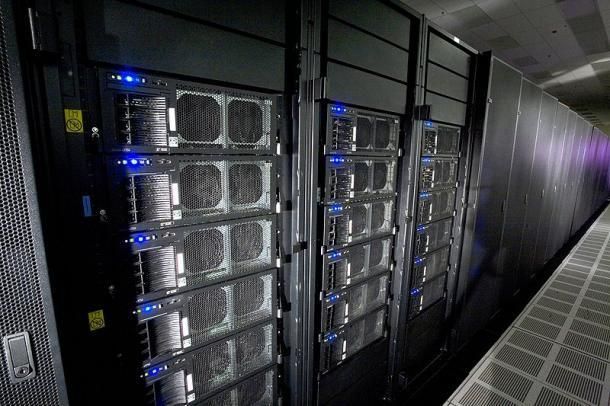
Replacing metal wiring with fiber optics could change everything from supercomputers to laptops.
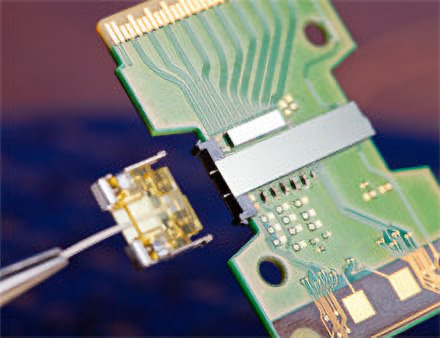
Replacing metal wiring with fiber optics could change everything from supercomputers to laptops.
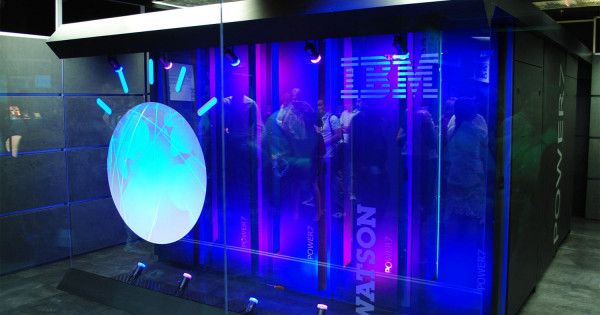
Sure, it can beat Ken Jennings at Jeopardy, tell you about your city, and dream up recipes for delectable delicacies, but now, IBM’s Watson is doing something even more important than all previous capabilities combined — it’s finally getting closer to becoming your doctor. Last April, the century-old company launched IBM Watson Health, and now, it’s opened up a new office in Cambridge, Massachusetts, home to some of the best universities in the U.S., and some of the most impressive biotech and pharmaceutical companies as well. In the last few months, Watson has already expanded its scope to take on some of our most pressing health issues and diseases, including cancer and diabetes, and with this new establishment, it seems that the supercomputer will only be taking on greater responsibilities in the industry.
More exciting still is the announcement that Deborah DiSanzo, the former CEO of Philips Healthcare, will be leading the unit as its general manager. Under her leadership, IBM hopes that Watson Health will be able to grow and further expand its massive cloud computing capabilities, which the company believes holds significant potential for modern health care. While current “health record systems can do great job storing data,” Mike Rhodin, senior vice president of the IBM Watson Group, told Fortune, “Watson can summarize that data and incorporate nurse and doctor’s notes to give a more complete picture.”
Related: IBM is bringing sports into the digital age, starting with the U.S. Open.
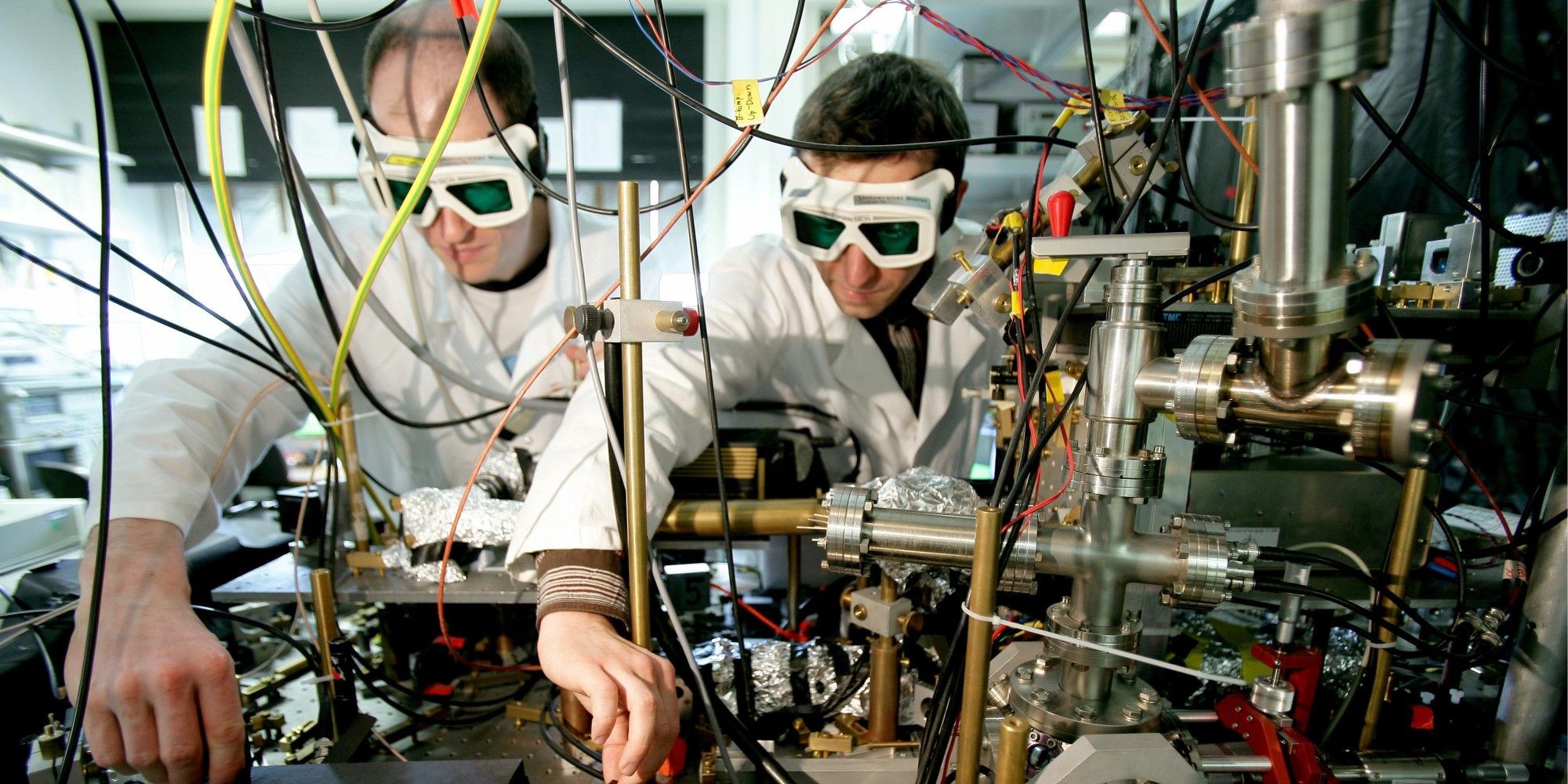
Tech giant, Intel has pledged $50 million (£33 million) to quantum computing research, which could ultimately give us a supercomputer unlike any machine we have known so far.
In an open letter, CEO Brian Krzanich announced a 10-year partnership with Delft University of Technology and TNO, the Dutch Organisation for Applied Research.
Describing the “exciting possibilities” about the research he said: “Quantum computing is one of the more promising areas of long-term research we’ve been exploring in our labs, with some of the smartest engineers in the world.
Quoted: “Sometimes decentralization makes sense.
Filament is a startup that is taking two of the most overhyped ideas in the tech community—the block chain and the Internet of things—and applying them to the most boring problems the world has ever seen. Gathering data from farms, mines, oil platforms and other remote or highly secure places.
The combination could prove to be a powerful one because monitoring remote assets like oil wells or mining equipment is expensive whether you are using people driving around to manually check gear or trying to use sensitive electronic equipment and a pricey a satellite internet connection.
Instead Filament has built a rugged sensor package that it calls a Tap, and technology network that is the real secret sauce of the operation that allows its sensors to conduct business even when they aren’t actually connected to the internet. The company has attracted an array of investors who have put $5 million into the company, a graduate of the Techstars program. Bullpen Capital led the round with Verizon Ventures, Crosslink Capital, Samsung Ventures, Digital Currency Group, Haystack, Working Lab Capital, Techstars and others participating.
“This cluster of technologies is what enables the Taps to perform some pretty compelling stunts, such as send small amounts of data up to 9 miles between Taps and keep a contract inside a sensor for a year or so even if that sensor isn’t connected to the Internet. In practical terms, that might mean that the sensor in a field gathering soil data might share that data with other sensors in nearby fields belonging to other farmers based on permissions the soil sensor has to share that data. Or it could be something a bit more complicated like a robotic seed tilling machine sensing that it was low on seed and ordering up another bag from inventory based on a “contract” it has with the dispensing system inside a shed on the property.
The potential use cases are hugely varied, and the idea of using a decentralized infrastructure is fairly novel. Both IBM and Samsung have tested out using a variation of the blockchain technology for storing data in decentralized networks for connected devices. The idea is that sending all of that data to the cloud and storing it for a decade or so doesn’t always make economic sense, so why not let the transactions and accounting for them happen on the devices themselves?
That’s where the blockchain and these other protocols come in. The blockchain is a great way to store information about a transaction in a distributed manner, and because its built into the devices there’s no infrastructure to support for years on end. When combined with mesh radio technologies such as TMesh it also becomes a good way to build out a network of devices that can communicate with each other even when they don’t have connectivity.”
Read the Article, and watch the Video, here > http://fortune.com/2015/08/18/filament-blockchain-iot/

A new optical chip that can process photons in a dizzying number of infinite ways has been developed by two research teams. Researchers from the University of Bristol in the UK and Nippon Telegraph and Telephone in Japan (NTT) are behind the breakthrough in quantum computing. The means to solve daunting problems such as the ability to design new life-saving drugs; perform advanced calculations that are a step or two beyond even supercomputers; and analyze weather patterns for more accurate forecasting has just received a major boost.
A group of researchers have pulled off a staggering feat; they’ve developed a silicon-based optical chip that is fully reprogrammable and can process photons in every way imaginable and then some, reports Phys.org.
Prof. Jeremy O’Brien, the Director of the Centre for Quantum Photonics at Bristol University where researchers masterminded the development of the chip, said:
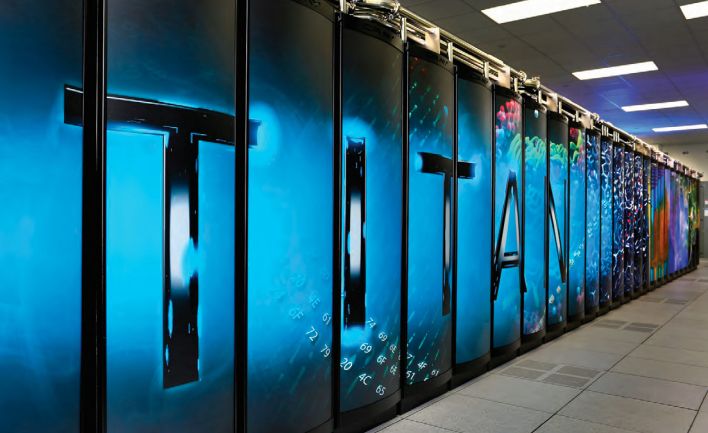
Titan, former world’s fastest supercomputer (credit: Oak Ridge National Laboratory)
President Obama has signed an executive order authorizing the National Strategic Computing Initiative (NSCI), with the goal of creating the world’s fastest supercomputers. The NSCI is charged with building the world’s first-ever exascale (1,000-petaflops) computer — 30 times faster than today’s fastest supercomputer.
The order mandates:
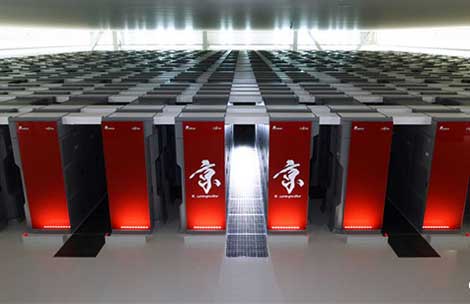
The K supercomputer in Japan. The human brain is arguably the most complex structure in the Universe. To unlock its secrets, scientists all over the world are mapping and simulating parts of the human brain. The latest breakthrough comes from Japan where scientists using the K supercomputer, the fourth most powerful in world, accurately mapped one second’s worth of brain activity. It took the computer 40 minutes to undertake this task, for one percent of the brain activity!
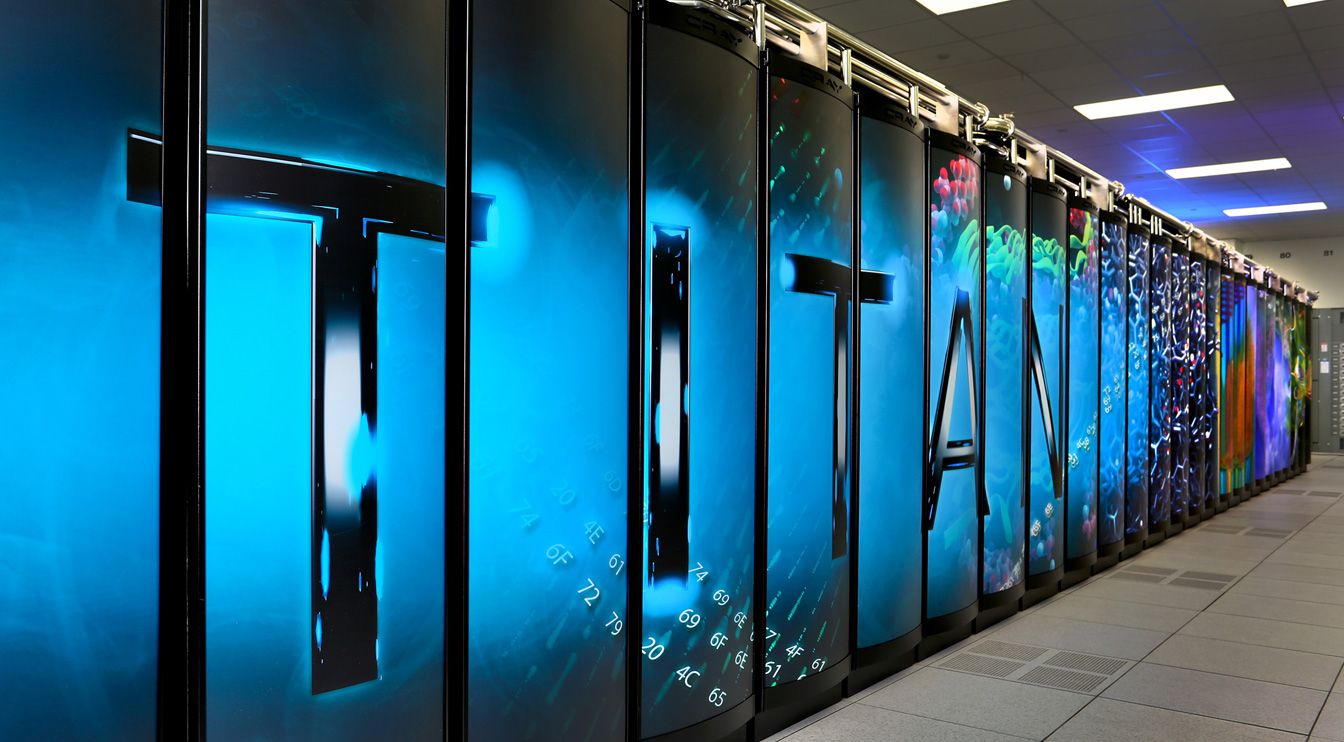
While the US has plenty of representation in the current TOP500 list of the fastest supercomputers in the world, it lost the #1 slot to China’s Tianhe-2 several years ago. President Obama wants to fix that immediately.
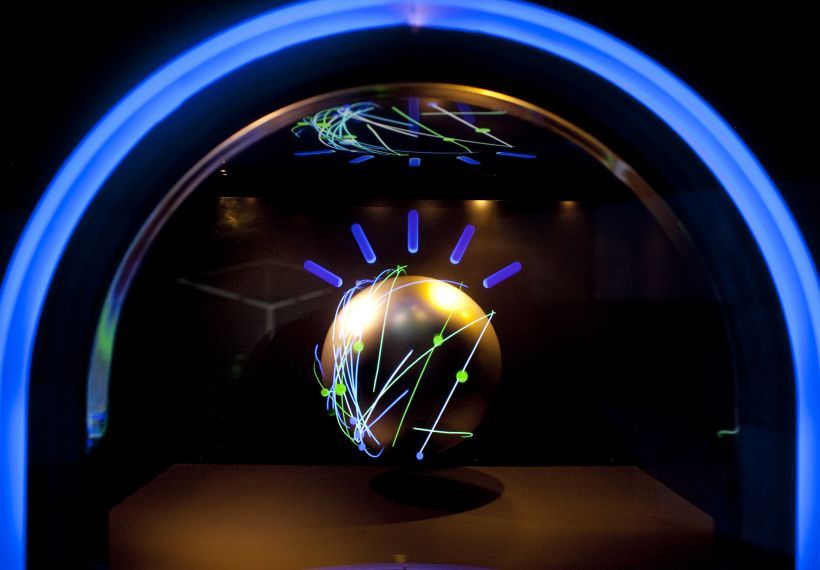
IBM supercomputer and Jeopardy champion Watson is setting up shop in the Middle East and North Africa.