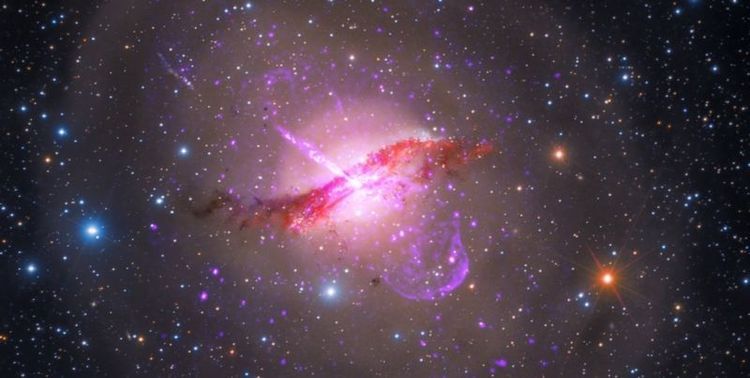
Two huge bubbles, thousands of light-years across, have been discovered jiggling near the center of a distant galaxy. They could be spitting all over Earth.
Despite being the very first candidate planet discovered by our Kepler Mission, Kepler-1658b had a rocky road to confirmation. Ten years later, scientists have now confirmed that it is, in fact, a planet. It whips around its star every 3.85 days. Details: https://go.nasa.gov/2TDlaIl
Circa 2013
Enlarge | +
One in five stars in our galaxy like the Sun have planets about the size of Earth and a surface temperature conducive to life, astronomers at UC Berkeley and University of Hawaii, Manoa now estimate.
The estimate was based on a statistical analysis of all the Kepler observations of NASA’s Kepler space telescope of the 200 billion stars in our galaxy.
China says it is working to develop a solar energy plant in space that could one day beam enough power back to Earth to light up an entire city.
If scientists can overcome the formidable technical challenges, the project would represent a monumental leap in combating the Earth’s addiction to dirty power sources which worsen air pollution and global warming.
A space-based solar power station could also provide an alternative to the current generation of earthbound and relatively ineffective renewable energy sources.
Find out how you can submit original artwork for our Astronaut Crew Quarters, one of the places where crew members will spend time before heading out to the launch pad: https://go.nasa.gov/2TxmBYq