With quantum radar, you can map the cosmos with 3D modeling and dwave quantum computer.
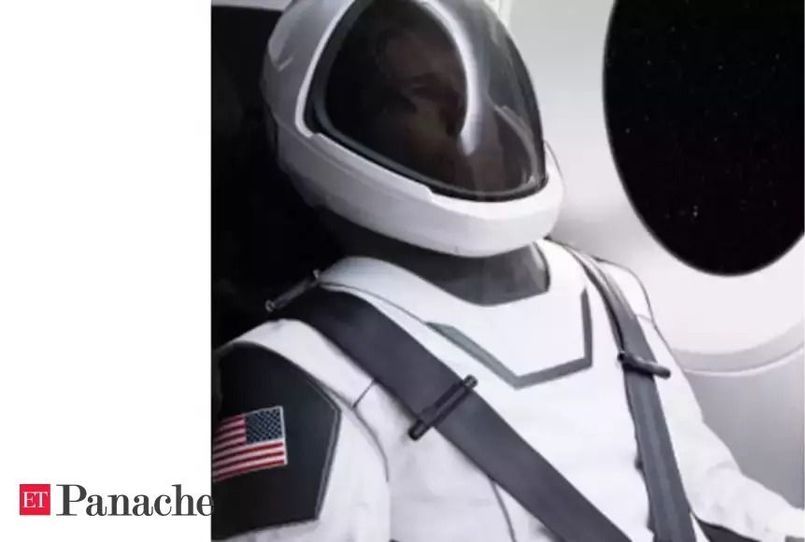
NASA’s new spacesuit may not look any different from the one used for spacewalks outside the International Space Station recently, but the US space agency says the suit is designed to achieve more complex tasks than its predecessors. The new suit, which will be worn by astronauts on the Artemis lunar exploration program, is called the Exploration Extravehicular Mobility Unit, or xEMU for short.
While the spacesuit is still under development, its features have been finalised. It’s already being tested underwater, and orbital testing is scheduled for 2023. Take a look:
1. Can extreme withstand temperatures of −250 degrees Fahrenheit in shade and up to 250 degrees Fahrenheit in the sun.

The obvious drawback of solar panels is that they require sunlight to generate electricity. Some have observed that for a device on Earth facing space, which has a frigid temperature, the chilling outflow of energy from the device can be harvested using the same kind of optoelectronic physics we have used to harness solar energy. New work, in a recent issue of Applied Physics Letters, from AIP Publishing, looks to provide a potential path to generating electricity like solar cells but that can power electronics at night. For more information see the IDTechEx report on Energy Harvesting Microwatt to Megawatt 2019–2029.
An international team of scientists has demonstrated for the first time that it is possible to generate a measurable amount of electricity in a diode directly from the coldness of the universe. The infrared semiconductor device faces the sky and uses the temperature difference between Earth and space to produce the electricity.
“The vastness of the universe is a thermodynamic resource,” said Shanhui Fan, an author on the paper. “In terms of optoelectronic physics, there is really this very beautiful symmetry between harvesting incoming radiation and harvesting outgoing radiation.”
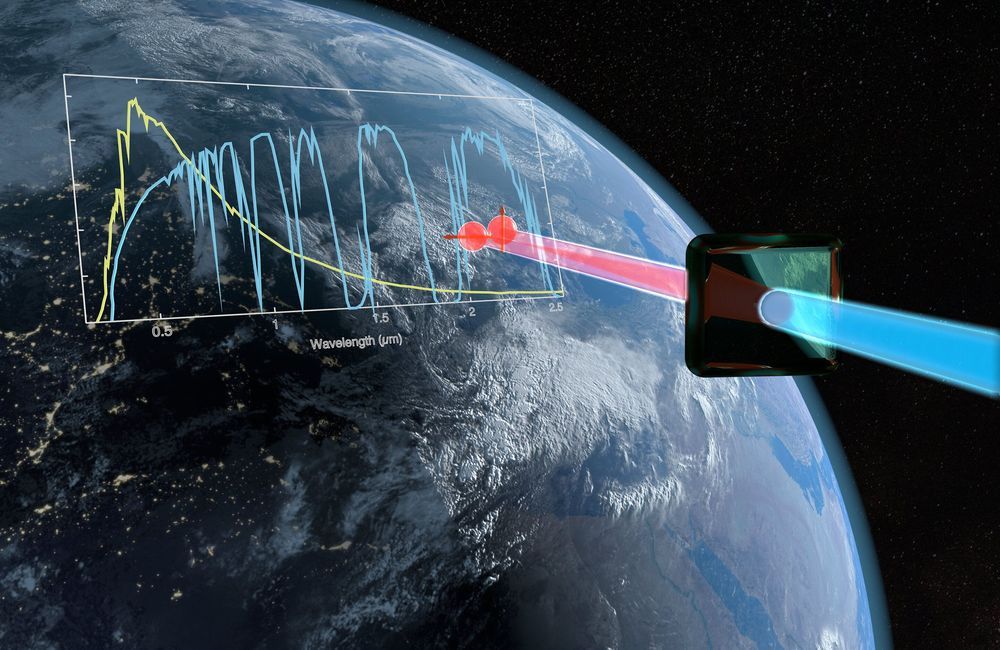
An international team with the participation of Prof. Dr. Michael Kues from the Cluster of Excellence PhoenixD at Leibniz University Hannover has developed a new method for generating quantum-entangled photons in a spectral range of light that was previously inaccessible. The discovery can make the encryption of satellite-based communications much more secure in the future.
A 15-member research team from the U.K., Germany and Japan has developed a new method for generating and detecting quantum-entangled photons at a wavelength of 2.1 micrometers. In practice, entangled photons are used in encryption methods such as quantum key distribution to completely secure telecommunications between two partners against eavesdropping attempts. The research results are presented to the public for the first time in the current issue of Science Advances.
It has been regarded as technically possible to implement encryption mechanisms with entangled photons in the near-infrared range of 700 to 1550 nanometers. However, these shorter wavelengths have disadvantages, especially in satellite-based communication. They are disturbed by light-absorbing gases in the atmosphere as well as the background radiation of the sun. With existing technology, end-to-end encryption of transmitted data can only be guaranteed at night, but not on sunny and cloudy days.

C omet Atlas is racing toward the inner solar system, and it could become the brightest comet seen in the night sky in over two decades. The comet, discovered by an observatory designed to protect Earth from asteroids, may even be visible during the day just two months from now.
Also known as C/2019 Y4, this comet was discovered by astronomers at the Asteroid Terrestrial-impact Last Alert System (ATLAS) in Hawaii in December 2019. At the time, the comet was exceedingly dim — but the comet became 4,000 times brighter in just a month. This increase is far greater than astronomers predicted, and could potentially signal the comet may soon be exceptionally bright.

By Bill D’Zio, Originally posted on www.westeastspace.com March 28, 2020
NASA may have sidelined the Lunar Gateway for a return mission to the Moon, but it is not stopping the momentum. NASA has awarded several contracts for the Lunar Gateway including the most recent one to SpaceX. This demonstrates the growing capabilities of New Space companies to capture contracts and complete missions.
“This contract award is another critical piece of our plan to return to the Moon sustainably. The Gateway is the cornerstone of the long-term Artemis architecture and this deep space commercial cargo capability integrates yet another American industry partner into our plans for human exploration at the Moon in preparation for a future mission to Mars.”
NASA Administrator Jim Bridenstine in a press release statement about the award to SpaceX.
NASA Awarded SpaceX the first Artemis Gateway Logistics Services (GLS) contract. The award for resupply services to the Gateway will require delivery of goods to a Near Rectilinear Halo Orbit (NRHO). Not sure what a NRHO orbit is? A NRHO is a highly elliptical orbit that takes about 7 days for each orbit. Want some more details, just click here: Near Rectilinear Halo Orbit (NRHO). There are a few options for NRHO orbits, but NASA is leaning towards the L2 9:2 lunar synodic resonant southerly Near-Rectilinear Halo Orbit (NRHO) which would be the likely location of the lunar Gateway. A simplification of the orbit is shown below.

But as we prepare for longer journeys that will return humans to the Moon and possibly send them to Mars within the near future, scientists are working hard to measure the effects of spaceflight on the human body in order to help mitigate them for those longer missions.