The updates don’t come every spring and fall, but space operating systems keep evolving.
Category: space – Page 849
Scientists Reveal First Direct Image of an Exoplanet Only 63 Light-Years Away
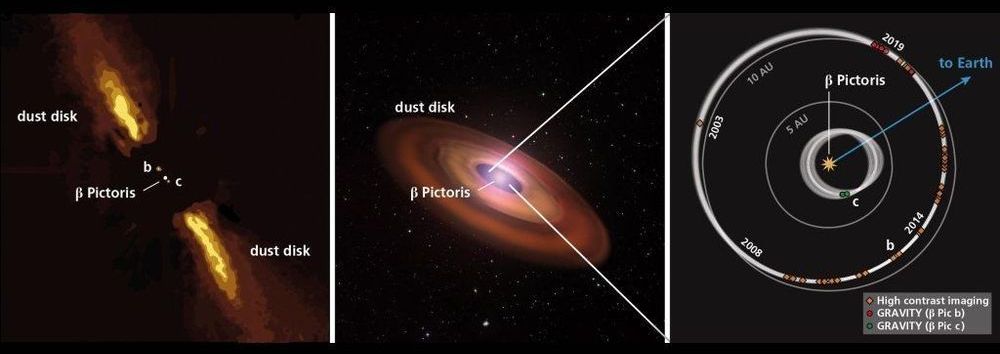
Most of the exoplanets we’ve confirmed to date have never actually been seen directly. We confirm their presence by indirect means, such as the effect they have on their host star. But now, astronomers have revealed images of an indirectly found exoplanet.
It’s not just an impressive feat of skills and technology. The combination of methods has given us a superb toolkit for measuring an exoplanet. For the first time, astronomers have measured both the brightness and the mass of an exoplanet — which has given us a new probe into how planets form.
The exoplanet is Beta Pictoris c (β Pic c), a gas giant orbiting the star — you guessed it — Beta Pictoris, just 63 light-years away. It’s a very young, very bright star, around 23 million years old; as such, it’s still surrounded by a lot of dusty debris, and its exoplanets — we’ve confirmed two to date — are just babies, around 18.5 million years old.

Potty training: NASA tests new $23M titanium space toilet
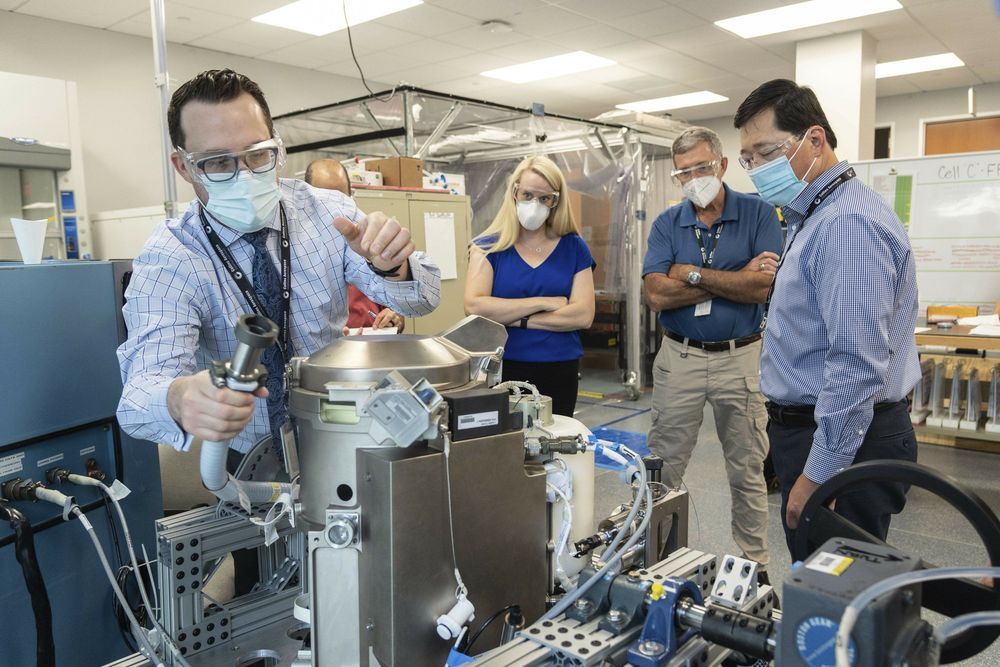
CAPE CANAVERAL, Fla. (AP) — NASA’s first new space potty in decades — a $23 million titanium toilet better suited for women — is getting a not-so-dry run at the International Space Station before eventually flying to the moon.
It’s packed inside a cargo ship that should have blasted off late Thursday from Wallops Island, Virginia. But the launch was aborted with just two minutes remaining in the countdown. Northrop Grumman said it would try again Friday night if engineers can figure out what went wrong.
Barely 100 pounds (45 kilograms) and just 28 inches (71 centimeters) tall, the new toilet is roughly half as big as the two Russian-built ones at the space station. It’s more camper-size to fit into the NASA Orion capsules that will carry astronauts to the moon in a few years.
Extreme Alien World Revealed by ESA’s Exoplanet Observer
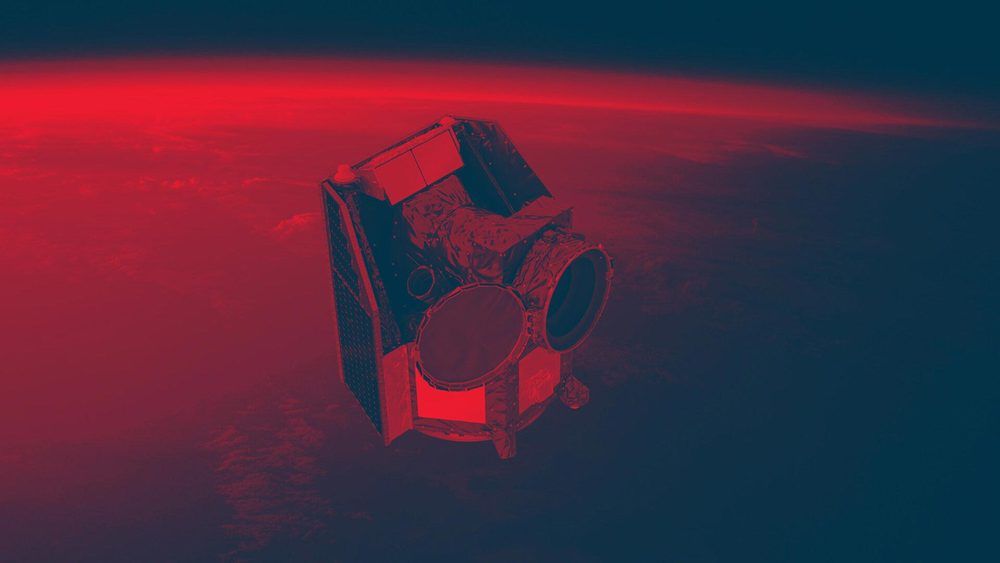
ESA’s new exoplanet mission, Cheops, has found a nearby planetary system to contain one of the hottest and most extreme extra-solar planets known to date: WASP-189 b. The finding, the very first from the mission, demonstrates Cheops’ unique ability to shed light on the Universe around us by revealing the secrets of these alien worlds.
Launched in December 2019, Cheops (the Characterising Exoplanet Satellite) is designed to observe nearby stars known to host planets. By ultra-precisely measuring changes in the levels of light coming from these systems as the planets orbit their stars, Cheops can initially characterize these planets — and, in turn, increase our understanding of how they form and evolve.
The new finding concerns a so-called ‘ultra-hot Jupiter ’ named WASP-189 b. Hot Jupiters, as the name suggests, are giant gas planets a bit like Jupiter in our own Solar System; however, they orbit far, far closer to their host star, and so are heated to extreme temperatures.
A Rogue Earth-Mass Planet Has Been Discovered Freely Floating in the Milky Way Without a Star
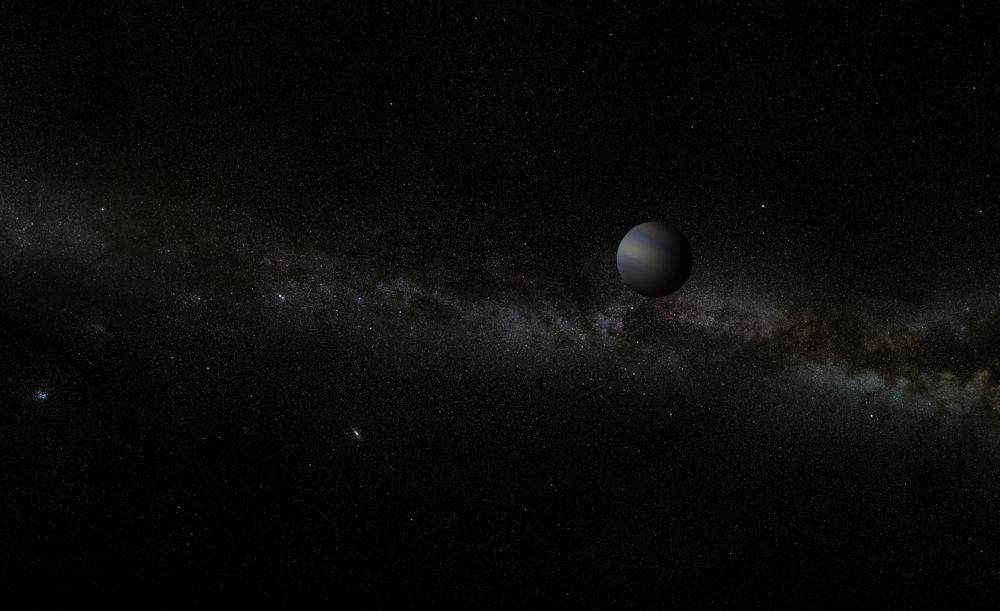
There may be more rogue planets drifting through space in the Milky Way than there are actual stars. This is how they found one of them.
If a solar system is a family, then some planets leave home early. Whether they want to or not. Once they’ve left the gravitational embrace of their family, they’re pretty much destined to drift through interstellar space forever, unbound to any star.
Astronomers like to call these drifters “rogue planets,” and they’re getting better at finding them. A team of astronomers have found one of these drifting rogues that’s about the same mass as Mars or Earth.
Finding something in deep space that emits no light of its own is extremely challenging. But two organizations are doing just that. They’re the OGLE (Optical Gravitational Lensing Experiment) collaboration and the KMTN (Korean Microlensing Telescope Network) collaboration.
What’s Up: October 2020 Skywatching Tips from NASA
There’s a reason our Perseverance rover and other missions left Earth for Mars recently: the two planets are close together right now. For those of us still on the ground, this also means Mars will be gorgeous in the sky this month. See more at: http://go.nasa.gov/34hp376
New Website Lets You Help NASA Find Alien Worlds
NASA just launched a new citizen science project — it wants the public’s help to find and identify brand new exoplanets.
Human Touch
This is the sort of work that technically could be automated with an algorithm trained to spot new worlds, Space.com reports. But it turns out that in this case, there’s no substitute for human judgment.
“Automated methods of processing TESS data sometimes fail to catch imposters that look like exoplanets,” Veselin Kostov, the NASA researcher leading the Planet Patrol project, said in a press release. “The human eye is extremely good at spotting such imposters, and we need citizen scientists to help us distinguish between the lookalikes and genuine planets.”
Revolutionary Universal Habitats for Earth and Space
This video shows how holographic storage works, using green light to write data as a persistent hologram inside an optical crystal. The data can then be read…How does holographic storage work?
See a home you can live in, make a living out, and grow most of your food in too, the ultimate bug-in or bug-out location — on Mars — here on Earth, or just about anywhere! That is why I call it my Universal Habitat. This is a very low ecological footprint home that can be beautiful, almost no energy cost to maintain, could be built affordably, and be resistant to many natural and man-made disasters such as tornadoes, fire, radiation, and worse. This is the ultimate self-sufficient bunker/fortress.
You can support Galactic Gregs by supporting the sister channel Green Gregs by clicking the links below:
See the Special Deals at My Patriot Supply: www.PrepWithGreg.com
Awesome deals for long term food supplies!
For gardening in your Lunar habitat Galactic Gregs has teamed up with True Leaf Market to bring you a great selection of seed for your planting. Check it out: http://www.pntrac.com/t/TUJGRklGSkJGTU1IS0hCRkpIRk1K
