Astronomy will never be the same again | Science & technology.
Category: space – Page 611
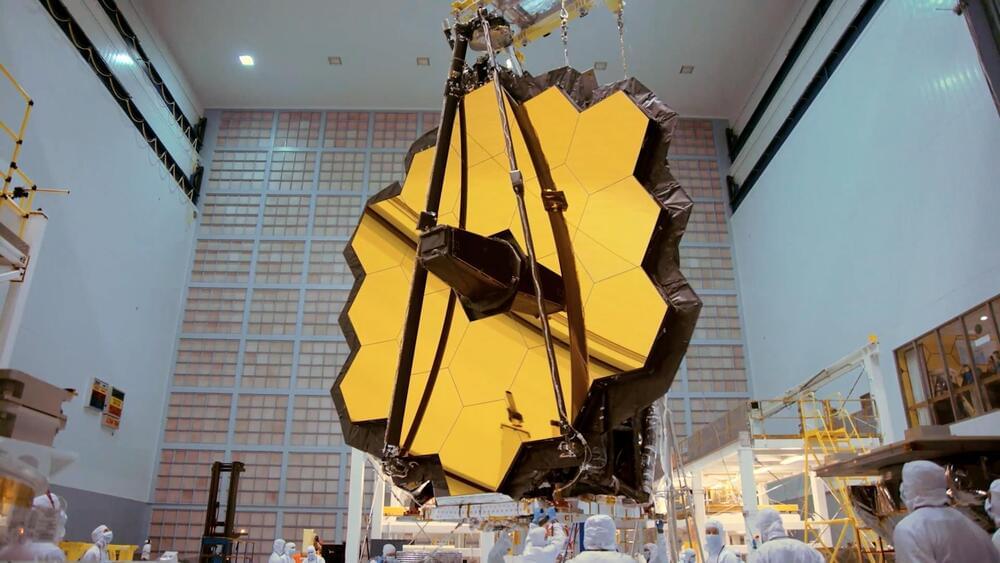
The James Webb Space Telescope took more than two decades and $10 billion to build
It’s one of NASA’s most expensive science projects. A combination of difficult engineering and mismanagement led to cost overruns and delays. Now it’s nearly a million miles from Earth, preparing to capture images of the first stars that formed over 13 billion years ago.
View insights.
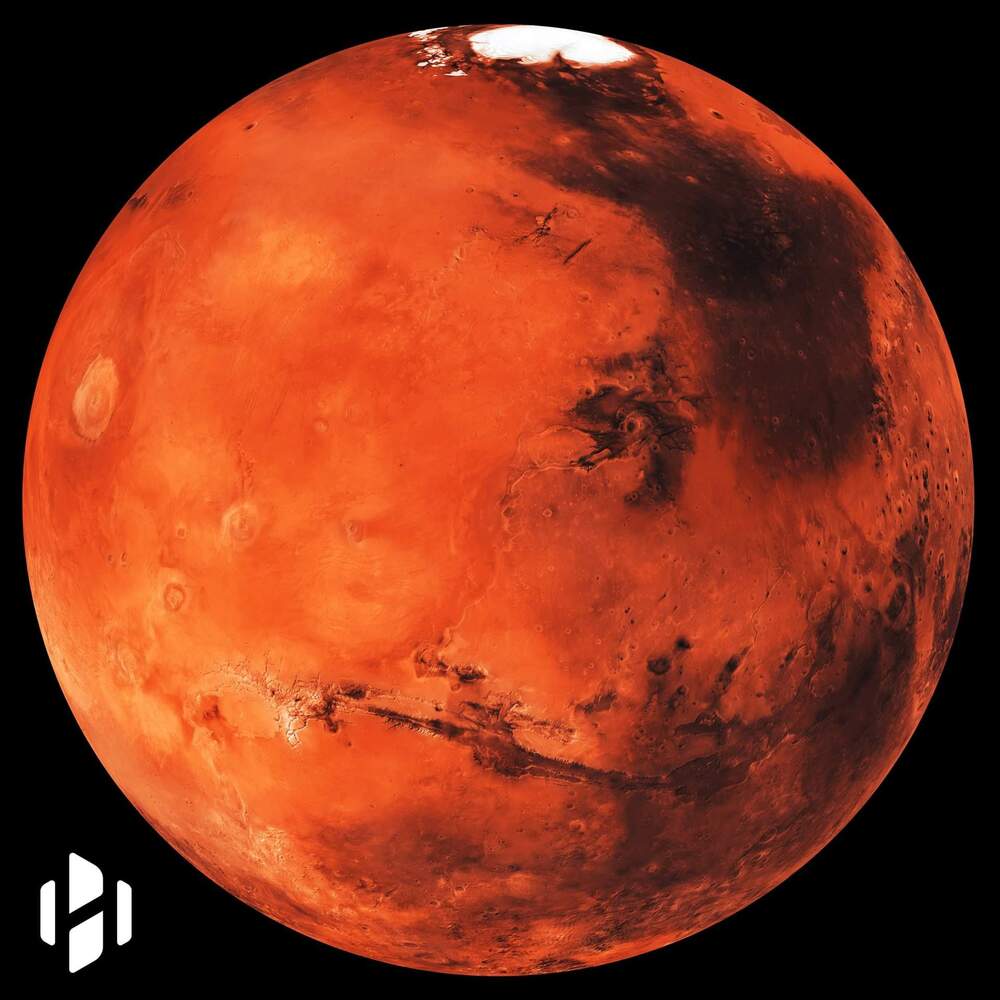
25 years ago, NASA landed its first rover on Mars — and catalyzed the search for life
Pathfinder brought the first rover to the Martian surface. The mission paved the way for Spirit, Opportunity, Curiosity, and Perseverance.
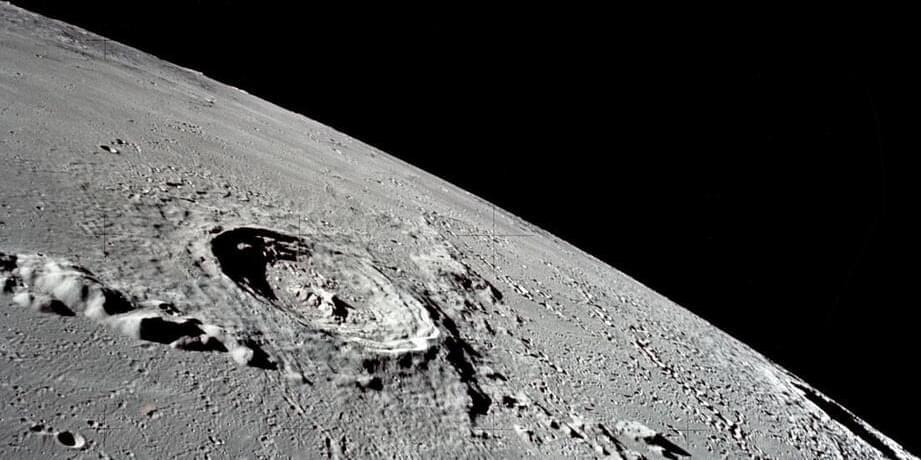
Could China take over the Moon? Space security experts explain the reality
Any control of the Moon would be temporary and localized.
In an op/ed space policy experts explain why China is unlikely to try exert power over the Moon.
Examining rocking shadows in protoplanetary disks
Astronomers from the University of Warwick reveal a new phenomenon dubbed the “rocking shadow” effect that describes how disks in forming planetary systems are oriented, and how they move around their host star. The effect also gives clues as to how they might evolve with time. Dr. Rebecca Nealon presented the new work this week at the 2022 National Astronomy Meeting at the University of Warwick.
Stars are born when a large cloud of gas and dust collapses in on itself. The leftover material that doesn’t make it into the star ends up circling around it, not unlike how water swirls around the drain before falling in. This swirling mass of gas and dust is called a protoplanetary disk, and it’s where planets like the Earth are born.
Protoplanetary disks are often thought to be shaped like dinner plates—thin, round and flat. However, recent telescope images from the Atacama Large Millimeter/Submillimeter Array (ALMA) show that this is not always the case. Some of the disks seen by ALMA have shadows on them, where the part of the disk closest to the star blocks some of the stellar light and casts a shadow onto the outer part of the disk. From this shadow pattern, it can be inferred that the inner part of the disk is oriented completely differently to the outer part, in what is called a broken disk.

A new measurement record for strongest magnetic field in universe
Breaking the previous record by 60 percent.
The team behind the first Chinese X-ray astronomy satellite, Insight-HXMT, has discovered the strongest magnetic field directly measured in the universe hitherto.
It is a known fact that neutron stars generate the strongest magnetic fields in the universe. These magnetic fields, close to a neutron star’s surface, can only be measured accurately and directly by looking for cyclon resonance scattering features (CRSF). The Insight-HXMT team discovered a cyclotron absorption line with an energy of 146 keV in the neutron star X-ray binary Swift J0243.6+6124, which translates to a surface magnetic field of more than 1.6 billion Tesla.
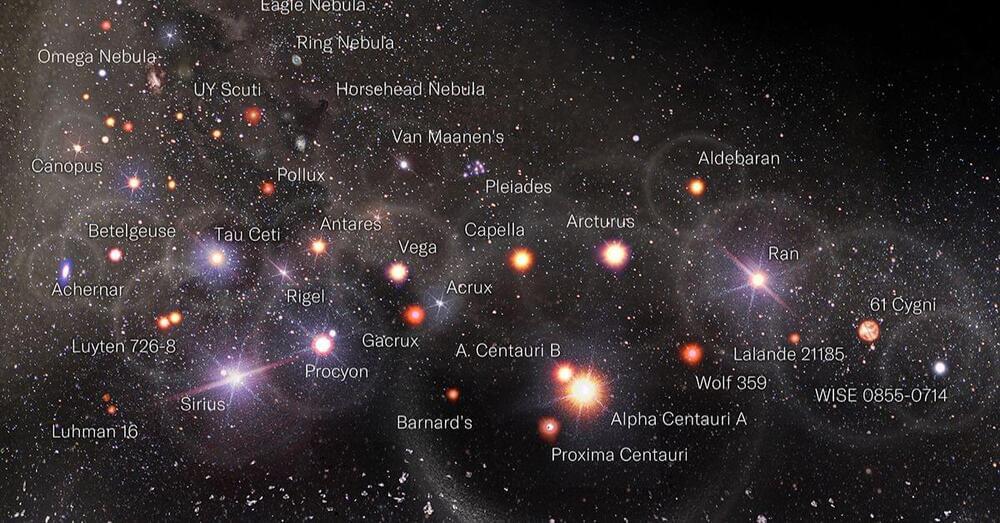
A Logarithmic Map of the Entire Observable Universe
Scientists believe we’ve only discovered about 5% of the universe. Here’s a map of what we’ve found so far, visualized using a log scale.