Toggle light / dark theme

NASA Selects Companies to Advance Moon Mobility for Artemis Missions

NASA has selected Intuitive Machines, Lunar Outpost, and Venturi Astrolab to advance capabilities for a lunar terrain vehicle (LTV) that Artemis astronauts will use to travel around the lunar surface, conducting scientific research during the agency’s Artemis campaign at the Moon and preparing for human missions to Mars.

The awards leverage NASA’s expertise in developing and operating rovers to build commercial capabilities that support scientific discovery and long-term human exploration on the Moon. NASA intends to begin using the LTV for crewed operations during Artemis V.

“We look forward to the development of the Artemis generation lunar exploration vehicle to help us advance what we learn at the Moon,” said Vanessa Wyche, director of NASA’s Johnson Space Center in Houston. “This vehicle will greatly increase our astronauts’ ability to explore and conduct science on the lunar surface while also serving as a science platform between crewed missions.”

Elon Musk reveals plan for next Starship mission

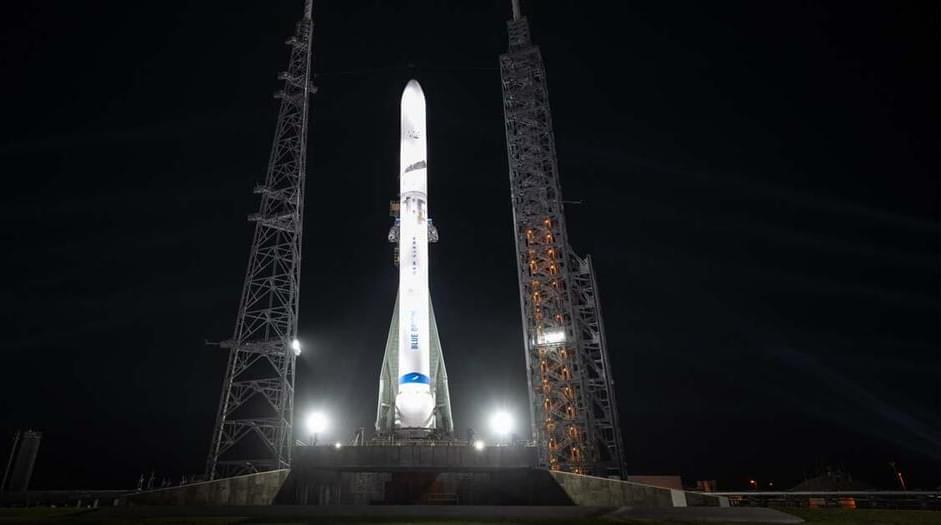
The static fire test comes less than two weeks after the last Starship mission, which saw the rocket reach orbital velocity for the first time before breaking up upon reentry to Earth’s atmosphere.

Gwynne Shotwell, SpaceX’s chief operating officer, said last week that the next launch attempt could take place in the “beginning part of May”, though no payload will be onboard.

The fourth major flight test of the fully stacked Starship rocket system will instead aim to resolve the issues that arose during the last mission.

Researchers develop new single-molecule transistor that uses quantum interference

An international team of researchers from Queen Mary University of London, the University of Oxford, Lancaster University, and the University of Waterloo have developed a new single-molecule transistor that uses quantum interference to control the flow of electrons. The transistor, which is described in a paper published in the Nature Nanotechnology (“Quantum interference enhances the performance of single-molecule transistors”), opens new possibilities for using quantum effects in electronic devices.

Transistor are the basic building blocks of modern electronics. They are used to amplify and switch electrical signals, and they are essential for everything from smartphones to spaceships. However, the traditional method of making transistors, which involves etching silicon into tiny channels, is reaching its limits.

As transistors get smaller, they become increasingly inefficient and susceptible to errors, as electrons can leak through the device even when it is supposed to be switched off, by a process known as quantum tunnelling. Researchers are exploring new types of switching mechanisms that can be used with different materials to remove this effect.

Odysseus lunar lander, 1st US craft on the moon in 50 years, has died and will ‘not complete another call home’

Odysseus, which was built by Houston-based company Intuitive Machines, powered down one week after landing as lunar night began for 14 days. Flight controllers ordered the spacecraft to snooze for three weeks, while the moon’s south pole faced away from the sun, but they hoped Odie would reawaken once sunlight hit its solar panels again.

“Intuitive Machines started listening for Odie’s wake-up signal on March 20, when we projected enough sunlight would potentially charge the lander’s power system and turn on its radio,” representatives of the company wrote on X, formerly called Twitter.

/* */