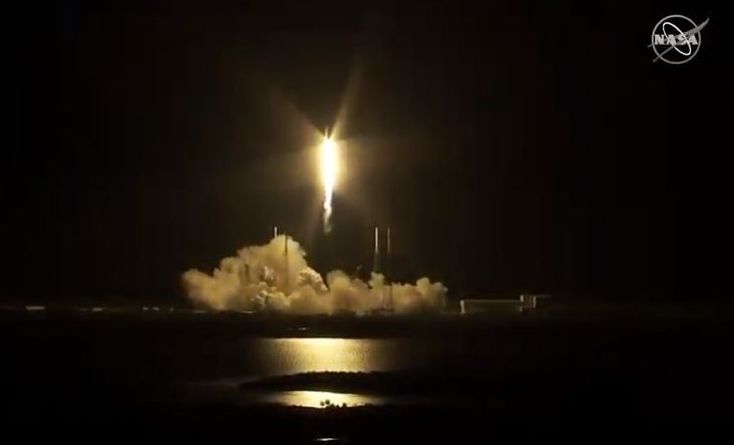
“Astronauts at the international space station expecting a delivery on Monday that private company SpaceX launched a cargo capsule loaded with supplies from Cape Canaveral early this morning the shipment. The company’s seventeenth to the orbiting outpost includes a new instrument to measure CO two in the atmosphere. Then peers Rebecca hersher reports it will be attached. To the space station measuring how much carbon dioxide is. In the atmosphere is really fundamental for understanding how the climate is changing. But it’s difficult for one thing. The amount of co two varies each day and each season and each year and measurements have to be both global and extremely precise. The new instrument can do both. It’s designed to scan the earth measuring not only how much co two is entering the atmosphere. But how much of the greenhouse gas is being absorbed by plants and oceans the instrument is called the orbiting carbon observatory three two other versions. Have previously been launched. Overall. NASA says the ability to measure co two from space has already helped scientists better understand our climate and predict how it will change”
KQED Radio