A void is consuming Microsoft Flight Simulator.
As Starship SN8 waited to be lifted onto the mount at Pad A, the forward section of SN9 was stacked (off camera). New weather stations were installed, work on and around the launch site continued, and some scrap rolls of stainless steel were moved.
Video and Pictures from Mary (@BocaChicaGal). Edited by Theo Ripper (@TheoRipper).
Click “Join” for access to early fast turnaround clips, exclusive discord access with the NSF team, etc — to support the channel.
Updates: https://forum.nasaspaceflight.com/index.php?topic=51332.
Articles: https://www.nasaspaceflight.com/?s=Starship
NSF Store: https://www.nasaspaceflight.com/shop/
Astrophysicists at the University of Jena (Germany) prove that dust particles in space are mixed with ice.
The matter between the stars in a galaxy – called the interstellar medium – consists not only of gas, but also of a great deal of dust. At some point in time, stars and planets originated in such an environment, because the dust particles can clump together and merge into celestial bodies. Important chemical processes also take place on these particles, from which complex organic – possibly even prebiotic – molecules emerge. However, for these processes to be possible, there has to be water. In particularly cold cosmic environments, water occurs in the form of ice. Until now, however, the connection between ice and dust in these regions of space was unclear. A research team from Friedrich Schiller University Jena and the Max Planck Institute for Astronomy has now proven that the dust particles and the ice are mixed. They report their findings in the current issue of the research journal Nature Astronomy.
Better modelling of physico-chemical processes in space.
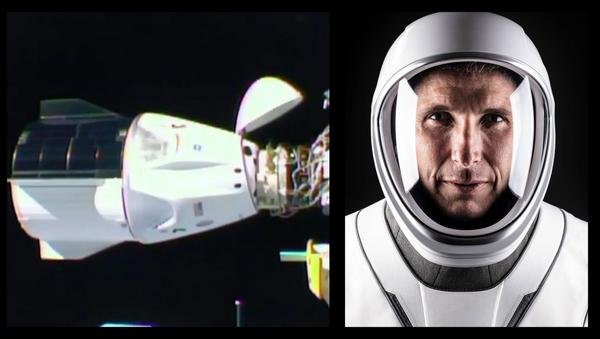
This week on #SpaceToGround : the International Space Station is set for a delivery of supplies and science from the Northrop Grumman Corporation’s Cygnus spacecraft, while the next astronauts set to launch aboard SpaceX’s Crew Dragon prepare for their upcoming mission:
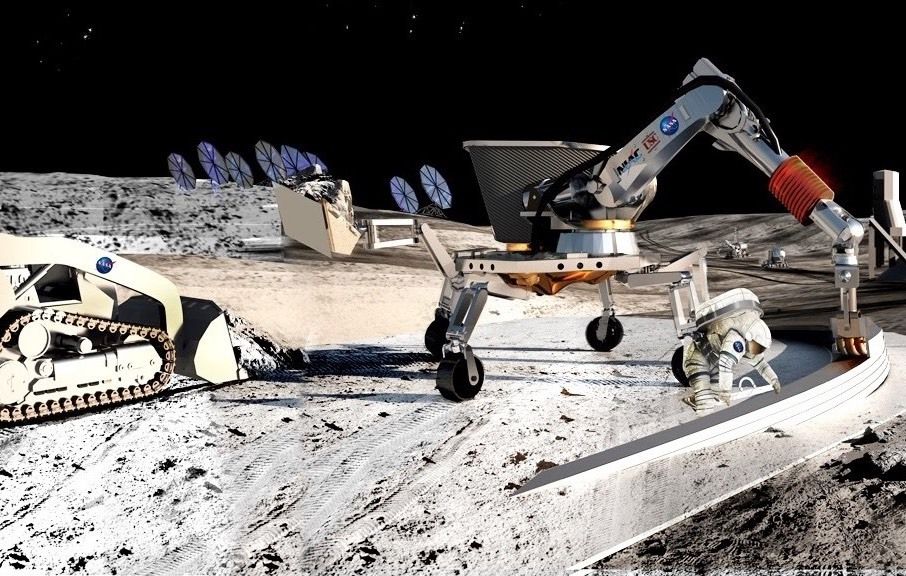
NASA’s Watts on the Moon Challenge seeks solutions for energy distribution, management, and/or storage that address NASA technology gaps and can be further developed for space flight and future operation on the lunar surface. Not only could novel solutions make a difference in lunar and space exploration, but technologies discovered during NASA’s Watts on the Moon competition could help facilitate new power options on Earth.
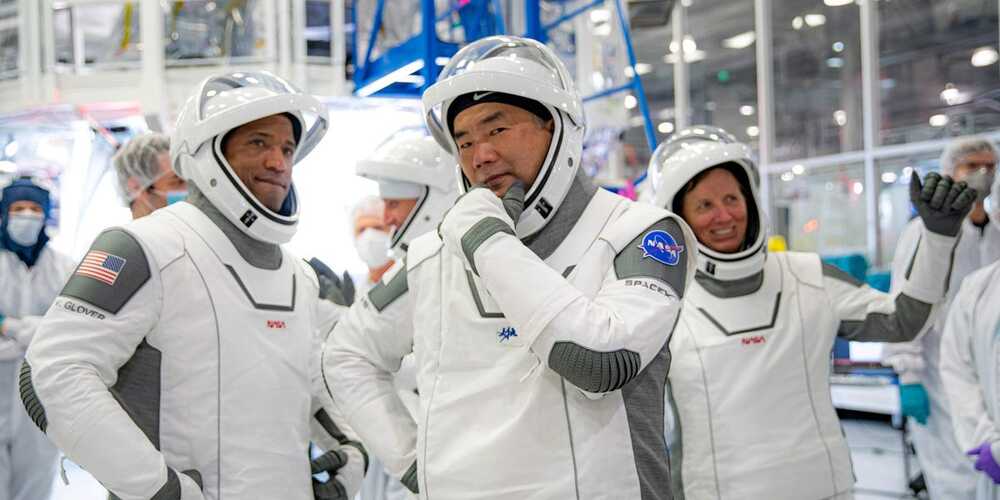
ESA Astronaut Pesquet revealed Crew-2 has been actively training for “Mission Alpha” aboard Crew Dragon. He shared photographs via Twitter of him training on SpaceX’s Crew Dragon simulator which involves learning how to control the spacecraft’s functions via a trio of touchscreen displays. – “Here’s the posse together, training on @SpaceX crew dragon. @Aki_Hoshide looking like a boss, and all of us wishing we had as cool socks as our awesome pilot @Astro_Megan. #MissionAlpha,” he wrote. During training, all astronauts are wearing face masks to protect each other from the coronavirus respiratory illness, pictured below.
Here’s the posse together, training on @SpaceX crew dragon. @Aki_Hoshide looking like a boss, and all of us wishing we had as cool socks as our awesome pilot @Astro_Megan. #MissionAlpha pic.twitter.com/UCDJvTcRgp— Thomas Pesquet (@Thom_astro) September 23, 2020
To familiarize with the spacecraft, the astronauts train with an interactive simulator and touchscreen interface that is a replica of Dragon’s cockpit. Earlier this year, SpaceX released an online game that allows players to try to dock the Crew Dragon spacecraft to the Space Station, using similar controls the astronauts will use during their voyage in space. You can play the online game on SpaceX’s website: Crew Dragon Simulator.
After a brief hiatus, the Space Coast appears to be on course to host a spate of rocket launches from three separate pads before the end of the month.
The latest Eastern Range schedule has both United Launch Alliance and SpaceX launching three missions starting early Saturday through late Tuesday, all of which will be handled by Delta IV Heavy and Falcon 9 rockets, respectively.
Two of the launches come after several delays due to weather and technical issues while the third is a last-minute addition by the Space Force.
Featured image: Axel Springer
With his inventive and innovative spirit, Elon Musk has revolutionized several industries, from electric vehicles and batteries to space travel. This year’s Axel Springer Award goes to Elon Musk.
The Axel Springer Prize is awarded annually to outstanding individuals who are extremely innovative, create new markets and change old markets, shape culture and value social responsibility. Musk will accept the award on December 1, 2020, at Axel Springer’s headquarters in Berlin. The theme of the evening is “An Evening for Elon Musk — Mission to Mars.”