Toggle light / dark theme

SpaceX INSANE Plan To Travel The Entire Solar System!

Head to https://www.wren.co/start/techspace for more informations!

Credit:
Thumbail:
Neopork: https://twitter.com/Neopork85

Video Credit:

IamVisuals: https://bit.ly/35Z3POh.
SpaceXVision: https://bit.ly/3xWTpeb.
DeepSpaceCourier: https://bit.ly/3y0hTmS
C-Bass Productions: https://bit.ly/35Z25F0
HazeGrayArt: https://bit.ly/3hcfgHM
Jochem Laurenssen: https://bit.ly/3vVIJuU
TijnM: https://bit.ly/3x2IWxK
AlexanderSvan: https://bit.ly/3djK9J4
NickHenning3D: https://bit.ly/36bsSy1
EvanKaren: https://bit.ly/3h1gmqV
NasaSpaceFlight: https://bit.ly/2TKU2sL
Kimitalvitie: https://twitter.com/kimitalvitie.
Neopork: https://twitter.com/Neopork85
AlexanderSvan: https://bit.ly/3jmOD3P
RGV Aerial Photography: https://bit.ly/37n1duw.
StarshipGazer: https://twitter.com/StarshipGazer.
Ocean Cam: https://twitter.com/obetraveller.
LabPadre: https://twitter.com/LabPadre.
Spadre: https://twitter.com/SpacePadreIsle.
3Ddaniel: https://twitter.com/3DDaniel1
StarshipBocaChica: https://www.youtube.com/channel/UCBfh

SpaceX is building the most powerful spacecraft ever with the Starship. When completed, clients are waiting to put it to different uses as it is a very versatile spacecraft and this is because SpaceX is making it to be 100 percent reusable. However, for SpaceX, the Starship is its vehicle to explore the unknown parts of the solar system.
How is SpaceX making sure the Starship is fit for the long journeys the spacecraft is destined for?
Join us as we examine SpaceX’s insane plan to travel all over the Solar system!
When the Starship is ready, SpaceX would have the most powerful spacecraft in its hands. When the upper stage, the Ship, and the lower stage, the Super Heavy, are stacked together, the Starship will stand an impressive 120 meters tall, with a diameter of nine meters and total payload to lower earth orbit of over 100 tons.
The booster is the Super Heavy, a colossal steel structure that is 70 meters tall. It will lift a gross mass of over 3 million kg by producing a thrust of 72 MN. The booster relies on 32 Raptor engines that SpaceX is designing in-house. The rocket engines will use propellants made of sub-cooled liquid methane and liquid oxygen, of which the booster can store 3,400 tons.
SpaceX designed reusability into the Super Heavy so it can be used for multiple mission launches. The booster was to return to earth and land on its six legs but to reduce costs and turn around time, SpaceX ditched the legs, instead, coming up with the radical idea of catching the Super Heavy with a pair of arms, known as the Mechazilla, on the launch tower. It will be aided on its return journey by a system of four grid fins.
The upper stage or the Ship is the part of the Starship that will go to and return from space. It is a 50 meters tall spacecraft that can carry both cargo and passengers to earth’s orbit and beyond. It will rely on six Raptor engines both for propulsion and landing since it is also completely reusable.
The Ship also uses methane and oxygen propellants, of which it can store 1,200 tons, but it has an ingenious proposed method of getting more fuel when out there in space, as we shall see later.
While the Ship will also be caught by the Mechazilla, on its return to earth, SpaceX is retaining the legs so that it can land on other planets or the moon where there is no Mechazilla.
Out of the 50-meter height of the Ship, 18 meters of it will be available to configure either for cargo or passenger transport, making it the largest usable payload volume of any current or in-development launcher.
If you ever wonder what I like to do when not making these videos, I like taking road trips. I also look forward to taking flights to see my folks and reconnect with my roots. Sometimes, I hang out with friends over a few chilled beers. I felt I was just having fun, until a pal hooked me up to Wren, which helped me to see how much my fun activities were adding carbon emissions to the air.
It was easy to calculate my carbon footprint on Wren website because I just answered some questions about the stuff I do and it calculated how much I am costing the environment in dollars!
However, Wren gave me a chance to offset my environmental debit by donating the amount to projects that plant trees and protect rainforests around the world!
You can make the contribution a monthly thing and you will get updates from Wren on the projects you support.
You can sign up today and start learning and compensating. If you sign up with my referral link in the video description, you will be supporting 5 extra acres of rainforest! So hurry and let’s save our planet, our only home!
The Starship is not a product that will struggle for business as many people are waiting on it.
One of its most prominent suitors is NASA, which is confident enough to put 2.9 billion dollars into its development.

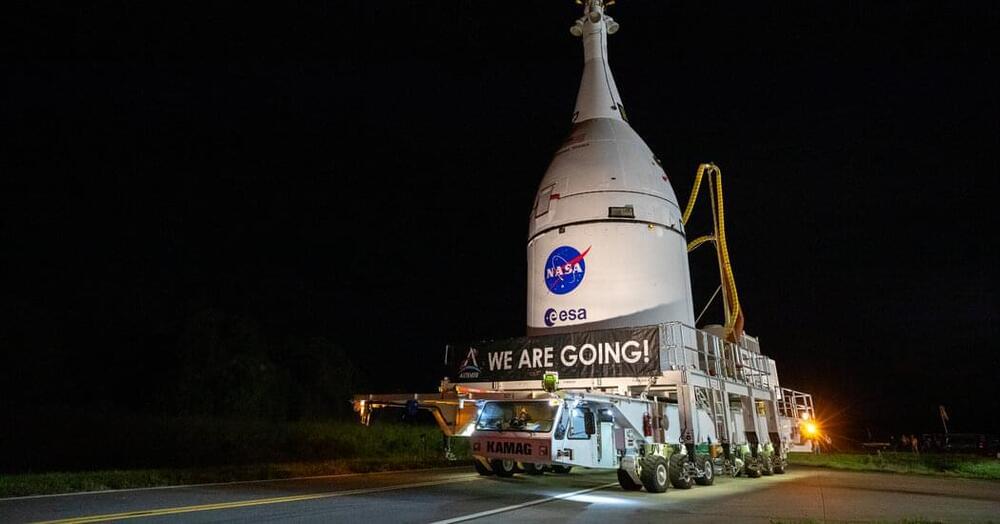
NASA Readies for Future Artemis Moon Missions with Rocket Engine Test

NASA marked a significant milestone Sept. 30 in its plans for future missions to the Moon and, eventually, Mars with completion of an RS-25 single-engine Retrofit-2 test series at Stennis Space Center near Bay St. Louis, Mississippi.


BepiColombo will complete its first of six Mercury flybys on October 1st. Some cameras will be operating so we’ll get some images. Some science, too.

8-Year-Old Asteroid Hunter From Brazil Is Officially The World’s Youngest Astronomer

When Nicole Oliveira was just learning to walk, she would throw up her arms to reach for the stars in the sky.

Today, at just eight years of age, the Brazilian girl is known as the world’s youngest astronomer, looking for asteroids as part of a NASA-affiliated program, attending international seminars and meeting with her country’s top space and science figures.

In Oliveira’s room, filled with posters of the Solar System, miniature rockets and Star Wars figures, Nicolinha, as she is affectionately known, works on her computer studying images of the sky on two large screens.

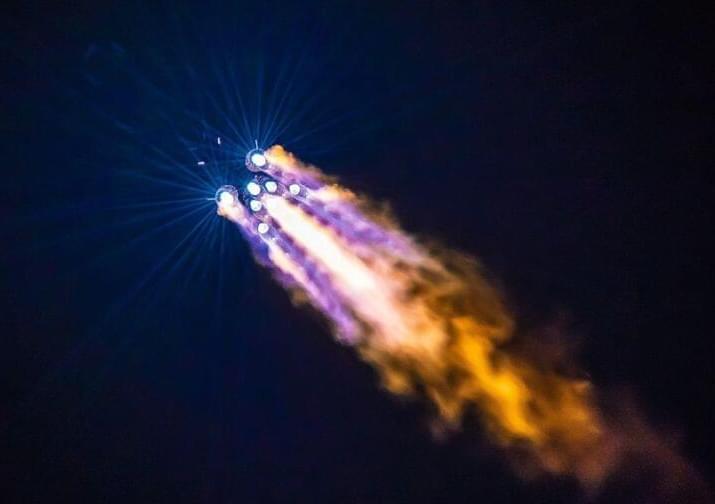
See video of bright fireball over Alabama from Dragon X Spacecraft reentry

A bright fireball seen streaking across the Alabama sky Thursday night was likely the reentry of a SpaceX Dragon Spacecraft.

The fireball and accompanying boom was reported in central and north Alabama shortly before 10 p.m. The Dragon Spacecraft had completed a one-month stay at the Space Station to bring supplies and bring home research being conducted on the space lab. The Dragon unlocked from the Space Station at around 8:05 a.m. yesterday to begin its journey back to earth.

Before reentry, Space X said the spacecraft’s return would likely be seen over Florida and Georgia, however, people as far north as Missouri reported seeing the bright light and accompanying smoke trail Thursday night.

SpaceX Starship is FINALLY Launching INTO ORBIT!

After weeks and days of hardworking, SpaceX is gearing up to launch the Starship into orbit, the biggest test yet for the ship designed to send humans to Mars and beyond. The whole world, including us and you, are waiting for the promised day that will be covered in this video. Huge thanks to all these amazing SpaceX Artists. Please follow them and support them through Payoneer and Twitter.
ErcXSpace: https://bit.ly/3ha4HFe.
Smallstars: https://bit.ly/3heQgja.
IamVisuals: https://bit.ly/35Z3POh.
SpaceXVision: https://bit.ly/3xWTpeb.
DeepSpaceCourier: https://bit.ly/3y0hTmS
C-Bass Productions: https://bit.ly/35Z25F0
HazeGrayArt: https://bit.ly/3hcfgHM
Jochem Laurenssen: https://bit.ly/3vVIJuU
TijnM: https://bit.ly/3x2IWxK
AlexanderSvan: https://bit.ly/3djK9J4
NickHenning3D: https://bit.ly/36bsSy1
EvanKaren: https://bit.ly/3h1gmqV
NasaSpaceFlight: https://bit.ly/2TKU2sL
Kimitalvitie: https://twitter.com/kimitalvitie.
Neopork: https://twitter.com/Neopork85
AlexanderSvan: https://bit.ly/3jmOD3P
RGV Aerial Photography: https://bit.ly/37n1duw.
StarshipGazer: https://twitter.com/StarshipGazer.
Ocean Cam: https://twitter.com/obetraveller.
LabPadre: https://twitter.com/LabPadre.
Spadre: https://twitter.com/SpacePadreIsle.
3Ddaniel: https://twitter.com/3DDaniel1
StarshipBocaChica: The firm is preparing for the Starship’s first orbital flight, which will see the under-development rocket take off from the Starbase facility in Texas and land off the coast of Hawaii. On August 15 CEO Elon Musk declared via Twitter that the ship would be ready for the flight “in a few weeks, pending only regulatory approval.”
Musk first unveiled the predecessor to the ship in 2017 under the name “BFR,” SpaceX designed the fully reusable vessel to send over 100 tons or 100 people into space at a time. It can replace the firm’s existing rockets like the Falcon 9 and Falcon Heavy, while also taking on more ambitious goals like sending humans to Mars and beyond.
The ship uses liquid oxygen and methane as its fuel — meaning that, in theory, astronauts will be able to go to Mars, use the planet’s natural resources to generate more fuel, and use that to return home — or possibly venture out further. The flight will be around 90 minutes. The special thing about this start would be the fact that both stages would be in use – the Super Heavy Booster (BN4) and the Starship (SN20).
The booster would ignite its Raptor engines for two minutes and 49 seconds, come down in the Gulf of Mexico and attempt a landing. Musk confirmed on Twitter that the team has decided the booster will use 33 engines to offer 500,000 pounds of sea-level thrust. These engines will all be the same, except for the outer 20 which will lack some of the more complex controls.
SpaceX is not waiting around to start these missions. The firm is aiming to send the first humans to Mars by the mid-2020s, before establishing a self-sustaining city on Mars as early as 2050.
It could all start with the Starship — and at around 400 feet when paired with the Super Heavy booster that lifts it away from the Earth, this thing is huge. It greatly eclipses the Falcon 9 which measured less than 230 feet tall. It’s also powerful, with a liftoff thrust of 16 million pounds.
SpaceX announced at the launch of the plans that it “intends to collect as much data as possible during the flight to quantify the dynamics of entry and better understand what the spaceship is experiencing during such a flight that is extremely difficult to predict or accurately is to be replicated arithmetically.“
In comparison to the Saturn V, which is a rocket built by NASA; the Starship is taller than the Saturn V. It stands 394 feet (120 meters) tall, weighs 11,000,000 pounds (4,989,516.07 kilograms), and is made of stainless steel alloy.
According to SpaceX, Starship will be the most powerful launch vehicle ever developed and looks like this (SN15 Prototype).
WHAT IS THE PLAN?
In May 2,021 a document from the Federal Communications Commission revealed the plan for the first flight.
The ship will take off from the firm’s Starbase, Texas, launch facility. Around two minutes after liftoff, at 171 seconds, the Super Heavy booster will separate from the Starship. The ship will continue to complete a targeted landing around 60 miles northwest of the coast of Hawaii. The whole flight will last around 90 minutes.
SpaceX will not land the booster or the ship on land. The booster will land in the Gulf of Mexico, around 20 miles offshore, at 495 seconds or eight minutes after launch. The ship will complete a targeted powered landing in the sea.
#spacex #starship #sn20

3D-printed rocket engines: The technology driving the private sector space race

The volatile nature of space rocket engines means that many early prototypes end up embedded in dirt banks or decorating the tops of any trees that are unfortunate enough to neighbor testing sites. Unintended explosions are in fact so common that rocket scientists have come up with a euphemism for when it happens: rapid unscheduled disassembly, or RUD for short.

Every time a rocket engine blows up, the source of the failure needs to be found so that it can be fixed. A new and improved engine is then designed, manufactured, shipped to the test site and fired, and the cycle begins again — until the only disassembly taking place is of the slow, scheduled kind. Perfecting rocket engines in this way is one of the main sources of developmental delays in what is a rapidly expanding space industry.

Today, 3D printing technology, using heat-resistant metal alloys, is revolutionizing trial-and-error rocket development. Whole structures that would have previously required hundreds of distinct components can now be printed in a matter of days. This means you can expect to see many more rockets blowing into tiny pieces in the coming years, but the parts they’re actually made of are set to become larger and fewer as the private sector space race intensifies.

/* */