Toggle light / dark theme

China breaking all solar power records, aiming for 50GW in 2017

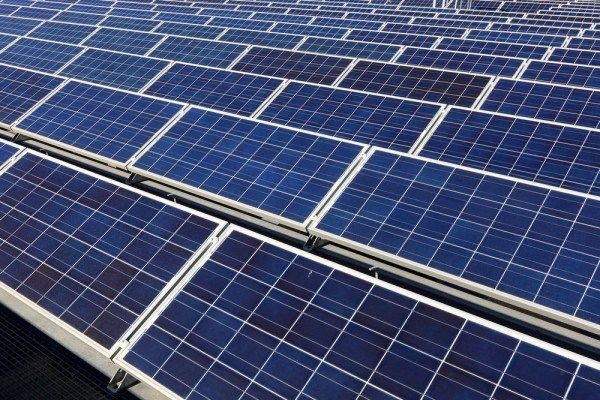
China is leading the world in solar power installations by a long run. ASECEA is predicting that 50GW of solar power is well within reach of being installed this year. In June and July of 2017, China installed 25GW of solar power – and they’ll push the globe past 100GW total for the year.

At China’s ‘State of the Union address’ equivalent, just yesterday, president Xi Jinping said, “Any harm we inflict on nature will eventually return to haunt us… this is a reality we have to face.”

“Taking a driving seat in international cooperation to respond to climate change, China has become an important participant, contributor, and torchbearer in the global endeavor for ecological civilization,” said President Xi Jinping, and that China must “develop a new model of modernization with humans developing in harmony with nature.”

Scientists develop machine-learning method to predict the behavior of molecules

An international, interdisciplinary research team of scientists has come up with a machine-learning method that predicts molecular behavior, a breakthrough that can aid in the development of pharmaceuticals and the design of new molecules that can be used to enhance the performance of emerging battery technologies, solar cells, and digital displays.

The work appears in the journal Nature Communications.

“By identifying patterns in , the learning algorithm or ‘machine’ we created builds a knowledge base about atomic interactions within a molecule and then draws on that information to predict new phenomena,” explains New York University’s Mark Tuckerman, a professor of chemistry and mathematics and one of the paper’s primary authors.

A Robot Can Print This $32,000 House in as Little as 8 Hours

Building a house by hand can be both time-consuming and expensive. Numerous homebuilders have chosen to automate part of the construction (i.e., by printing the home’s parts) instead.

A new Ukrainian homebuilding startup called PassivDom uses a 3D printing robot that can print parts for tiny houses. The machine can print the walls, roof, and floor of PassivDom’s 380-square-foot model in about eight hours. The windows, doors, plumbing, and electrical systems are then added by a human worker.

When complete, the homes are autonomous and mobile, meaning they don’t need to connect to external electrical and plumbing systems. Solar energy is stored in a battery connected to the houses, and water is collected and filtered from humidity in the air (or you can pour water into the system yourself). The houses also feature an independent sewage system.

Perovskite solar cells reach record long-term stability, efficiency over 20 percent

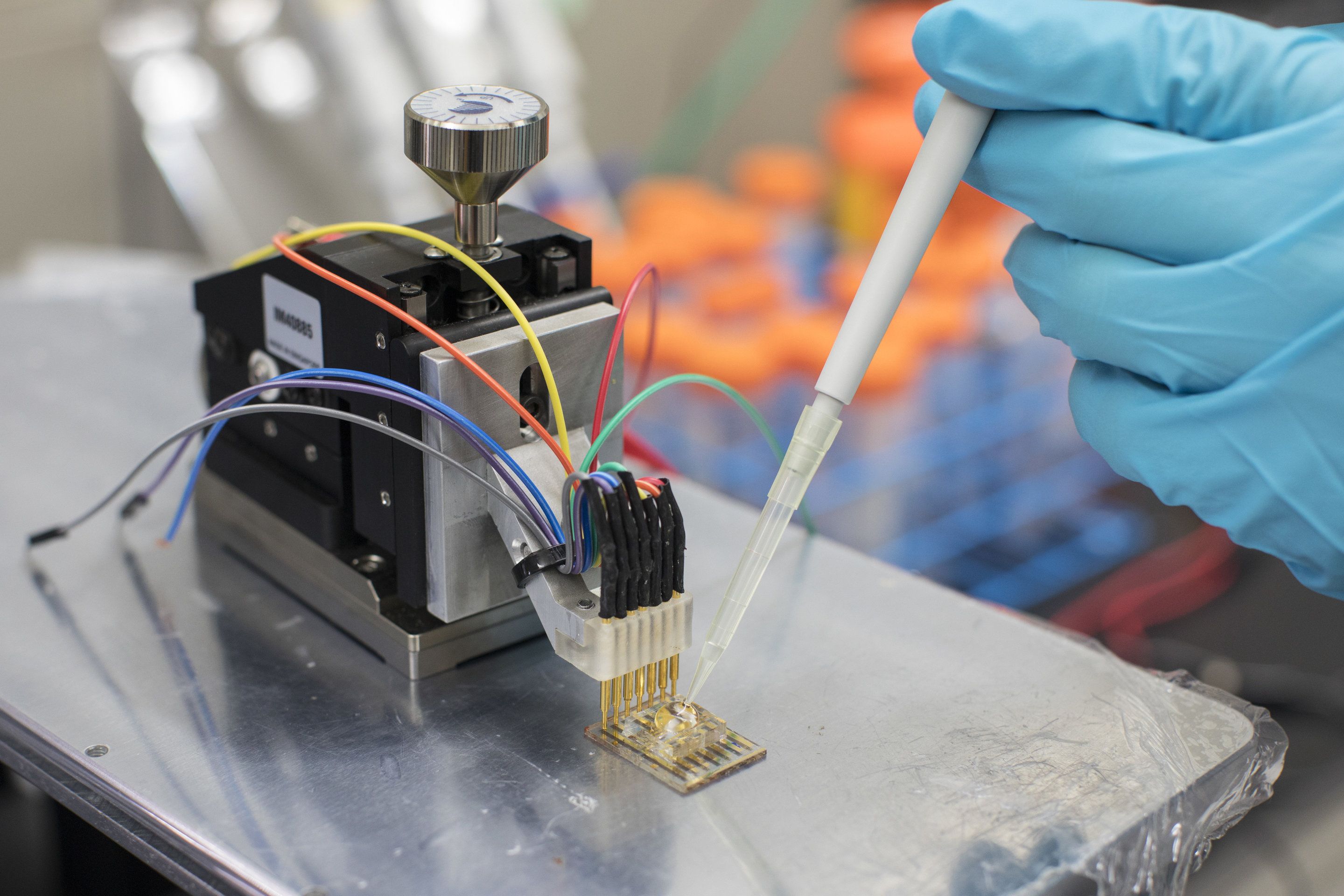
Perovskite solar cells (PSCs) can offer high light-conversion efficiency with low manufacturing costs. But to be commercially viable, perovskite films must also be durable and not degrade under solar light over time. EPFL scientists have now greatly improved the operational stability of PSCs, retaining more than 95% of their initial efficiencies of over 20 % under full sunlight illumination at 60oC for more than 1000 hours. The breakthrough, which marks the highest stability for perovskite solar cells, is published in Science.

Challenges of stability

Conventional have reached a point of maturation, with efficiencies plateauing around 25% and problems of high-cost manufacturing, heavyweight, and rigidity has remained largely unresolved. On the contrary, a relatively new photovoltaic technology based on solar cells has already achieved more than 22% .

A Tunisian Energy Company Wants to Pipe Electricity from the Sahara to Europe

The company TuNur aims to produce solar energy cheaply in the Sahara desert and distribute it to Europe. However, there are lingering questions about whether the company behind the project can actually pull it off.

Energy company TuNur is seeking approval from the Tunisian government for a 4.5GW solar park situated in the Sahara desert. If it’s given the green light, the project would distribute electricity to Malta, Italy, and France via submarine cables.

Shenzhen: City of the Future. The high-tech life of China’s Silicon Valley

More films about China: https://rtd.rt.com/tags/china/
- Technology and innovation hub, Shenzhen is known as China’s “silicon valley” and “the city of the future”.
- Once a fishing village, in just 50 years it grew into a megacity packed with skyscrapers.
- It hosts international technology exhibitions and forums and attracts creators and investors from around the world, contributing to its population boom.
- Inventors and engineers working here, create helpful robots, hybrid cars and smart car parks.

China has a saying; to see the past, visit Beijing, to see the present, go to Shanghai but for the future, it’s Shenzhen. Shenzhen has transformed itself from a tiny fishing village to a megacity in just 50 years, its population tripling since the 1990s. The city is a magnet for tech-savvy and inventive dreamers from all across China and the world, because of them Shenzhen has become the “silicon valley” of China, a true technology and innovation hub.

The sprawling metropolis is famed for its skyscrapers, hybrid cars, solar energy and for being home to a great many hi-tech companies. UBTECH is one of them; its focus is on making robots an indispensable part of everyday life. Its key product is the android – a human-like robot that can help out in the workplace and around the home as well as becoming both teacher and playmate for kids.

Shenzhen municipal government encourages citizens to switch to eco-friendly, hybrid cars that use both fuel and solar energy. The vehicles are made by a local manufacturer, BYD. Public transport here is hybrid too helping maintain the city’s ecological reputation, which is among the best in China. The city’s rapid growth demands new solutions for optimising space. Shenzhen is one of the top 10 cities in the world for having the most skyscrapers. Today, its engineers are working on a solution to the ever present problem of parking by developing smart car parks that can automatically place cars in tight spaces while the driver simply walks away.

The technological achievements of the city’s many companies are regularly showcased at popular international exhibitions and forums.

SUBSCRIBE TO RTD Channel to get documentaries firsthand! http://bit.ly/1MgFbVy

/* */