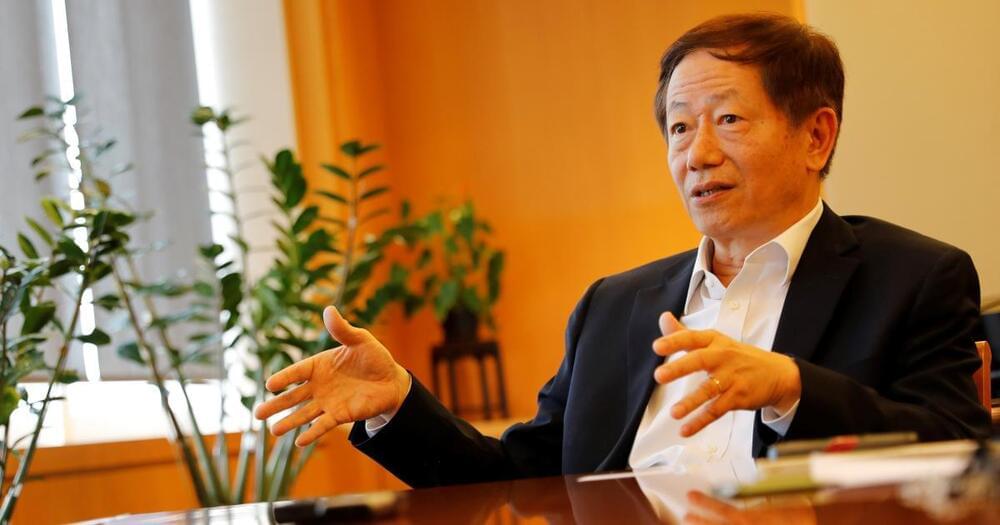
Ruonan Han seeks to push the limits of electronic circuits.
Ruonan Han’s research is driving up the speeds of microelectronic circuits to enable new applications in communications, sensing, and security.
Han, an associate professor who recently earned tenured in MIT
MIT is an acronym for the Massachusetts Institute of Technology. It is a prestigious private research university in Cambridge, Massachusetts that was founded in 1861. It is organized into five Schools: architecture and planning; engineering; humanities, arts, and social sciences; management; and science. MIT’s impact includes many scientific breakthroughs and technological advances.
Palo Alto Networks on Tuesday unveiled a new cloud security offering, its next-generation Cloud Access Security Broker (CASB), which taps machine learning to bolster the protection of software-as-a-service (SaaS) and collaboration apps.
The company’s next-generation CASB platform will use ML and AI to provide capabilities such as the automatic discovery of applications and improved data loss prevention for sensitive data, the company announced.
The next-generation CASB is the latest product from the Santa Clara, California-based cyber firm to get a significant injection of ML-and AI-powered functionality, said Lee Klarich, chief product officer at Palo Alto Networks, in a briefing with reporters.
AI is a classic double-edged sword in much the same way as other major technologies have been since the start of the Industrial Revolution. Burning carbon drives the industrial world but leads to global warming. Nuclear fission provides cheap and abundant electricity though could be used to destroy us. The Internet boosts commerce and provides ready access to nearly infinite amounts of useful information, yet also offers an easy path for misinformation that undermines trust and threatens democracy. AI finds patterns in enormous and complex datasets to solve problems that people cannot, though it often reinforces inherent biases and is being used to build weapons where life and death decisions could be automated. The danger associated with this dichotomy is best described by sociobiologist E.O. Wilson at a Harvard debate, where he said “The real problem of humanity is the following: We have paleolithic emotions; medieval institutions; and God-like technology.”
Full Story:
There is a lot more than the usual amount of handwringing over AI these days. Former Google CEO Eric Schmidt and former US Secretary of State and National Security Advisor Henry Kissinger put out a new book last week warning of AI’s dangers. Fresh AI warnings have also been issued by professors Stuart Russell (UC Berkeley) and Youval Harari (University of Jerusalem). Op-eds from the editorial board at the Guardian and Maureen Dowd at the New York Times have amplified these concerns. Facebook — now rebranded as Meta — has come under growing pressure for its algorithms creating social toxicity, but it is hardly alone. The White House has called for an AI Bill of Rights, and the Financial Times argues this should extend globally. Worries over AI are flying faster than a gale force wind.
Apple has been talking for years about the role it wants to play in human health, led by the Apple Watch and its array of health-related features. With the Apple Watch maturing and Apple increasing its integration of health-focused hardware and software, several pieces of evidence suggest the company is positioning itself for an even bigger expansion in that direction.
According to trends compiled by Linkedin and seen by MacRumors, over the past year, Apple’s open job listings in health-related fields have increased by over 220%, with a significant portion of the increase coming in just the last several months. Apple’s health-focused hiring has been the fastest-growing segment for the company over the past year, followed most closely by sales and IT specialists, such as in cloud computing and security, according to the data.
OrCam’s reading device, ElectReon’s ‘smart road’ tech, a sensor for farming and security drones all make the list.
1. OrCam Read, a smart reading support device developed by OrCam Technologies, the maker of artificial intelligence-based wearable devices to help the blind and visually impaired read texts via audio feedback. The company launched OrCam Read in 2,020 a handheld digital reader meant to help people with language processing challenges, including dyslexia. The device (priced at $1,990) captures and reads out full pages of text and digital screens, and follows voice commands.
A US$500 billion accelerator of human progress — mansoor hanif, executive director, emerging technologies, NEOM.
Mansoor Hanif is the Executive Director of Emerging Technologies at NEOM (https://www.neom.com/en-us), a fascinating $500 billion planned cognitive city” & tourist destination, located in north west Saudi Arabia, where he is responsible for all R&D activities for the Technology & Digital sector, including space technologies, advanced robotics, human-machine interfaces, sustainable infrastructure, digital master plans, digital experience platforms and mixed reality. He also leads NEOM’s collaborative research activities with local and global universities and research institutions, as well as manages the team developing world-leading Regulations for Communications and Connectivity.
Prior to this role, Mr Hanif served as Executive Director, Technology & Digital Infrastructure, where he oversaw the design and implementation of NEOM’s fixed, mobile, satellite and sub-sea networks.
An industry leader, Mr Hanif has over 25 years of experience in planning, building, optimizing and operating mobile networks around the world. He is patron of the Institute of Telecommunications Professionals (ITP), a member of the Steering Board of the UK5G Innovation Network, and on the Advisory Boards of the Satellite Applications Catapult and University College London (UCL) Electrical and Electronic Engineering Dept.
Prior to joining NEOM, Mr Hanif was Chief Technology Officer of Ofcom, the UK telecoms and media regulator, where he oversaw the security and resilience of the nation’s networks.
A need exists to accurately estimate overdose risk and improve understanding of how to deliver treatments and interventions in people with opioid use…
The Microsoft 365 Defender security research team discovered a new vulnerability in macOS that allows an attacker to bypass the System integrity protection or SIP. This is a critical security feature in macOS which uses kernel permissions to limit the ability to write critical system files. Microsoft explains that they also found a similar technique […].
The Microsoft 365 Defender security research team discovered a new vulnerability in macOS that allows an attacker to bypass the System integrity protection or SIP. This is a critical security feature in macOS which uses kernel permissions to limit the ability to write critical system files.
Microsoft explains that they also found a similar technique that could allow an attacker to gain elevated root privileges on an affected device, basically allowing to install a rootkit on macOS.
Displacing Delta. Expect this to dominate globally in the coming year, if truly 10% more transmissible.
An offshoot of the Delta coronavirus variant which is slowly spreading throughout the UK is expected to be dominant within a matter of months, experts believe.
Known as AY.4.2, the sub-variant is thought to be at least 10 cent more transmissible than its predecessor, with analysis underway to determine what accounts for its increased infectiousness.
The UK Health Security Agency (UKHSA) has said that early tests do not suggest that AY.4.2, which has been labelled a ‘Variant Under Investigation’, has acquired the ability to evade immunity generated by infection or injection.
The world’s largest semiconductor manufacturers—Intel, Samsung, and the Taiwan Semiconductor Manufacturing Company (TSMC)—have all announced plans to build new chip factories in the US. Everyone is bragging about those plans: American lawmakers say bringing chip manufacturing back onto US soil will strengthen national security, while the chip makers, chastened by this year’s disastrous semiconductor shortage, are diversifying their supply chains to avoid future crises.
But there’s one problem: Who will pay?
Intel, Samsung, and TSMC have all threatened to pull the plug on their US factory plans unless government subsidies are on the table. Company executives claim that if they don’t get a rich package of incentives and tax breaks, they’ll build their semiconductor factories elsewhere, effectively ending American ambitions to return chip manufacturing to its shores after ceding the bulk of the market to Taiwan in the 1990s.