Toggle light / dark theme

DARPA unified space-sensor networks help keep orbiting junk from slamming into something important

Now, here is a longer term concept. Could we see a day soon where we have some model of an EPA in Space due to the already junk material (namely abandoned/ broken satellites, etc.) and mining? Wonder who will get the contracts for space cleanup?


DARPA recently said that it had finished integrating seven space-watching networks that will feed tons of new Earth-orbiting junk data into what the agency calls “the largest and most diverse network of space situational awareness networks ever assembled.”

+More on Network World: NASA’s hot Juno Jupiter mission +

DARPA’s OrbitOutlook (O2) program brings seven previously separate new space sensor networks together that could ultimately feed into the United States Space Surveillance Network (SSN), a worldwide network of 29 military radar and optical telescopes operated by the Air Force as well as NASA, the FAA and other entities that could use the information.

DARPA Completes Integration of Live Data Feeds Into Space Surveillance Network; Jeremy Raley Comments

The Defense Advanced Research Projects Agency has finished its work to integrate live data feeds from several sources into the U.S. Space Surveillance Network run by the Air Force in an effort to help space monitoring teams check when satellites are at risk.

SSN is a global network of 29 military radar and optical telescopes and DARPA added seven space data providers to the network to help monitor the space environment under its OrbitOutlook program, the agency said Wednesday.

DARPA plans to test the automated algorithms developed to determine relevant data from the integrated feed in order to help SSA experts carry out their mission.

China’s pioneering quantum satellite launch slips to August

Oh no; China has slipped by a month.


Launch of the world’s first quantum communications satellite will take place in August, the leader of China’s space science program has said.

Dr Wu Ji of the National Space Science Centre (NSSC) under the Chinese Academy of Sciences (CAS), told reporters in Beijing while updating on space science missions (link in Chinese).

The pioneering QUantum Experiments at Space Scale (QUESS) mission, part of China’s ambitious space science agenda, was expected to launch from Jiuquan Satellite Launch Centre in July, but has now slipped.

Singapore is turning off the internet in drastic plan to bolster cybersecurity

Wow and just in time for China’s Quantum Satellite launch next month.


News about this “extreme” decision has drawn ire from many Singaporeans who have criticised the government’s decision on social media.

But, in a surprise move, the Singaporean government has resorted to limiting the Internet access for government work stations for over a year for security reasons. The system of “No internet” for public servants should be more clear-cut, experts say.

He added: “As public servants, we have a duty and responsibility to protect the Government and citizens’ information and data”.

Security experts wary of the Pentagon’s new microchip supplier

To provide computing power for the U.S. arsenal of advanced weaponry, satellites and information systems, the Pentagon has entered into a seven-year deal with Globalfoundries Inc, an Abu Dhabi-owned microchip manufacturer.

The move serves to diversify the Defense Department’s microchip supply chain — an issue of particular concern for some defense officials — which has been dominated by a short list of sellers led by IBM for over a decade.

A microchip is a small, wafer-thin semiconductor used to relay information through an electrical grid, thereby making an integrated circuit. Almost every modern digital device is chock-full of microchips.

China plans to set up global quantum communications network

China is getting their new Quantum communications infrastructure being prepped for deployment and adoption. Next month, the Quantum Satellite is launched to enable wireless communication that is secured and can block hacking; and we know what the reverse means for everyone else.

Now, China has unveiled that they have been planning and getting their cities ready for Quantum communications/ network adoption.


China leads the world in quantum communications.

China has already begun to establish quant.

Quantum weirdness survives space travel

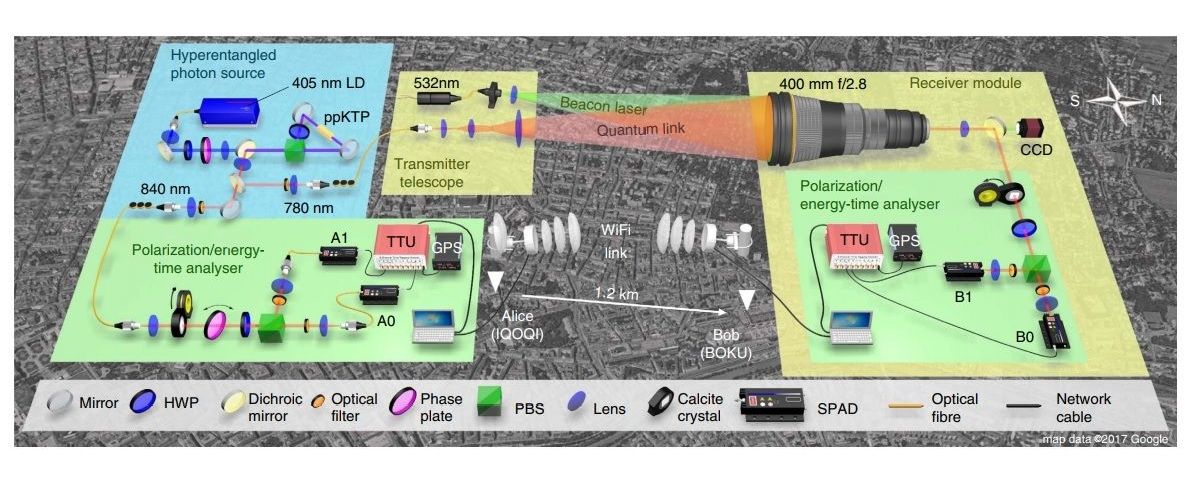
In a feat that demonstrates the feasibility of using satellites to transmit uncrackable quantum messages, scientists have measured the quantum properties of photons sent to space and back again.

Physicists beamed the blips of light up to a satellite that reflected them back to Earth. Upon the photons’ return, the team, led by Paolo Villoresi of the University of Padua in Italy, observed a property known as quantum interference. That confirmed that the particles’ quantum traits remained intact over the 5,000-kilometer space voyage. The team reports the advance in a paper to be published in Physical Review Letters.

The technique could one day lead to quantum cryptography by satellite, allowing users to send snoop-proof encryption keys for encoding secret information. It’s important for the sake of secure communication and advancement of physics,” says Villoresi. But that’s not the only reason he took on the challenge. “I can more honestly say that it’s cool.”

ISRO To Launch A Record 22 Satellites On One Rocket This Month

When space launches become more about breaking Guinesses World Records — the streamlining of satellite launches; a rocket launches 22 mini-satellites at once.


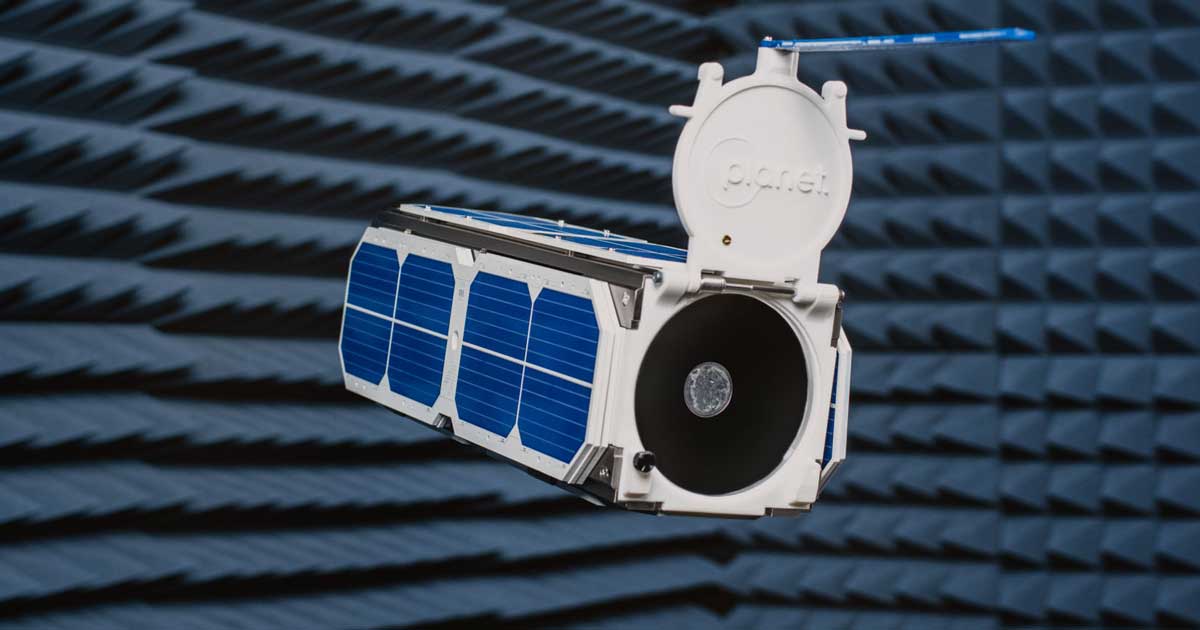
The Indian Space Research Organization (ISRO) is set to launch a record 22 satellites on one rocket in June. It will be the biggest launch for the prestigious space organization, till date.

The space agency plans to use the workhorse Polar Satellite Launch Vehicle, PSLV-C34 for the job. The launch is planned for June end.

Among the 22 satellites planned for launch, three will indigenous and the rest commercial satellites. An Earth Observation satellite weighing 710kg will be the primary payload, along with two nano-satellites developed by Indian students.

These Tiny Spacecraft Could Lead Us to Alpha Centauri

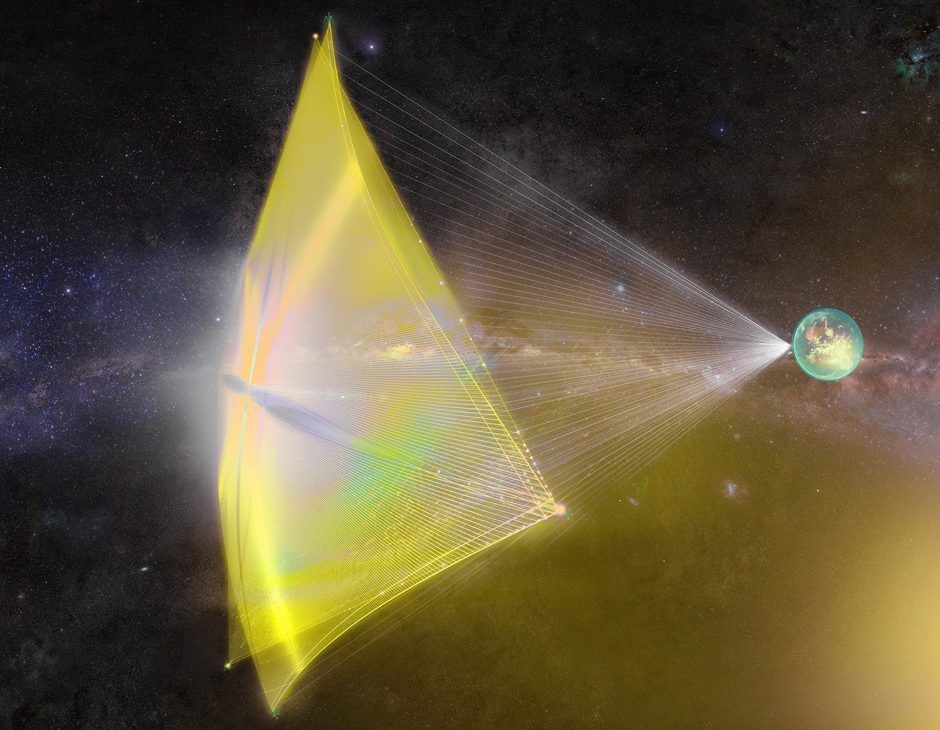
Earlier this spring, Russian billionaire Yuri Milner casually announced his intention to develop spacecraft that can travel at up to 20 percent the speed of light and reach Alpha Centauri within twenty years. From the outset, it was clear that no humans would be making the warp jump—the mission will involve extremely lightweight robotic spacecraft. A new fleet of tiny satellites hints at what those future interstellar voyagers will look like and be capable of.

Meet Sprites: sticky note-sized devices that sure look like the result of the Pentagon’s long-anticipated floppy disk purge, but are in fact state-of-the-art spacecraft complete with solar cells, a radio transceiver, and a tiny computer. Later this summer, a Cornell-led project called Kicksat-2 will launch 100 of these puppies to the International Space Station. There, the satellites will spend a few days field-testing their navigational hardware and communications systems before burning up in orbit.

The project’s lead engineers, Zachary Manchester and Mason Peck, are on the advisory committee for Breakthrough Starshot, an ambitious effort to reach our nearest neighboring star system within a generation. (In fact, the potato chip-sized computer Milner held up during a highly publicized press conference in April was Manchester’s own design.) Sprites, and the “chipsat” technology they’re based on, are a step toward that goal of interstellar travel. More generally, they’re an indication of the future of space exploration.

/* */