This is the first algorithm that can design robots that actually work in the real world.
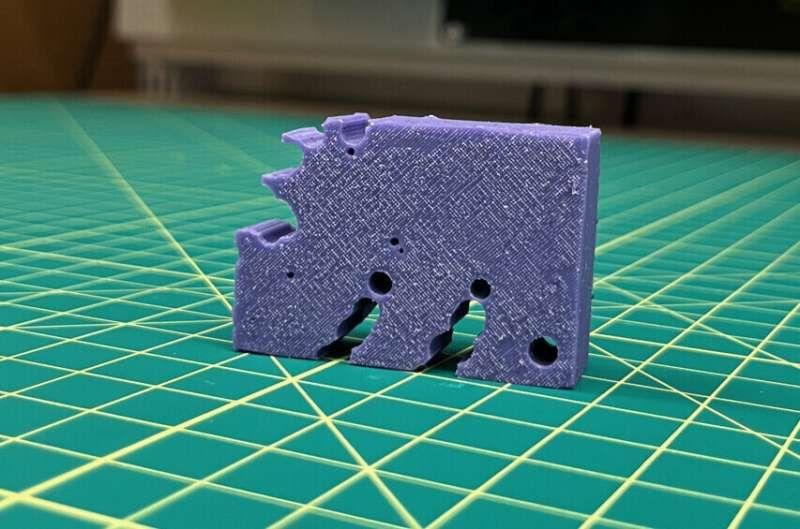
In recent years, roboticists have developed increasingly sophisticated robotic systems designed to mimic both the structure and function of the human body. This work includes robotic hands, grippers that allow robots to grasp objects and manipulate them like humans do while completing everyday tasks.
Ideally, robotic hands should be able to perform highly precise movements, while also being relatively affordable and easy to fabricate. However, most bio-inspired skeleton structures for robotic hands introduced so far have highly intricate designs containing numerous advanced components, which makes them difficult to fabricate on a large scale.
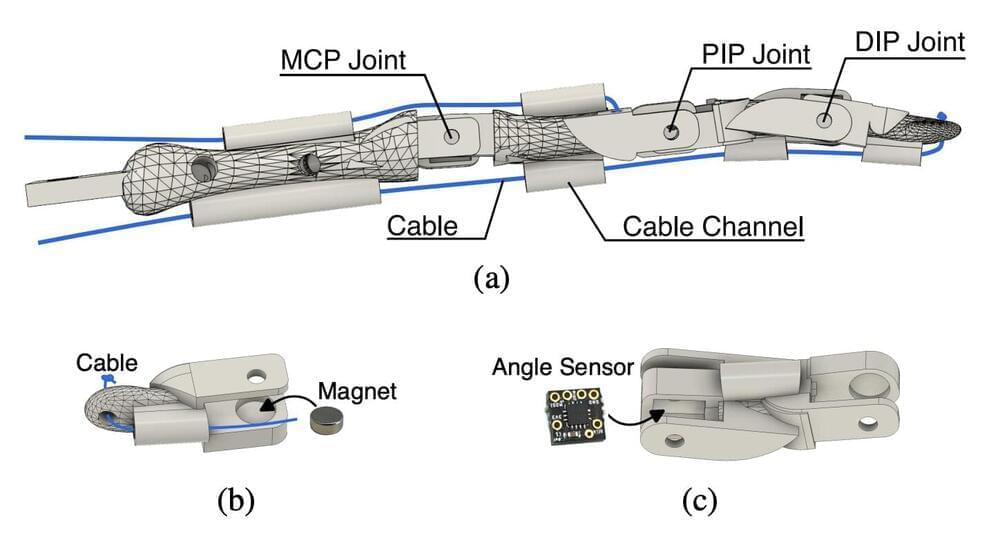
Researchers at Massachusetts Institute of Technology (MIT) recently created a new highly precise robotic hand that could be easier to upscale, as its components can be crafted using commonly employed techniques, such as 3D printing and laser cutting. Their robotic hand, introduced in a paper published in the journal 2023 IEEE International Conference on Soft Robotics (RoboSoft), is based on a so-called modular structure, meaning that it comprises multiple building blocks that can be rearranged to achieve different movements.


After a researcher discovered that an Android TV streaming box, known as T95, was infected with preloaded malware, researchers at Human Security released information regarding the extent of infected devices and how malicious schemes are connected to these corrupted products.
Daniel Milisic, a systems security consultant, created a script alongside instructions to help other users mitigate the threat after first coming across the issue. Now, Human Security’s threat intelligence and research team has dubbed the operation “Bandbox,” which it characterizes as a complex, interconnected series of ad fraud schemes on a massive scale.
Human Security describes the operation as “a global network of consumer products with firmware backdoors installed and sold through a normal hardware supply chain.” Once activated, the malware on the devices connect to a command-and-control (C2) server for further instructions. In tandem, a botnet known as Peachpit is integrated with Badbox, and engages in ad fraud, residential proxy services, fake email/messaging accounts, and unauthorized remote code installation.
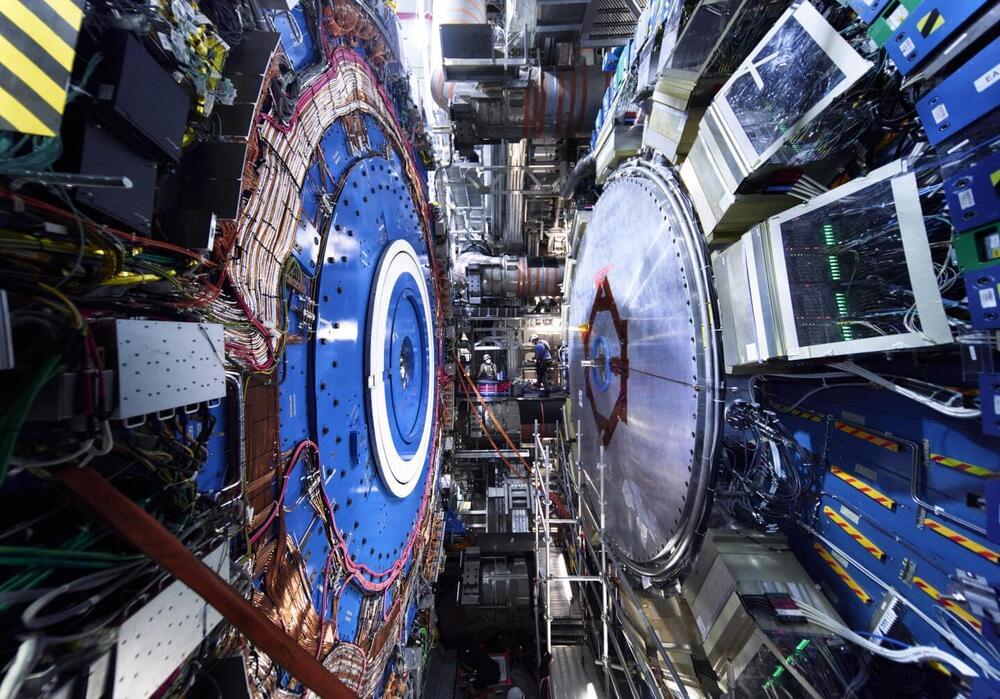
If new particles are out there, the Large Hadron Collider (LHC) is the ideal place to search for them. The theory of supersymmetry suggests that a whole new family of partner particles exists for each of the known fundamental particles. While this might seem extravagant, these partner particles could address various shortcomings in current scientific knowledge, such as the source of the mysterious dark matter in the universe, the “unnaturally” small mass of the Higgs boson, the anomalous way that the muon spins and even the relationship between the various forces of nature. But if these supersymmetric particles exist, where might they be hiding?
This is what physicists at the LHC have been trying to find out, and in a recent study of proton–proton collision data from Run 2 of the LHC (2015–2018), the ATLAS collaboration provides the most comprehensive overview yet of its searches for some of the most elusive types of supersymmetric particles—those that would only rarely be produced through the “weak” nuclear force or the electromagnetic force. The lightest of these weakly interacting supersymmetric particles could be the source of dark matter.
The increased collision energy and the higher collision rate provided by Run 2, as well as new search algorithms and machine-learning techniques, have allowed for deeper exploration into this difficult-to-reach territory of supersymmetry.


Tech companies are investing billions in developing and deploying generative AI. That money needs to be recouped. Recent reports and analysis show that it’s not easy.
According to an anonymous source from the Wall Street Journal, Microsoft lost more than $20 per user per month on generative AI code Github Copilot in the first few months of the year. Some users reportedly cost as much as $80 per month. Microsoft charges $10 per user per month.
It loses money because the AI model that generates the code is expensive to run. Github Copilot is popular with developers and currently has about 1.5 million users who constantly trigger the model to write more code.