Former Google CEO Eric Schmidt weighs in on where AI is headed, when to “pull the plug” and how to cope with China.
Category: robotics/AI – Page 861

Meta plans to use 10 times more compute to train its next-generation Llama 4 AI model
Meta CEO Mark Zuckerberg believes open-source language models like Llama are the future of AI. The company is investing heavily in computing power for its next-generation model and expects AI chatbots to become ubiquitous on websites soon.
Ad.
“I think we’ll look back on Llama 3.1 as a turning point in the industry, where open-source AI started to become the industry standard, like Linux,” Zuckerberg said during the latest earnings call.
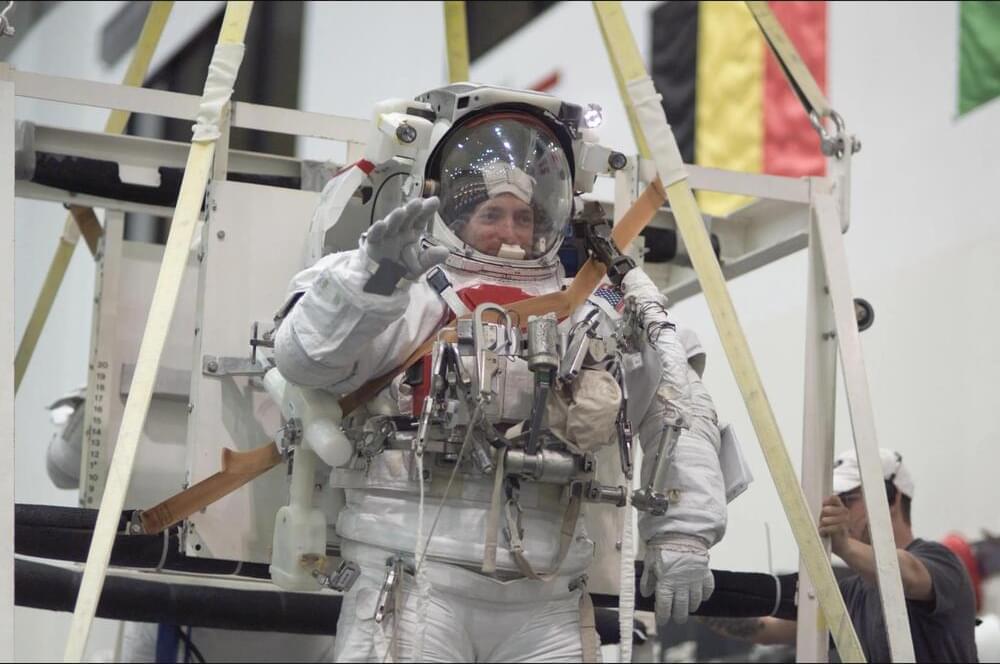
Mark Kelly Could Halt Plans To Crash The International Space Station
If Mark Kelly, the Space Shuttle pilot who played a pivotal role in assembling the International Space Station, is catapulted into the White House as Vice President, he could quickly help reverse the death sentence that NASA’s current leaders have placed on the ISS.
Now a widely popular U.S. senator and potential running mate of Kamala Harris, Kelly spent the first decade of the new millennium ferrying European and Japanese modules to the Station — and guiding gigantic robotic builders to put the ISS together — all while the outpost was circling the planet at 17,000 miles per hour.
The space hero — recently inducted into the pantheon of the greatest American astronauts — is likely part of a contingent of ISS spacefarers who back saving the orbiting icon from NASA’s death decree by boosting it into a higher orbit and transforming it into an eternal monument to human ingenuity, says Rick Tumlinson, a torchbearer in the “Save Our Station,” or SOS movement.
David Spivak: Pioneering Math for Understanding Reality | AGI-24 Keynote Preview
Mathematics application to a new understanding thd world and life and information.
Dr. David Spivak introduces himself as a keynote speaker at the 17th Annual Artificial General Intelligence Conference in Seattle and shares his lifelong passion for math. He discusses his journey from feeling insecure about the world as a child, to grounding his understanding in mathematics.
Dr. Spivak is the Secretary of the Board at the Topos Institute and on the Topos staff as Senior Scientist and Institute Fellow, following an appointment as founding Chief Scientist. Since his PhD from UC Berkeley in 2007, he has worked to bring category-theoretic ideas into science, technology, and society, through novel mathematical research and collaboration with scientists from disciplines including Materials Science, Chemistry, Robotics, Aeronautics, and Computing. His mission at Topos is to help develop the ability for people, organizations, and societies to see more clearly—and hence to serve—the systems that sustain them.
For more information and registration, please visit the Conference website: https://agi-conf.org/2024/
#AGI #AGI24 #AI #Mathematics.

EU AI Act Comes Into Effect — Here’s What To Expect
Soon we will need AI to resolve AI complience acts…is it so hard to understand that to follow complexities of AI/ LLMs you will need AI/LLM to catch the small letters of laws.
Noncompliance with the AI Act can result in severe penalties, such as fines of up to 35 million euros or 7% of the company’s total worldwide annual turnover, depending on which figure is bigger.
Former GTA dev says ‘it’s time for a revolution’ where ‘animation is more AI-driven and physics-driven’ than done by hand
2029–2030
“If anyone is going to make that step it’s going to be Rockstar,” said Obbe Vermeij, former technical director at Rockstar North.

Meta’s future is AI, AI, and more AI
On Meta’s Wednesday earnings call, CFO Susan Li reiterated to investors that financial returns from its recent AI investments will “come in over a longer period of time.” Zuckerberg was direct about why Meta is spending billions on Nvidia hardware and the other infrastructure ahead of these future returns: “It’s hard to predict how this will trend multiple generations into the future, but at this point, I’d rather risk building capacity before it is needed rather than too late.”
He again telegraphed that the Meta AI assistant is on track to be the most used in the world before the end of the year. While he touted that generative AI features “are things that I think will increase engagement in our products,” he said the real revenue will come from business use cases, like AI creating ads from scratch and letting businesses operate their own AI agents in WhatsApp for customer service.

Augmenting Human Capabilities With Artificial Intelligence Agents
By Chuck Brooks
AI agents represent a great leap forward in technology, offering exponential benefits to society. From enhancing scientific research, healthcare, transportation, education, and cybersecurity. There are a lot of different applications that AI agents could help enable in our new digital world, including, foremost, for humans.

Surprising Outcome Of Carl Sagan’s Famous 1975 Prediction About AI Becoming Your Attentive Psychotherapist
I will begin with the first point and make my way gradually to the tenth point.
I’ve already mentioned to you that the AI of the 1970s was toy-like in comparison to the more involved and expansive AI of today. Modern-day generative AI, for example, makes use of vast amounts of data as scanned across the Internet to pattern-match the nature of human writing. This requires a massive amount of computing resources (something far beyond the depth readily employable in the 1970s). The large-scale modeling or pattern matching is what makes contemporary generative AI seem highly fluent.
A common phrase is to say that generative AI is mimicking or parroting human writing.