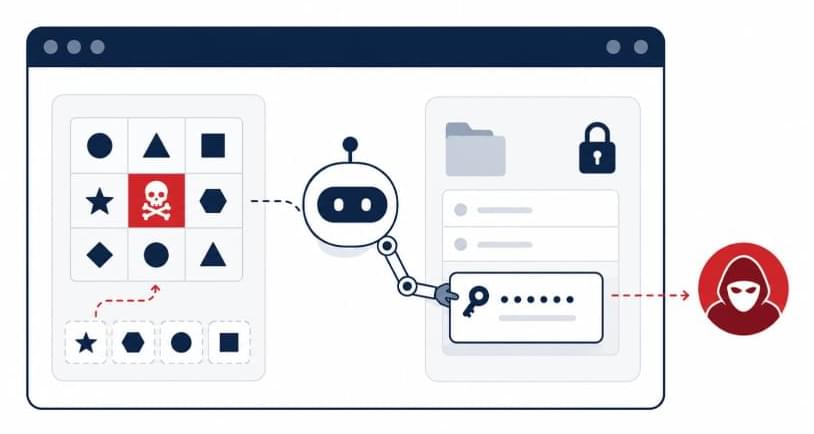
LayerX says BioShocking used indirect prompt injection to trick six AI browsers into copying credentials from signed-in accounts.
The four vulnerabilities are part of nearly 30 vulnerabilities that have been patched in WebKit, an open-source web browser engine developed by Apple. Others include a use-after-free issue in WebKit Canvas (CVE-2026–43720) and a vulnerability that could be exploited by a malicious website to process restricted web content outside the sandbox (CVE-2026–43725).
Apple has also remediated three bugs that could be exploited by a malicious app to leak sensitive kernel state (CVE-2026–43722), cause unexpected system termination or write kernel memory (CVE-2026–43724), or corrupt kernel memory (CVE-2026–39868). Security researcher Hyunwoo Kim, who discovered Dirty Frag, has been credited with discovering and reporting CVE-2026–43724 and CVE-2026–43722.
The updates are available for iOS 26.5.2, iPadOS 26.5.2, macOS Tahoe 26.5.2, and Safari 26.5.2. None of the patched vulnerabilities has been disclosed as actively exploited in the wild.
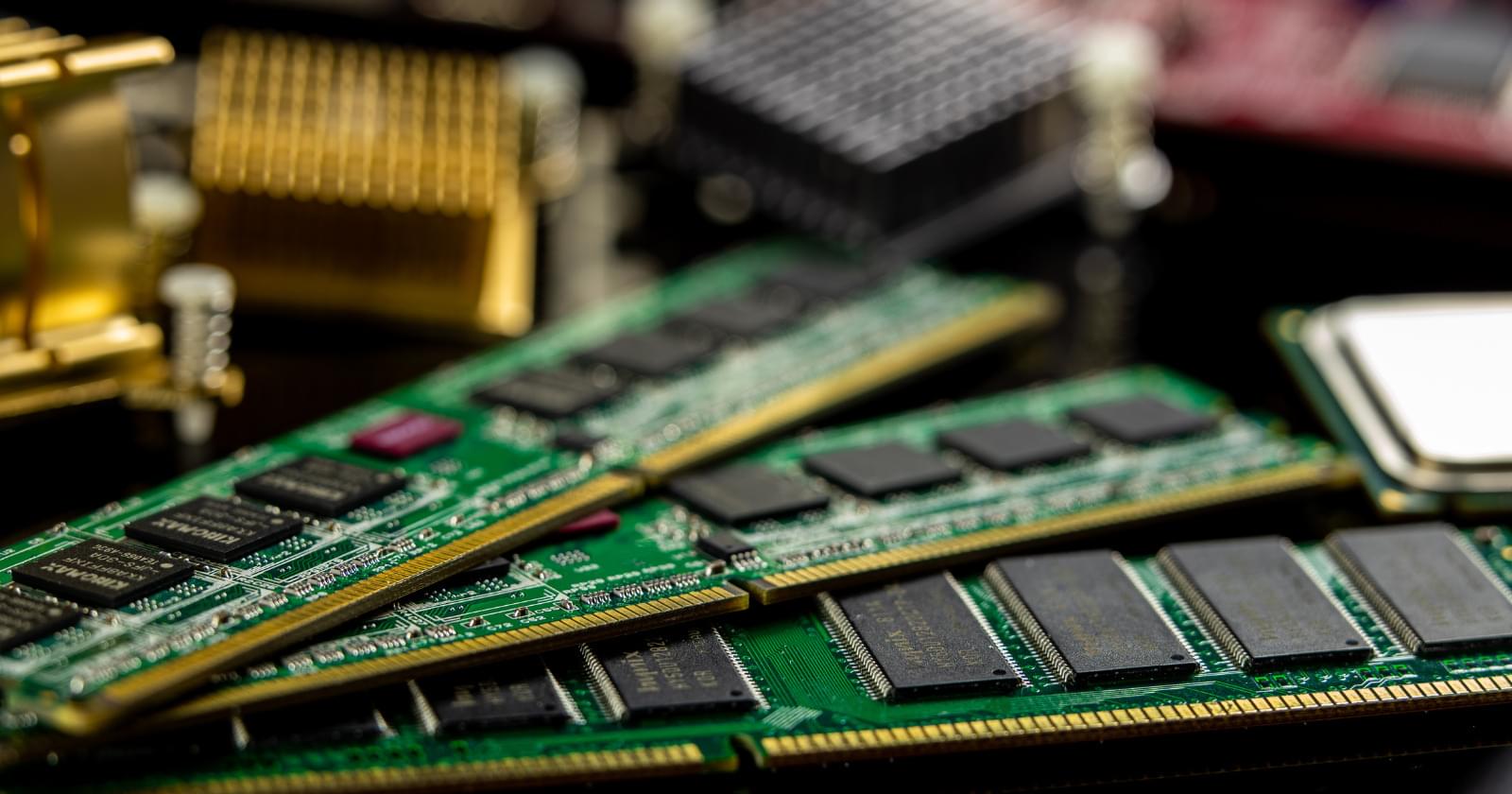
Open any device built in the past five years, look inside its memory subsystem, and the chips you find were almost certainly fabricated in one of three South Korean industrial cities — Hwaseong, Pyeongtaek, or Icheon — by one of two companies whose combined market capitalisation now exceeds $700 billion. The historical improbability of this situation is not a matter of degree but of category. Korea in 1953 did not have a semiconductor industry, a precision manufacturing tradition, an advanced engineering workforce, or the kind of capital markets that could finance industrial development. It had a per-capita income lower than essentially every other country whose subsequent economic trajectory has been studied by development economists, a primarily agricultural economy substantially destroyed by three years of active warfare, and a small population (~20 million) whose adult literacy rate stood at approximately 20 percent. The proposition that, 72 years later, two companies headquartered in the same country would manufacture the memory chips inside Apple’s iPhones, Google’s Pixel devices, Microsoft’s data centres, Nvidia’s AI accelerators, Tesla’s autonomous-driving computers, and essentially every other major piece of digital hardware sold globally — would have been considered, by any reasonable observer in 1953, structurally impossible.
This website uses a security service to protect against malicious bots. This page is displayed while the website verifies you are not a bot.
To harness biological systems (plants and microbes) for next-generation energy production and advanced materials, researchers are looking to beneficial plant-microbe interactions. Because these are complex systems, it has proven difficult to reproducibly control exactly which microbes are present. And, subtle differences in materials, methods, or even the hands of the researchers themselves can lead to inconsistent results. This makes it difficult to replicate previous work, significantly slowing the leap from scientific discovery to practical application.
Researchers at Lawrence Berkeley National Laboratory (Berkeley Lab) are overcoming this bottleneck by addressing a multi-layered challenge: building reliable physical hardware, engineering accurate visual sensors, and developing predictive algorithms. Their solution, EcoBOT, stands out from typical plant phenotyping facilities by integrating these distinct components into a reliably automated workflow under strictly sterile conditions.
EcoBOT takes specialized growth chambers, called EcoFABs, and integrates them with machine-learning tools that autonomously guide the discovery cycle. This system uses advanced imaging to regularly scan the entire plant—from the tips of its leaves to the bottom of its roots. By using Gaussian Process models and AI analysis tools, it can quickly analyze and model this visual data to calculate the most informative next steps. This directs the automated hardware to determine exactly how plants adapt to environmental stressors, establishing the crucial microbe-free baseline needed to eventually study plant-microbe interactions and engineer better bioenergy crops.
The Borg were never terrifying because they had advanced technology. They were terrifying because they erased individuality itself.
As brain-computer interfaces move from science fiction into reality, humanity may be approaching a question once reserved for Star Trek: What happens when technology no longer just helps us… but changes what it means to be human?
In this video, we explore the unsettling possibility that artificial intelligence, neural implants, and human enhancement technologies could eventually create something disturbingly similar to the Borg Collective.
🔹 Brain-computer interfaces and neural implants.
🔹 Human enhancement and transhumanism.
🔹 AI integration with the human mind.
🔹 Social and economic pressure to augment.
🔹 The loss of individuality and autonomy.
🔹 Whether technological evolution can be resisted.
If humanity could become smarter, faster, stronger, and more connected than ever before… would we resist? Or would we choose to become something else?
Resistance… may not be futile, but history suggests that enhancement rarely remains optional for long.
But there is a vast difference between launching satellites and operating an industrial-scale computing infrastructure in orbit. Space is unforgiving. Radiation damages electronics. The electronics generate enormous amounts of heat, and getting rid of that heat is surprisingly difficult in space. Repairs are extraordinarily expensive, and every pound launched into orbit still carries a significant cost.
We are engineering professors who study data-center design and space systems engineering. Building a space-based data center will involve considerations from both sides.
First off, consider what goes into an Earth-based data center, like those that you’ve probably begun to see pop up everywhere. These facilities power cloud computing, video streaming, online banking, scientific computing, and increasingly, artificial intelligence. But a data center is much more than a room full of servers.