Toggle light / dark theme

How an organelle evolves in symbiosis with a cell: Intermediate stage sheds light on the assimilation process

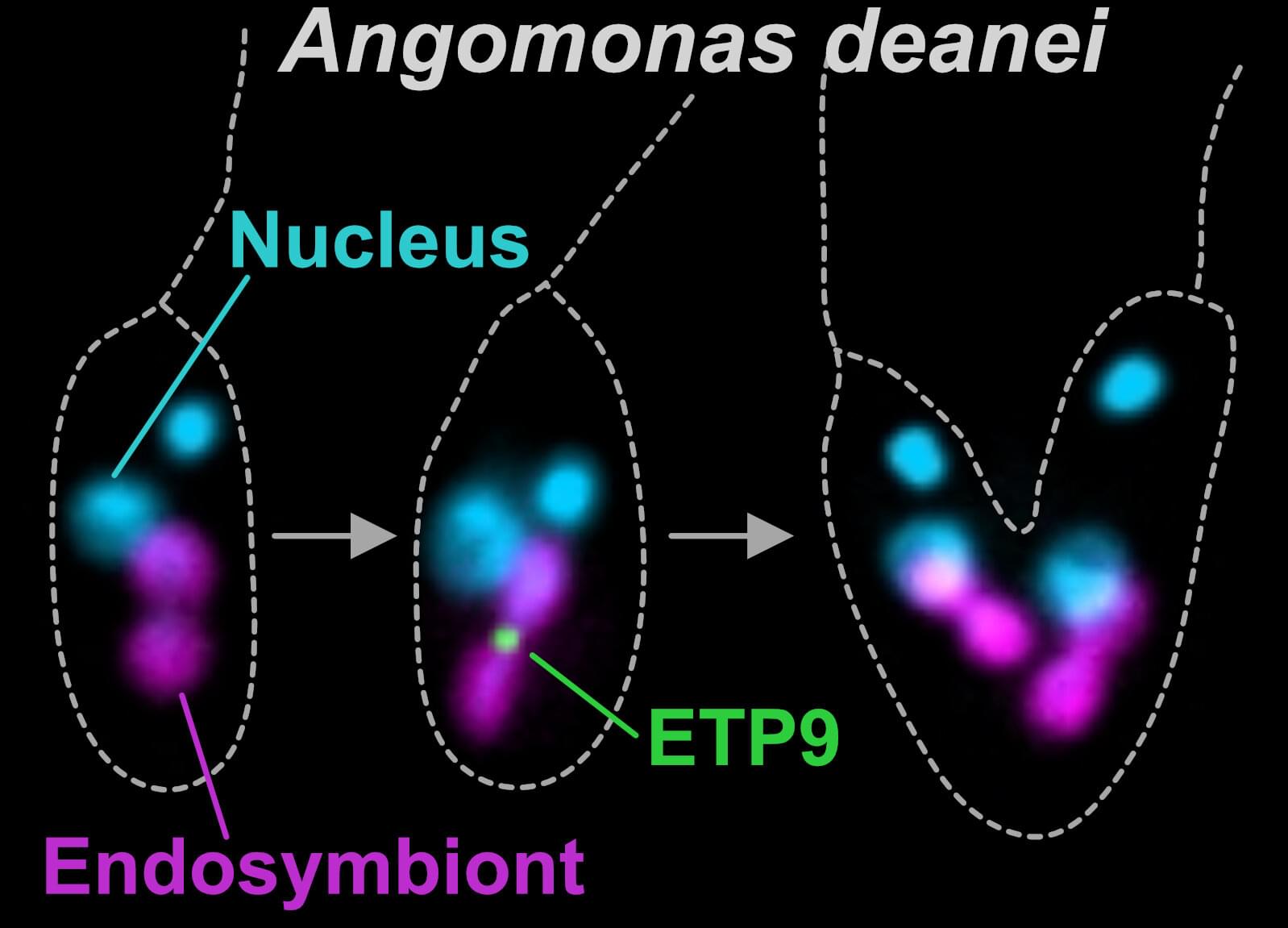
Organelles in cells were originally often independent cells, which were incorporated by host cells and lost their independence in the course of evolution. A team of biologists headed by Professor Dr. Eva Nowack at Heinrich Heine University Düsseldorf (HHU) are examining the way in which this assimilation process occurs and how quickly. They now describe their findings about an intermediate stage in this process in Science Advances.

Eukaryotic cells contain a large number of functional sub-units, so-called organelles. They perform important functions within the cell. Some organelles were independent, at some point in the past. They were then taken up by a cell and have evolved over time in symbiosis with the .

These “endosymbionts” lost their ability to function autonomously in the process. One well-known example of this type of is the mitochondrion, which evolved from a bacterium.
AI-driven software is 96% accurate at diagnosing Parkinson’s

Existing research indicates that the accuracy of a Parkinson’s disease diagnosis hovers between 55% and 78% in the first five years of assessment. That’s partly because Parkinson’s sibling movement disorders share similarities, sometimes making a definitive diagnosis initially difficult.

Although Parkinson’s disease is a well-recognized illness, the term can refer to a variety of conditions, ranging from idiopathic Parkinson’s, the most common type, to other like multiple system atrophy, a Parkinsonian variant; and progressive supranuclear palsy. Each shares motor and nonmotor features, like changes in gait, but possesses a distinct pathology and prognosis.

Roughly one in four patients, or even one in two patients, is misdiagnosed.

AI-driven MRI analysis improves accuracy in distinguishing Parkinsonian disorders

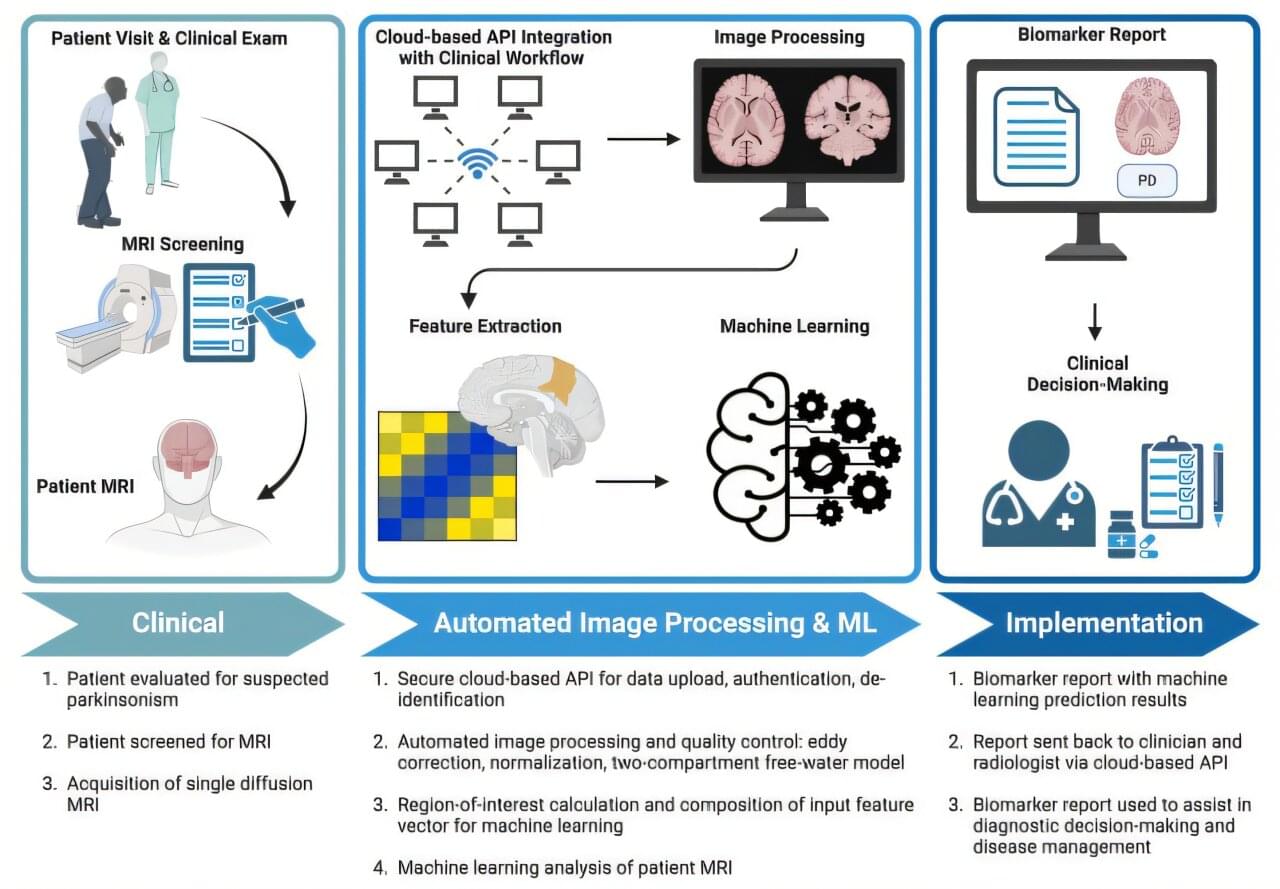
University of Florida researchers have led a multicenter study demonstrating that Automated Imaging Differentiation for Parkinsonism (AIDP), a machine-learning method using magnetic resonance imaging (MRI), accurately distinguishes Parkinson’s disease (PD) from atypical parkinsonian disorders. Findings suggest this approach could significantly improve diagnostic precision and clinical care.

Liquid Cooling, Meeting The Demands Of AI Data Centers

Adopting liquid cooling technology could significantly reduce electricity costs across the data center.

Many Porsche “purists” reflect forlornly upon the 1997, 5th generation, 996 version of the iconic 911 sports car. It was the first year of the water-cooled engine versions of the 911, which had previously been based on air-cooled engines since their entry into the market in 1964. The 911 was also the successor to the popular air-cooled 356. For over three decades, Porsche’s flagship 911 was built around an air-cooled engine. The two main reasons often provided for the shift away from air-cooled to water-cooled engines were 1) environmental (emission standards) and 2) performance (in part cylinder head cooling). The writing was on the wall: If Porsche was going to remain competitive in the sports car market and racing world, the move to water-cooled engines was unavoidable.

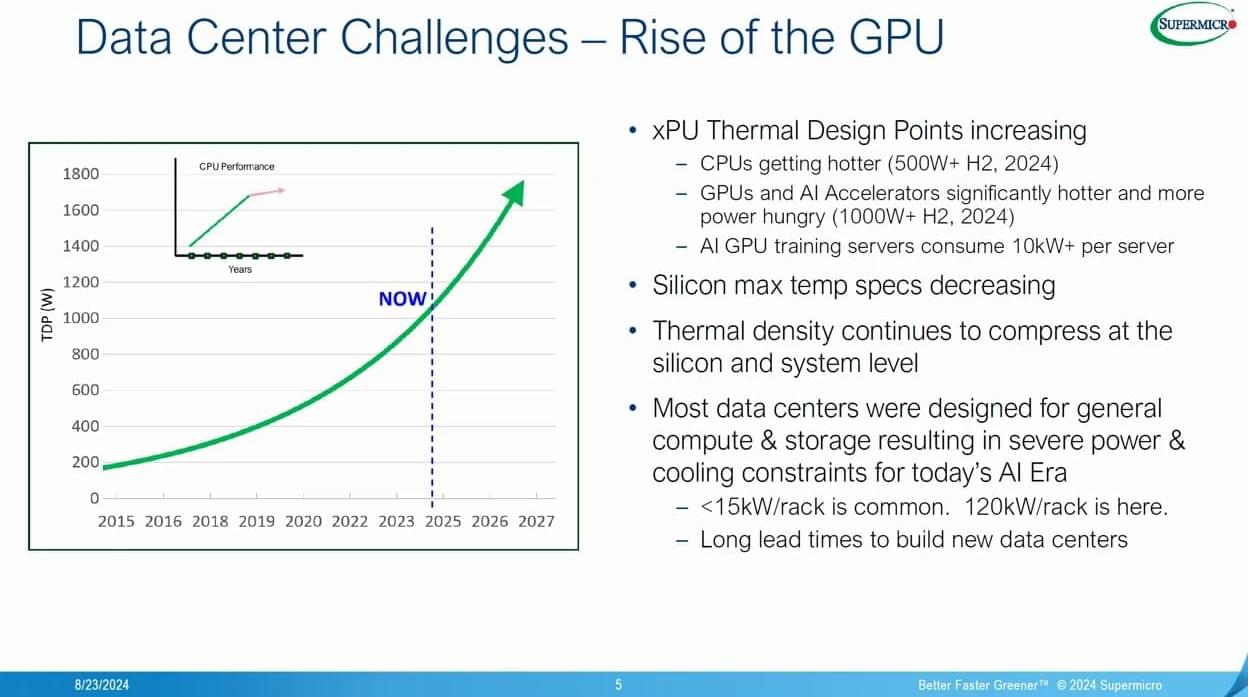
Fast forward to current data centers trying to meet the demands for AI computing. For similar reasons, we’re seeing a shift towards liquid cooling. Machines relying on something other than air for cooling date back at least to the Cray-1 supercomputer which used a freon-based system and the Cray-2 which used Fluorinert, a non-conductive liquid in which boards were immersed. The Cray-1 was rated at about 115kW and the Cray-2 at 195kW, both a far cry from the 10’s of MWs used by today’s most powerful supercomputers. Another distinguishing feature here is that these are “supercomputers” and not just data center servers. Data centers have largely run on air-cooled processors, but with the incredible demand for computing created by the explosive increase in AI applications, data centers are being called on to provide supercomputing-like capabilities.