Toggle light / dark theme

The Man Behind DeepSeek (Liang Wenfeng)

Discover China’s Best – Best Prices on Trip.com! ✈️ : https://bit.ly/3DBipQe.
Experience China’s Bullet 🚅 : https://www.trip.com/t/OkTg4FPMnZ1

Want to sponsor the next East Money video? Get in touch:: [email protected].

Discover how the Chinese startup DeepSeek is revolutionizing AI with its groundbreaking models! In this video, we dive into the journey of Liang Wenfeng, the innovative mind behind DeepSeek, and explore how their latest model, DeepSeek-V3, outperforms industry giants using surprisingly basic hardware. Learn about their unique approach to talent acquisition, the significance of open-source development, and how they are democratizing access to advanced AI technology. Join us as we analyze the impact of DeepSeek on the global AI landscape and what it means for the future of artificial intelligence. Don’t forget to like, comment, and subscribe for more insights on AI breakthroughs!

#Eastmoney #Documentry #deepseek
Aerial robot can navigate unknown environments safely at high speeds

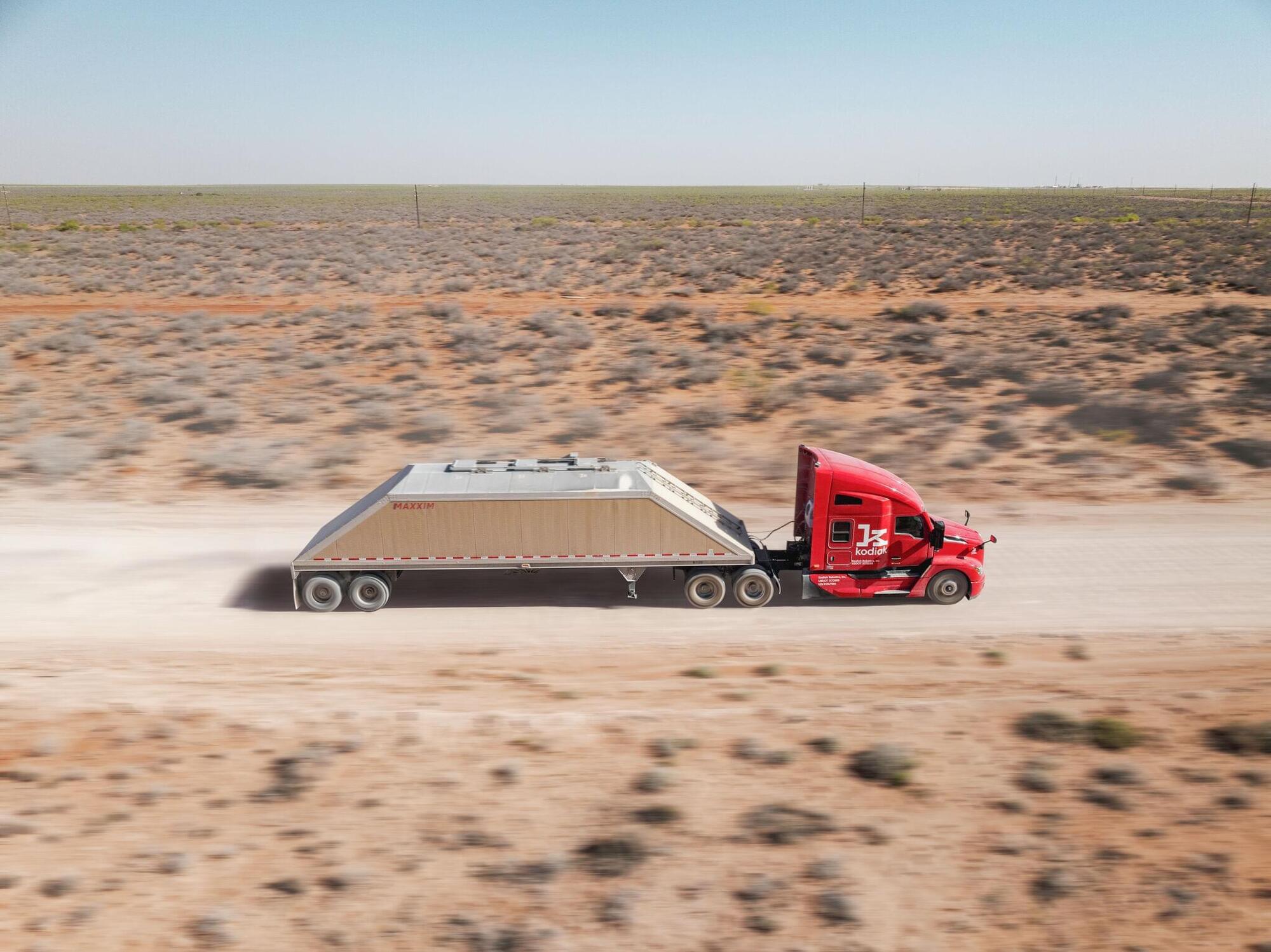
A team of engineers and roboticists at the University of Hong Kong have designed, built and tested an aerial robot capable of navigating unknown environments safely at high speeds while avoiding obstacles. In their paper published in the journal Science Robotics, the group describes how they overcame problems encountered by others attempting to build similar robots and how well their quadcopter robot, called SUPER, performed during testing.

Roboticists have been trying for several years to build a flying robot that could perform like birds—moving safely at high speeds while adjusting to unknown conditions as they arise, such as encountering gusts of wind, , tree limbs or other objects appearing suddenly in their path.

Most such flying robots have relied on various types of sensors and cameras that had to process massive amounts of video data, slowing the speeds at which they could operate. In this new effort, the researchers in Hong Kong say they have finally overcome these challenges.

From desktop to benchtop with automated computational workflows for computer-aided design in asymmetric catalysis

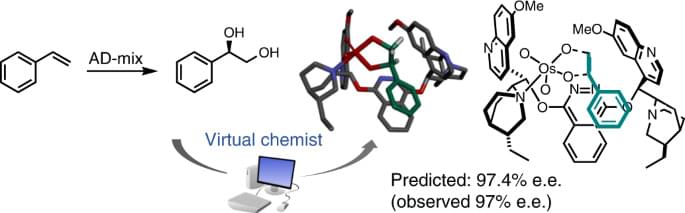
Computational chemistry has remained largely inaccessible to the experimental chemistry community. Here we report the VIRTUAL CHEMIST, a software suite free for academic use, that enables organic chemists without expertise in computational chemistry to perform virtual screening experiments for asymmetric catalyst discovery and design.

OpenAI chief says it needs new open-source strategy

OpenAI chief Sam Altman on Friday said his high-profile artificial intelligence company is “on the wrong side of history” when it comes to being open about how its technology works.

Altman’s comments came during an Ask Me Anything session on Reddit where he fielded questions including whether he would consider publishing OpenAI research.

Altman replied he was in favor of the idea and that it is a topic of discussion inside San Francisco-based OpenAI.

Robots In Space: Tianwen-1

Dangerous solar blast detected at Mars by Chinese Orbiter in new episode of Robots In Space!🇨🇳🟠.


Join aerospace engineer Mike DiVerde as he breaks down groundbreaking research on Mars radiation from multiple space missions. This comprehensive analysis combines data from Tianwen-1, MAVEN, ExoMars, and the Curiosity rover to understand the dangerous Solar Energetic Particles affecting Mars. Learn why radiation protection is crucial for future Mars colonization and astronaut safety and discover how space weather impacts potential Mars habitats. DiVerde explains complex space science concepts in an accessible way, drawing from recent research that highlights the challenges of keeping humans safe on Mars. Essential viewing for anyone interested in Mars exploration and the future of human space missions.

Anthropic CEO Reveals New Details About DeepSeek R1

Try Recraft, a premium image generation and editing tool for creators and teams, and get $12 off with my promo code BERMAN12: https://go.recraft.ai/matthew_berman.

Join My Newsletter for Regular AI Updates 👇🏼
https://forwardfuture.ai.

My Links 🔗
👉🏻 Subscribe: / @matthew_berman.
👉🏻 Twitter: / matthewberman.
👉🏻 Discord: / discord.
👉🏻 Patreon: / matthewberman.
👉🏻 Instagram: / matthewberman_ai.
👉🏻 Threads: https://www.threads.net/@matthewberma… LinkedIn: / forward-future-ai Media/Sponsorship Inquiries ✅ https://bit.ly/44TC45V Links: https://twitter.com/DarioAmodei/status/1884https://darioamodei.com/on-deepseek-a… Disclosure: I am a small investor in Groq.
👉🏻 LinkedIn: / forward-future-ai.

Media/Sponsorship Inquiries ✅
https://bit.ly/44TC45V

Links:
https://twitter.com/DarioAmodei/status/1884
https://darioamodei.com/on-deepseek-a

Disclosure: I am a small investor in Groq.

Prosthetic limb gains more natural control through hand–brain connection

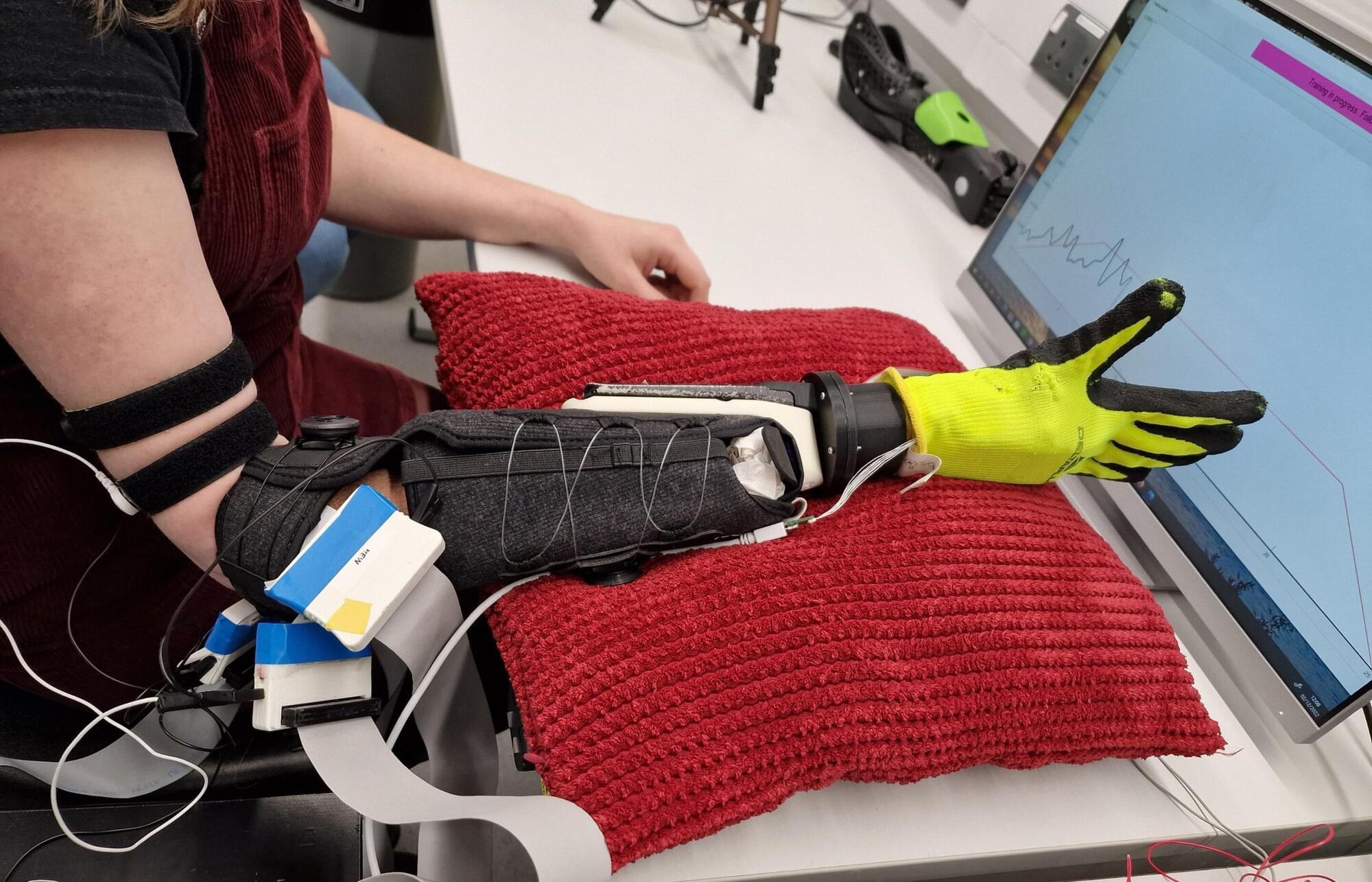
Researchers are paving the way for the design of bionic limbs that feel natural to users. They demonstrate the connection between hand movement patterns and motoneuron control patterns. The study, published in Science Robotics, also reports the application of these findings to a soft prosthetic hand, which was successfully tested by individuals with physical impairments.

The research study sees the collaboration of two research teams, one at Istituto Italiano di Tecnologia (Italian Institute of Technology) in Genova, Italy, led by Antonio Bicchi, and Imperial College London, UK led by Dario Farina. It is the outcome of the project “Natural BionicS” whose goal is to move beyond the model of current prosthetic limbs, which are often abandoned by patients because they do not respond in a “natural” way to their movement and control needs.

For the central nervous system to recognize the bionic limb as “natural,” it is essential for the prosthesis to interact with the environment in the same way a real limb would. For this reason, researchers believe that the prostheses should be designed based on the theory of sensorimotor synergies and soft robotics technologies, first proposed by Antonio Bicchi’s group at IIT, such as the Soft-Hand robotic hand.

New soft prosthetic hand offers natural bionic interfacing

Recent technological advances have opened new possibilities for the development of assistive and medical tools, including prosthetic limbs. While these limbs used to be hard objects with the same shape as limbs, prosthetics are now softer and look more realistic, with some also integrating robotic components that considerably broaden their functions.

Despite these developments, most commercially available robotic limbs cannot be easily and intuitively controlled by users. This significantly limits their effectiveness and the extent to which they can improve people’s quality of life.

Researchers at the Italian Institute of Technology (IIT) and Imperial College London recently developed a new soft prosthetic hand that could be easier for users to control. This system, presented in a Science Robotics paper, leverages a new control approach that integrates the coordination patterns of multiple fingers (i.e., postural synergies) with the decoding of the activity of motoneurons in people’s spinal column.

/* */