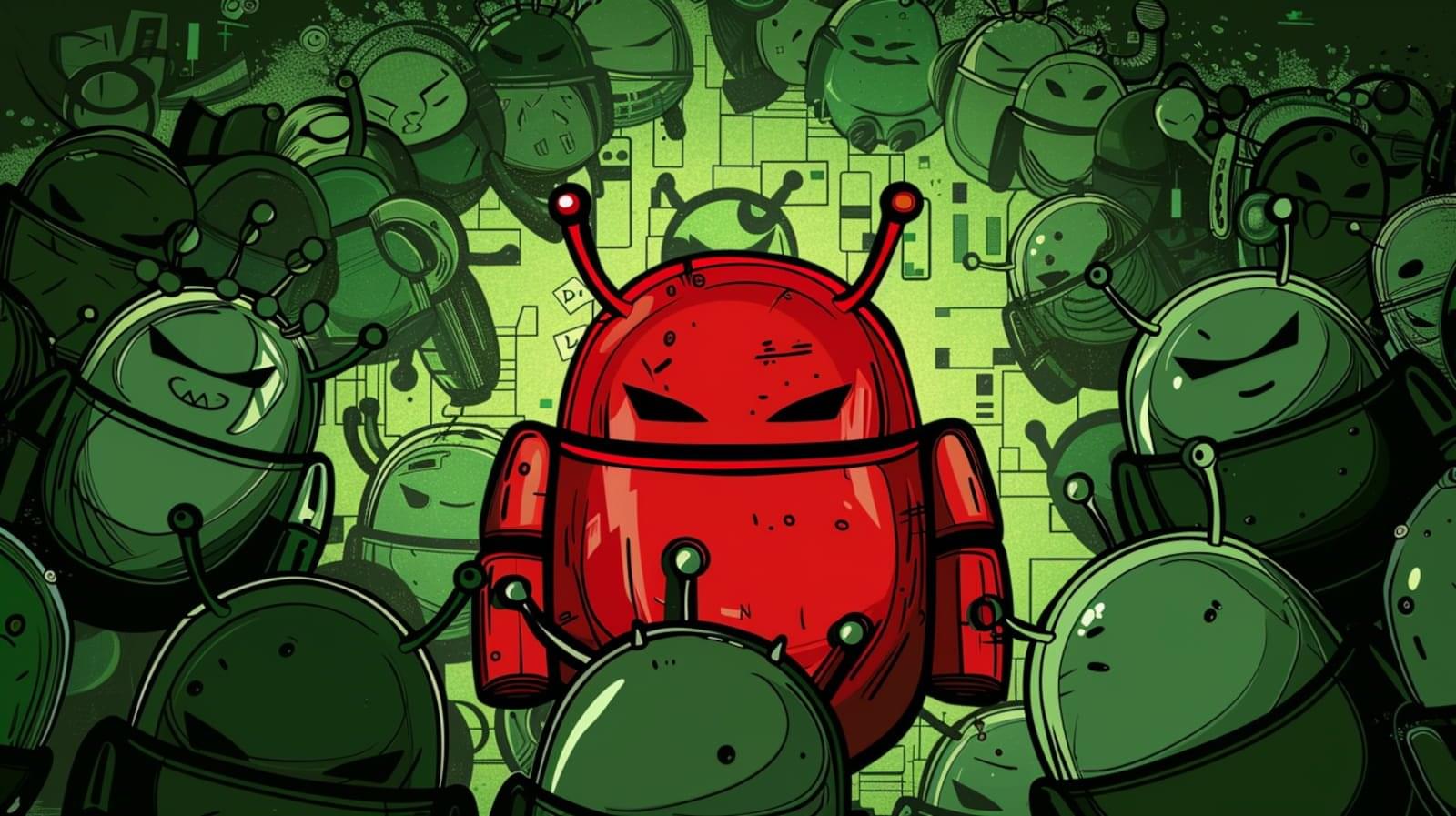
New Android malware campaigns use Microsoft’s cross-platform framework. NET MAUI while disguising as legitimate services to evade detection.
🌍 What if Earth was no longer ours? Imagine a reality where alien fungal lifeforms took over the planet, reshaping cities, nature, and even human civilization itself.
👁️ This AI-generated Sci-Fi short film is a mind-bending journey into an alternate Earth—a world overtaken by bioluminescent alien fungi, spore-based civilizations, and an eerie, surreal atmosphere.
🔬 Inspired by nature’s most resilient organisms, this vision of the future combines biology, science fiction, and cosmic horror into one epic cinematic experience!
🎧 Best experienced with headphones!
🔔 SUBSCRIBE for more AI-Generated Sci-Fi content every day!
💎 Support the channel on Patreon for exclusive content: / pintocreation.
💡 Created with:
🎨 MidJourney V6.1 (AI Art)
🎞 Hailuo AI (AI Animation)
🎶 Suno AI v4 (AI Music)
#alienworlds #mushroom #scifishortstory #aigenerated #futuristicworld #alienplanet #hailuoai #midjourneyart #scifishortfilm #aianimationvideo
The DeepSeek-V3-0324, named after its predecessor and the launch date, has “enhanced reasoning capabilities, optimised front-end web development and upgraded Chinese writing proficiency”, according to a notice on the company’s website.
The new version and DeepSeek V3 are both foundation models trained on vast data sets that can be applied in different use cases, including that of a chatbot. DeepSeek R1, the reasoning model, is based on DeepSeek V3.
The updated foundation model has made improvements in several benchmarks, especially the American Invitational Mathematics Examination (AIME), where it scored 59.4 compared with 39.6 for its predecessor, while achieving an increase of 10 points on LiveCodeBench to achieve 49.2, DeepSeek data showed.
In 1971, American electrical engineer and computer scientist Leon Chua reasoned that there must exist a fourth fundamental element of computing. There’s the resistor, capacitor, and inductor, but Chua believed there also existed a “memristor”— a portmanteau of “memory” and “resistor” that described a simple, non-volatile memory component that could store information even when turned off.
This sounds like a simple function, but it provides the technological foundation of neuromorphic (a.k.a. brain-like) computing—an effective memristor would essentially act as an artificial synapse in an AI neural net, as it can achieve both data storage and computation at the same time (which is something our brain does). Since researchers “discovered” memristors back in 2008, scientists and engineers around the world have been slowly improving their capabilities in the hopes of bringing about computers that are as efficient and powerful as human brains.
Agibot plans to produce 5,000 humanoid robots in 2025, aiming to match Tesla’s Optimus output and expand in industrial automation.
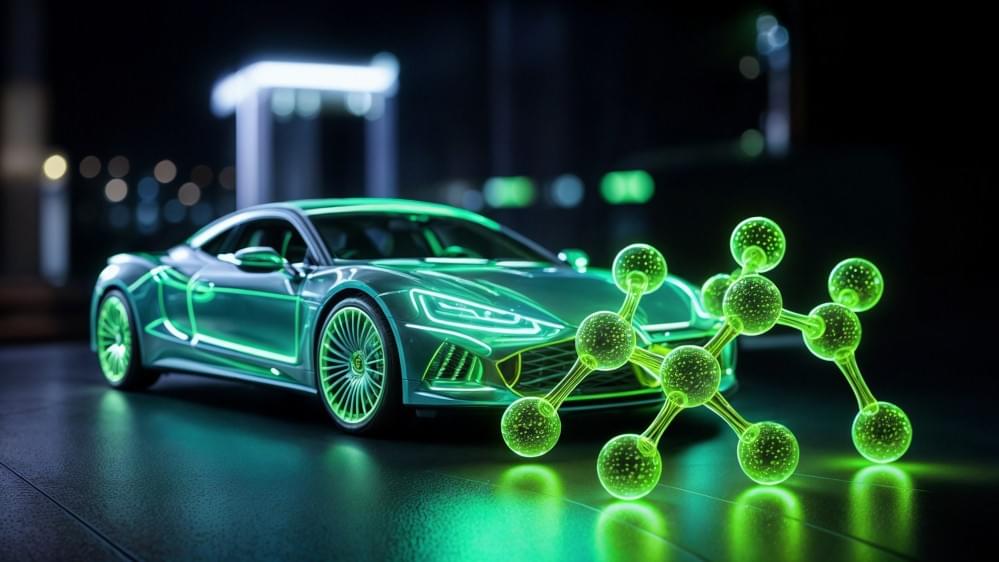
Electric vehicles (EVs) are transforming transportation, but challenges such as cost, longevity, and range remain barriers to widespread adoption. At the heart of these challenges lies battery technology—specifically, the electrolyte, a critical component that enables energy storage and delivery. The electrolyte’s properties directly impact a battery’s charging speed, power output, stability, and safety.
To overcome these hurdles, researchers are turning to AI-driven approaches to accelerate the discovery of novel battery materials.
SES AI, a leader in battery innovation, is leveraging the cutting-edge NVIDIA hardware and software ecosystem to revolutionize materials discovery. By combining domain-adapted LLMs with an AI model and GPU-accelerated simulations in a single workflow, SES AI compresses decades of research into months and unlocks groundbreaking advancements in EV battery performance.
Elon Musk envisions a future where automation and AI could transform society by creating abundance and new job opportunities, while also posing challenges such as job displacement, wealth concentration, and the need for innovative solutions like universal basic income ## Questions to inspire discussion ## Income Opportunities in the Age of Abundance.
🤖 Q: How can I profit from owning assets in an abundant future? A: Rent out assets like bots, cars, and homes as a major income source, creating new job opportunities in asset management and maintenance.
🎨 Q: What industries will thrive in a post-scarcity world? A: Bespoke industries like Etsy will flourish as people seek custom-made products from human artisans, creating new job opportunities for unique, high-quality craftsmanship. ## Lifestyle Changes and Affordability.
💰 Q: How will abundance affect the cost of living? A: Middle-class living becomes possible on **$20,000/year instead of **$100,000/year, reducing costs of energy, transportation, homes, groceries, and making luxuries more accessible.
✈️ Q: Will travel become more affordable in an abundant future? A: Vacation land and travel become more accessible as abundance reduces costs of travel and accommodations, creating new job opportunities in the travel industry. ## Entertainment and Sports.
🏆 Q: How will abundance impact professional sports and gaming? A: Professional athletes and gamers will gain popularity and lucrative opportunities as more people afford tickets and subscriptions, creating new job opportunities in competitive fields. ## Economic Considerations.
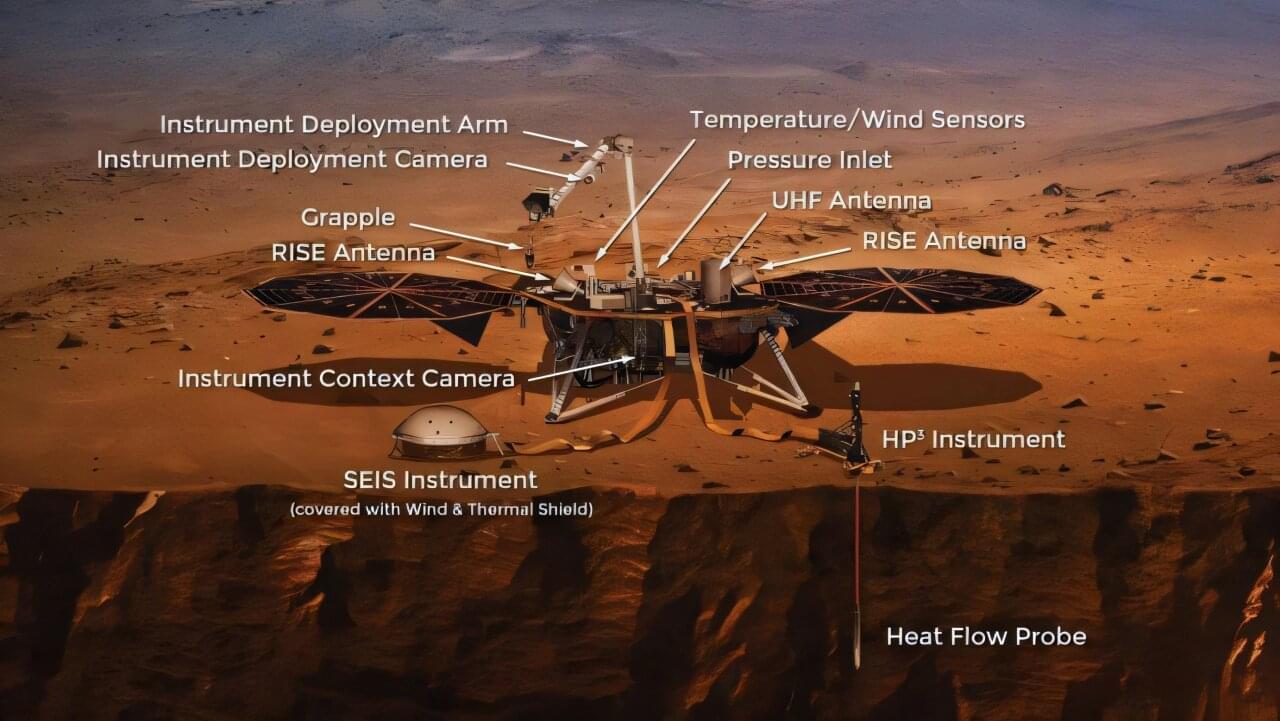
Are subterranean lifeforms viable on Mars? A new interpretation of Martian seismic data by scientists Ikuo Katayama of Hiroshima University and Yuya Akamatsu of Research Institute for Marine Geodynamics suggests the presence of water below the surface of Mars. “If liquid water exists on Mars,” Katayama says, “the presence of microbial activity” is possible.
This analysis is based on seismic data from SEIS (Seismic Experiment for the Interior Structure), deployed from NASA’s InSight lander that landed on Mars in 2018. This robotic lander is unique because it was able to use its robotic arm to place a seismometer on the surface of Mars. The SEIS instrument, which contains the seismometer, uses the seismic waves naturally generated on Mars from Marsquakes or meteorite impacts to scan the planet’s interior.
When a Marsquake or meteorite impact occurs on Mars, SEIS can read the energy emitted as P-waves, S-waves, and surface waves to create an image of the planet’s interior.
Is AI already conscious and sentient? How would you know if it was? Join me as I dive into the world of testing consciousness and AI — does it matter in the end for how we use AI?
📧: Sign up for my Newsletter: https://www.profjoelpearson.com/newsl… out The new science of Intuition in the Intuition Toolkit: https://www.amazon.com/Intuition-Tool?tag=lifeboatfound-20?tag=lifeboatfound-20… iktok / profjoelpearson Insta / profjoelpearson.
Check out The new science of Intuition in the Intuition Toolkit:
https://www.amazon.com/Intuition-Tool?tag=lifeboatfound-20?tag=lifeboatfound-20…
Tiktok.
/ profjoelpearson.
Insta.
/ profjoelpearson.