Toggle light / dark theme

Wobbly molecules get a closer look

While new technologies, including those powered by artificial intelligence, provide innovative solutions to a steadily growing range of problems, these tools are only as good as the data they’re trained on. In the world of molecular biology, getting high-quality data from tiny biological systems while they’re in motion – a critical step for building next-gen tools – is something like trying to take a clear picture of a spinning propeller. Just as you need precise equipment and conditions to photograph the propeller clearly, researchers need advanced techniques and careful calculations to measure the movement of molecules accurately.

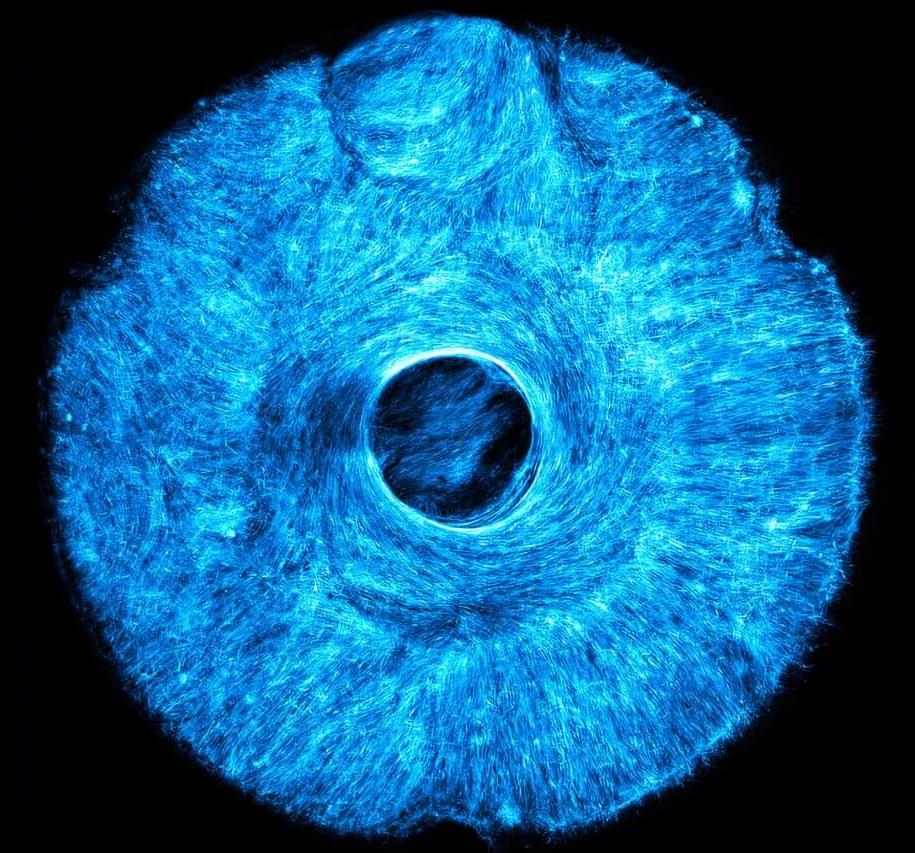
Matthew Lew, associate professor in the Preston M. Green Department of Electrical & Systems Engineering in the McKelvey School of Engineering at Washington University in St. Louis, builds new imaging technologies to unravel the intricate workings of life at the nanoscale. Though they’re incredibly tiny – 1,000 to 100,000 times smaller than a human hair – nanoscale biomolecules like proteins and DNA strands are fundamental to virtually all biological processes.

Scientists rely on ever-advancing microscopy methods to gain insights into these systems work. Traditionally, these methods have relied on simplifying assumptions that overlook some complexities of molecular behavior, which can be wobbly and asymmetric. A new theoretical framework developed by Lew, however, is set to shake up how scientists measure and interpret wobbly molecular motion.

SpaceX to launch privately-financed international crew of four around Earth’s poles

A blockchain entrepreneur, a cinematographer, a polar adventurer and a robotics researcher plan to fly around Earth’s poles aboard a SpaceX Crew Dragon capsule by end of year, becoming the first humans to observe the ice caps and extreme polar environments from orbit, SpaceX announced Monday.

The historic flight, launched from the Kennedy Space Center in Florida, will be commanded by Chun Wang, a wealthy bitcoin pioneer who founded f2pool and stakefish, “which are among the largest Bitcoin mining pools and Ethereum staking providers,” the crew’s website says.

“Wang aims to use the mission to highlight the crew’s explorational spirit, bring a sense of wonder and curiosity to the larger public and highlight how technology can help push the boundaries of exploration of Earth and through the mission’s research,” SpaceX said on its web site.

Sheba Study: AI Can Spot Patients At Risk Of Pulmonary Embolism

A newly published study by Sheba Medical Center, Israel’s largest and internationally ranked hospital, shows that AI analysis of medical records as patients are admitted to the ER can accurately identify those at high risk of pulmonary embolism (PE).

A pulmonary embolism is a sudden blockage in an artery in the lung caused by a blood clot, most commonly due to a dislodged clot in the leg. They are normally diagnosed during a CT scan.

Using machine learning, the researchers trained an algorithm to detect a pulmonary embolism before a patient was hospitalized, based on existing medical records.

Are emergent abilities in large language models just in-context learning?

According to a new study led by TU Darmstadt, AI models such as ChatGPT are apparently less capable of learning independently than previously assumed.

According to the study, there is no evidence that what are known as (LLMs) are beginning to develop a general “intelligent” behavior that would enable them to proceed in a planned or intuitive manner or to think in a complex way.

The study, which has been published on the arXiv preprint server, will be presented in August at the annual conference of the Association for Computational Linguistics (ACL) in Bangkok, the largest international conference on automatic language processing.

Can odors help fight infection? Nematode research suggests so

In a recent study published in Science Advances, researchers from the University of California, Berkeley, used the nematode model Caenorhabditis elegans to determine whether the olfactory nervous system could non-autonomously control the mitochondrial unfolded protein response in response to cellular stress.

A critical part of maintaining a state of cellular homeostasis is coordinating responses to environmental stress across tissues. Substantial evidence now supports the fact that the central nervous system regulates stress across all tissues. Furthermore, cell non-autonomous induction of stress responses occurs in peripheral tissues when unfolded protein responses (UPR) in the mitochondria and the endoplasmic reticulum are activated in the neurons.

Stressed cells undergo misfolding or unfolding of proteins, and UPR transmits protein folding status information to the nucleus to enable cellular stress responses or induce apoptotic cell death. The non-autonomous control of cellular stress responses is believed to be essential for the organism to survive toxic environmental conditions.

/* */