1st with ALS. 1st nonverbal.
Category: robotics/AI – Page 538
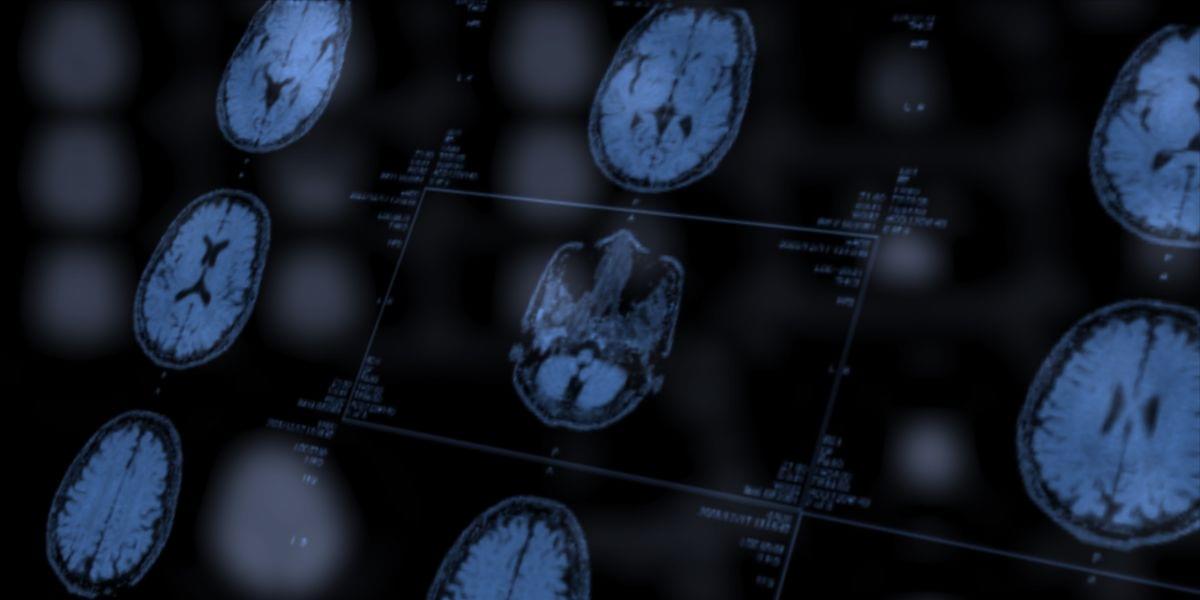
A Single Cubic Millimeter of Brain Tissue May Have Just Changed Neuroscience Forever
Scientists have mapped an unprecedentedly large portion of the brain of a mouse. The cubic millimeter worth of brain tissue represents the largest piece of a brain we’ve ever understood to this degree, and the researchers behind this project say that the mouse brain is similar enough to the human brain that they can even extrapolate things about us. A cubic millimeter sounds tiny—to us, it is tiny—but a map of 200,000 brain cells represents just over a quarter of a percent of the mouse brain. In brain science terms, that’s extraordinarily high. A proportionate sample of the human brain would be 240 million cells.
Within the sciences, coding and computer science can sometimes overshadow the physical and life sciences. Rhetoric about artificial intelligence has raced ahead with terms like “human intelligence,” but the human brain is not well enough understood to truly give credence to that idea. Scientists have worked for decades to analyze the brain, and they’re making great progress despite the outsized rhetoric working against them.
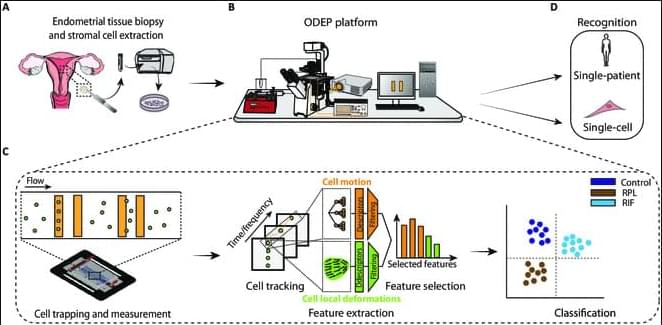
ODEP-Based Robotic System for Micromanipulation and In-Flow Analysis of Primary Cells
The presence of cellular defects of multifactorial nature can be hard to characterize accurately and early due to the complex interplay of genetic, environmental, and lifestyle factors. With this study, by bridging optically-induced dielectrophoresis (ODEP), microfluidics, live-cell imaging, and machine learning, we provide the ground for devising a robotic micromanipulation and analysis system for single-cell phenotyping. Cells under the influence of nonuniform electric fields generated via ODEP can be recorded and measured. The induced responses obtained under time-variant ODEP stimulation reflect the cells’ chemical, morphological, and structural characteristics in an automated, flexible, and label-free manner.
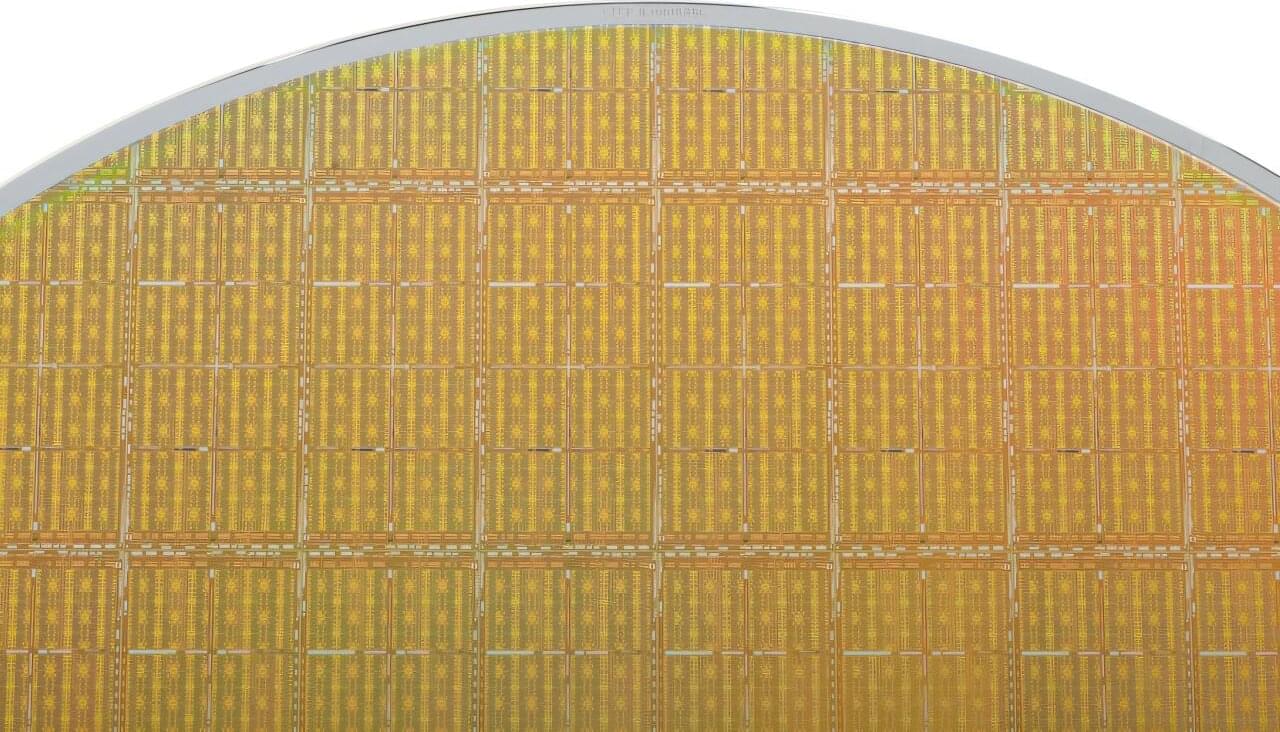
New chip tests cooling solutions for stacked microelectronics
As demand grows for more powerful and efficient microelectronics systems, industry is turning to 3D integration—stacking chips on top of each other. This vertically layered architecture could allow high-performance processors, like those used for artificial intelligence, to be packaged closely with other highly specialized chips for communication or imaging. But technologists everywhere face a major challenge: how to prevent these stacks from overheating.
Now, MIT Lincoln Laboratory has developed a specialized chip to test and validate cooling solutions for packaged chip stacks. The chip dissipates extremely high power, mimicking high-performance logic chips, to generate heat through the silicon layer and in localized hot spots. Then, as cooling technologies are applied to the packaged stack, the chip measures temperature changes. When sandwiched in a stack, the chip will allow researchers to study how heat moves through stack layers and benchmark progress in keeping them cool.
“If you have just a single chip, you can cool it from above or below. But if you start stacking several chips on top of each other, the heat has nowhere to escape. No cooling methods exist today that allow industry to stack multiples of these really high-performance chips,” says Chenson Chen, who led the development of the chip with Ryan Keech, both of the laboratory’s Advanced Materials and Microsystems Group.
Ray Kurzweil’s 7 Boldest Predictions—What’s Still on Track?
Future drops, freebies & digital gifts – Don’t miss out! Join here:
https://docs.google.com/forms/d/e/1FAIpQLSdeuqNNvEjhpL_PQrF4…usp=dialog.
Ray Kurzweil, one of the world’s leading futurists, has made hundreds of predictions about technology’s future. From portable devices and wireless internet to brain-computer interfaces and nanobots in our bloodstream, Kurzweil has envisioned a future that sometimes feels like science fiction—but much of it is becoming reality.
In this video, we explore 7 of Ray Kurzweil’s boldest predictions:
00:00 — 01:44 Intro.
01:44 — 02:42 Prediction 1: Portable Devices and Wireless Internet.
02:42 — 03:34 Prediction 2: Self-Driving Cars by Early 2020s.
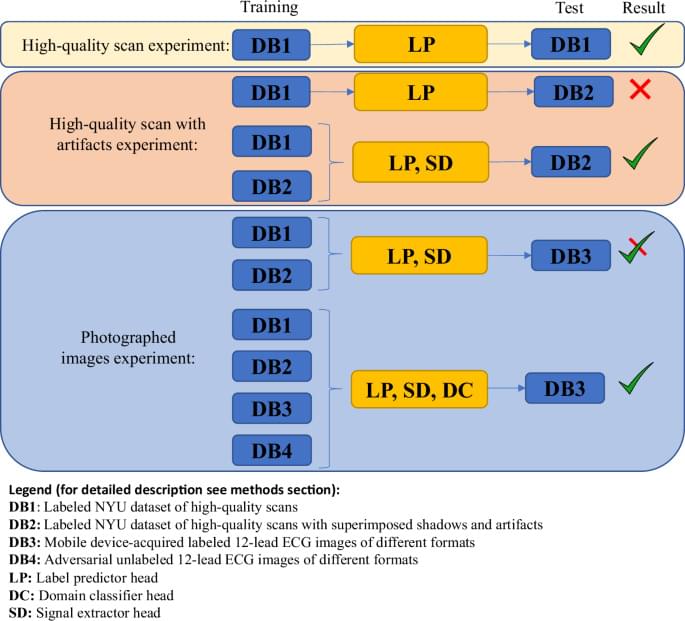
Clinically meaningful interpretability of an AI model for ECG classification
Gliner, V., Levy, I., Tsutsui, K. et al. Clinically meaningful interpretability of an AI model for ECG classification. npj Digit. Med. 8, 109 (2025). https://doi.org/10.1038/s41746-025-01467-8

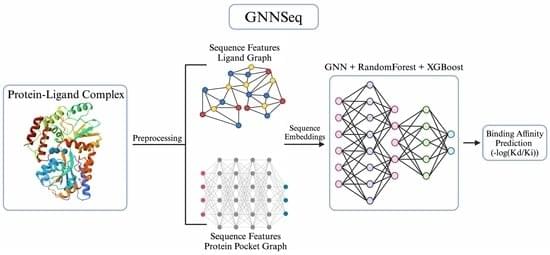
GNNSeq: A Sequence-Based Graph Neural Network for Predicting Protein–Ligand Binding Affinity
Background/Objectives: Accurately predicting protein–ligand binding affinity is essential in drug discovery for identifying effective compounds. While existing sequence-based machine learning models for binding affinity prediction have shown potential, they lack accuracy and robustness in pattern recognition, which limits their generalizability across diverse and novel binding complexes. To overcome these limitations, we developed GNNSeq, a novel hybrid machine learning model that integrates a Graph Neural Network (GNN) with Random Forest (RF) and XGBoost. Methods: GNNSeq predicts ligand binding affinity by extracting molecular characteristics and sequence patterns from protein and ligand sequences. The fully optimized GNNSeq model was trained and tested on subsets of the PDBbind dataset. The novelty of GNNSeq lies in its exclusive reliance on sequence features, a hybrid GNN framework, and an optimized kernel-based context-switching design. By relying exclusively on sequence features, GNNSeq eliminates the need for pre-docked complexes or high-quality structural data, allowing for accurate binding affinity predictions even when interaction-based or structural information is unavailable. The integration of GNN, XGBoost, and RF improves GNNSeq performance by hierarchical sequence learning, handling complex feature interactions, reducing variance, and forming a robust ensemble that improves predictions and mitigates overfitting. The GNNSeq unique kernel-based context switching scheme optimizes model efficiency and runtime, dynamically adjusts feature weighting between sequence and basic structural information, and improves predictive accuracy and model generalization. Results: In benchmarking, GNNSeq performed comparably to several existing sequence-based models and achieved a Pearson correlation coefficient (PCC) of 0.784 on the PDBbind v.2020 refined set and 0.84 on the PDBbind v.2016 core set. During external validation with the DUDE-Z v.2023.06.20 dataset, GNNSeq attained an average area under the curve (AUC) of 0.74, demonstrating its ability to distinguish active ligands from decoys across diverse ligand–receptor pairs. To further evaluate its performance, we combined GNNSeq with two additional specialized models that integrate structural and protein–ligand interaction features. When tested on a curated set of well-characterized drug–target complexes, the hybrid models achieved an average PCC of 0.89, with the top-performing model reaching a PCC of 0.97. GNNSeq was designed with a strong emphasis on computational efficiency, training on 5000+ complexes in 1 h and 32 min, with real-time affinity predictions for test complexes. Conclusions: GNNSeq provides an efficient and scalable approach for binding affinity prediction, offering improved accuracy and generalizability while enabling large-scale virtual screening and cost-effective hit identification. GNNSeq is publicly available in a server-based graphical user interface (GUI) format.