Toggle light / dark theme

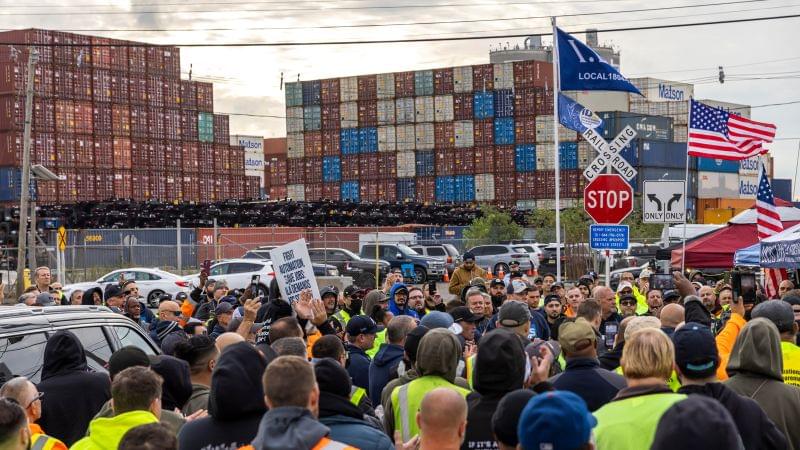
Dockworkers are waging a battle against automation. The rest of us may want to take notes

The dockworkers striking up and down the East Coast are, culturally and geographically, a world apart from the Hollywood actors and writers who staged a four-month walkout last year. But their protests share a common core principle: They don’t want bots taking their jobs.

It’s a fight you can expect to see playing out a lot more as advanced automation and AI creep into virtually every workforce.

Here’s the deal: The East Coast port strike is getting a lot of attention for its potential disruption to the economy — which is precisely the point. Longshore work can be grueling, and the people working at ports are vital to getting all of the stuff we want to buy onto store shelves. No dockworkers means no bananas (or whatever), which means no profits for the companies that produce and ship them.

The Quest for True AI Consciousness — From the Turing Test to Consciousness 2.0

In the ongoing journey to create and understand AI (artificial intelligence), a key challenge has been determining if and when a machine has achieved consciousness.

While early AI research focused on mimicking human behavior, modern advancements have revealed the limitations of traditional evaluations like the Turing Test.

As we push the boundaries of AI development, we must redefine how we measure machine intelligence, moving beyond surface-level interactions to explore deeper levels of awareness, creativity and self-consciousness.

Nvidia just dropped a bombshell: Its new AI model is open, massive, and ready to rival GPT-4

Nvidia has released a powerful open-source artificial intelligence model that competes with proprietary systems from industry leaders like OpenAI and Google.

The company’s new NVLM 1.0 family of large multimodal language models, led by the 72 billion parameter NVLM-D-72B, demonstrates exceptional performance across vision and language tasks while also enhancing text-only capabilities.

“We introduce NVLM 1.0, a family of frontier-class multimodal large language models that achieve state-of-the-art results on vision-language tasks, rivaling the leading proprietary models (e.g., GPT-4o) and open-access models,” the researchers explain in their paper.

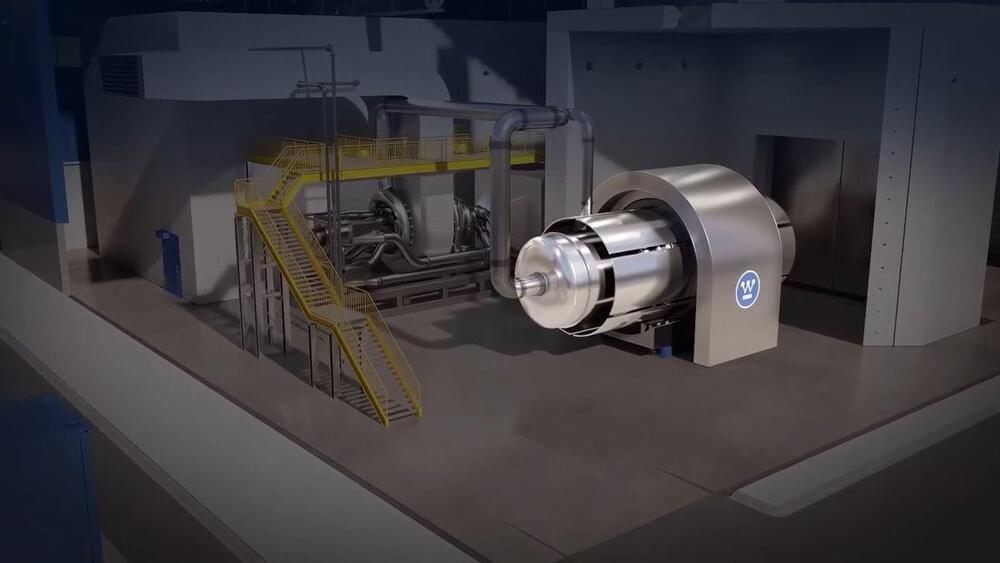
Westinghouse’s eVinci micro nuclear reactor for data centers delivers 5 megawatts of power for eight years without refueling — microreactors could power next-gen AI data centers

Small, easily transportable nukes could power our data driven future.

/* */