AI may become the most powerful tool ever. It will reshape the economy, and Brad’s testimony focus on 3 priorities to lead in the global AI race.

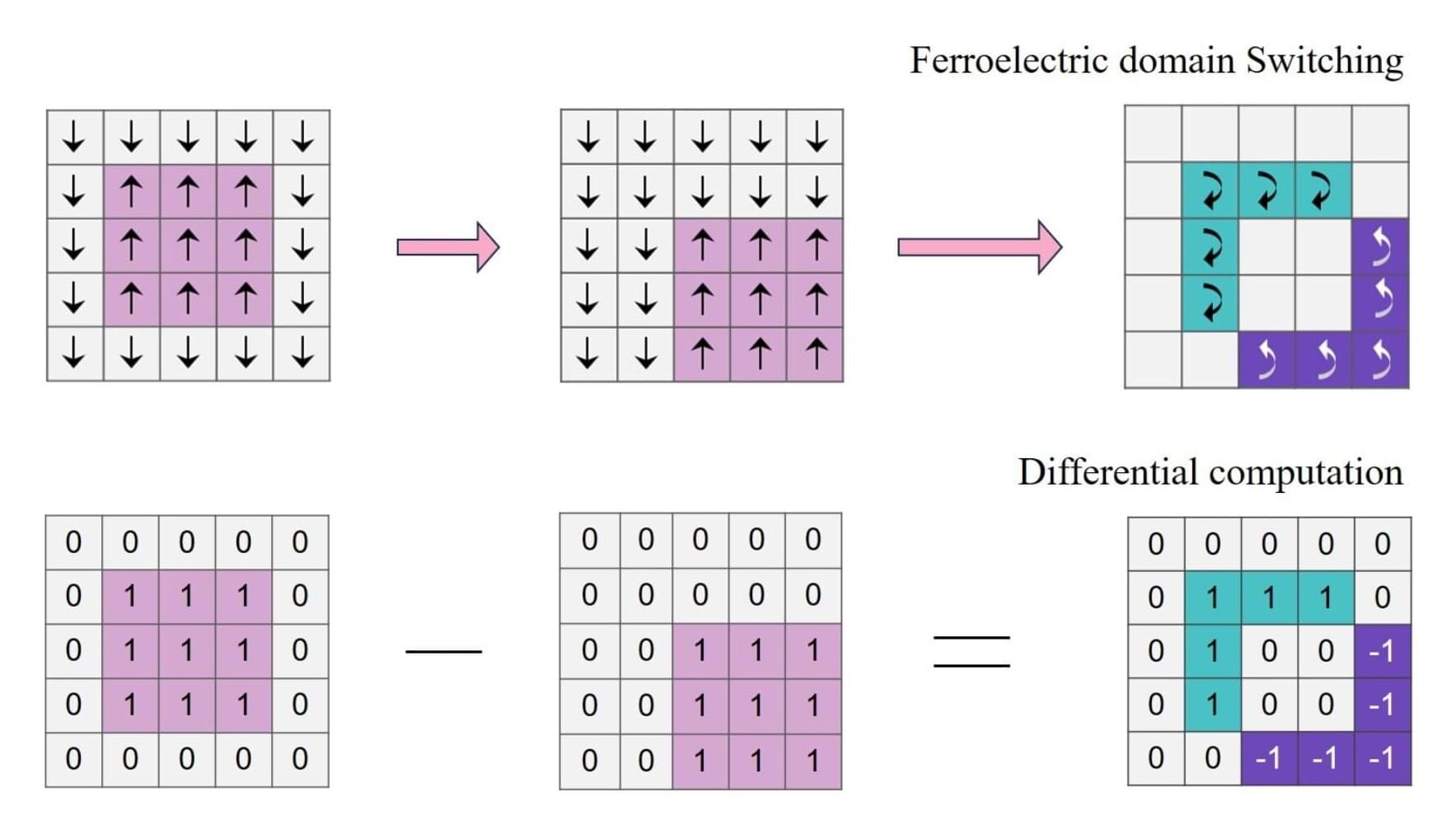
In a new Nature Communications study, researchers have developed an in-memory ferroelectric differentiator capable of performing calculations directly in the memory without requiring a separate processor.
The proposed differentiator promises energy efficiency, especially for edge devices like smartphones, autonomous vehicles, and security cameras.
Traditional approaches to tasks like image processing and motion detection involve multi-step energy-intensive processes. This begins with recording data, which is transmitted to a memory unit, which further transmits the data to a microcontroller unit to perform differential operations.
Phase-change actuation has been revived for the era of untethered, electrically driven soft robots. Our team at the University of Coimbra have developed a phase transition soft actuator designed to power electric soft robots that require high force and precision. Our innovation leverages the liquid-to-gas phase transition of water to generate mechanical motion in a way that is simple, scalable, and remarkably powerful.
Unlike traditional soft actuators, which often rely on bulky pneumatics, exotic materials, or high voltages, our design exploits a well-known process: boiling. Using a tiny embedded heater, our actuator transforms water into steam, generating internal pressure that drives motion in soft, flexible structures. As a result, our actuator can operate at voltages as low as 24 V, deliver forces exceeding 50 N, and achieve pressurization rates of up to 100 kPa/s.
Our findings are published in Nature Communications.
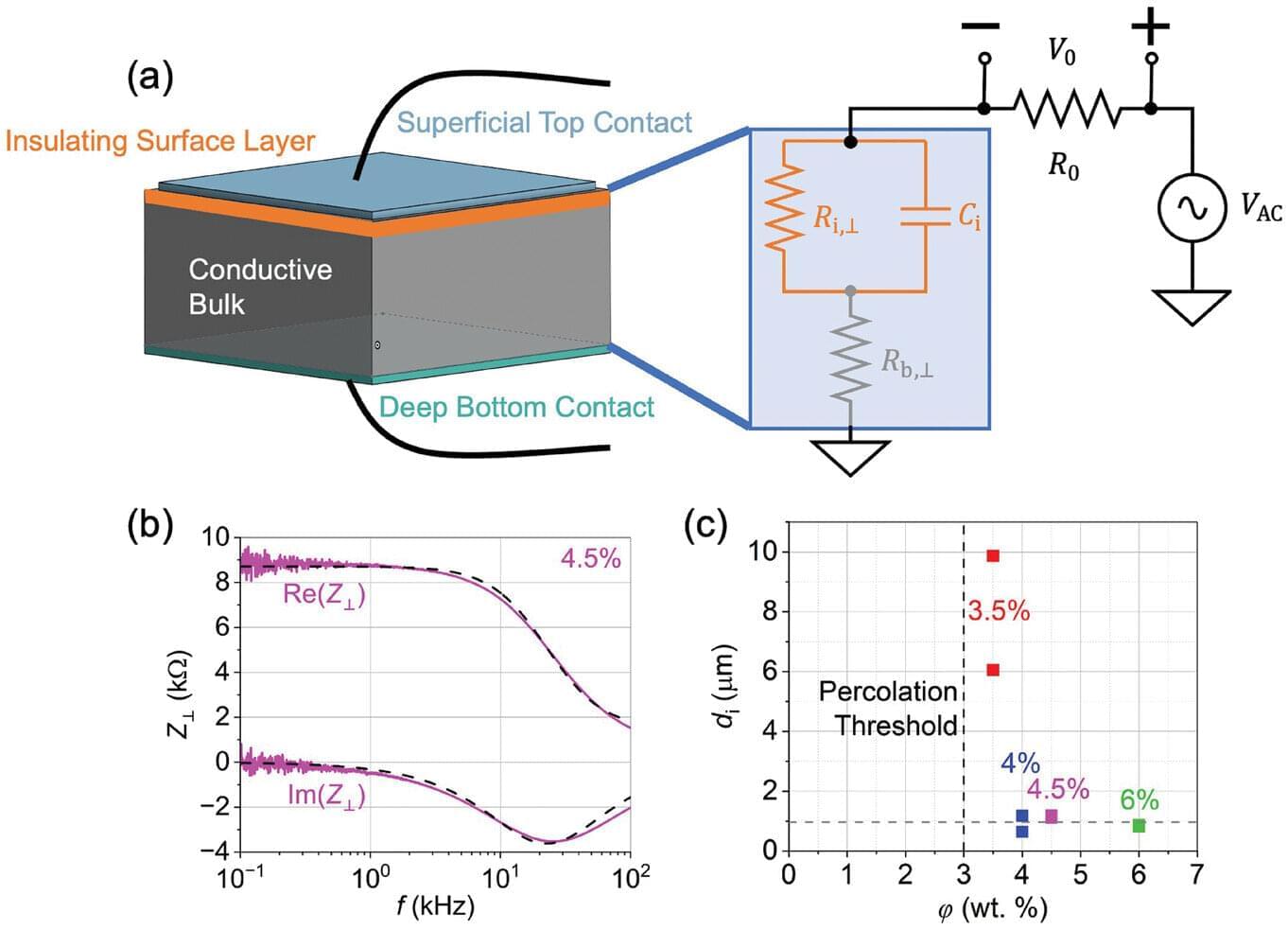
Researchers at Northwestern University and Israel’s Tel Aviv University have overcome a major barrier to achieving a low-cost solution for advanced robotic touch. The authors argue that the problem that has been lurking in the margins of many papers about touch sensors lies in the robotic skin itself.
In the study, inexpensive silicon rubber composites used to make skin were observed to host an insulating layer on the top and bottom surfaces, which prevented direct electrical contact between the sensing polymer and the monitoring surface electrodes, making accurate and repeatable measurements virtually impossible.
With the error eliminated, cheap robotic skins could allow robots to mimic human touch, allowing them to sense an object’s curves and edges, which is necessary to properly grasp it.
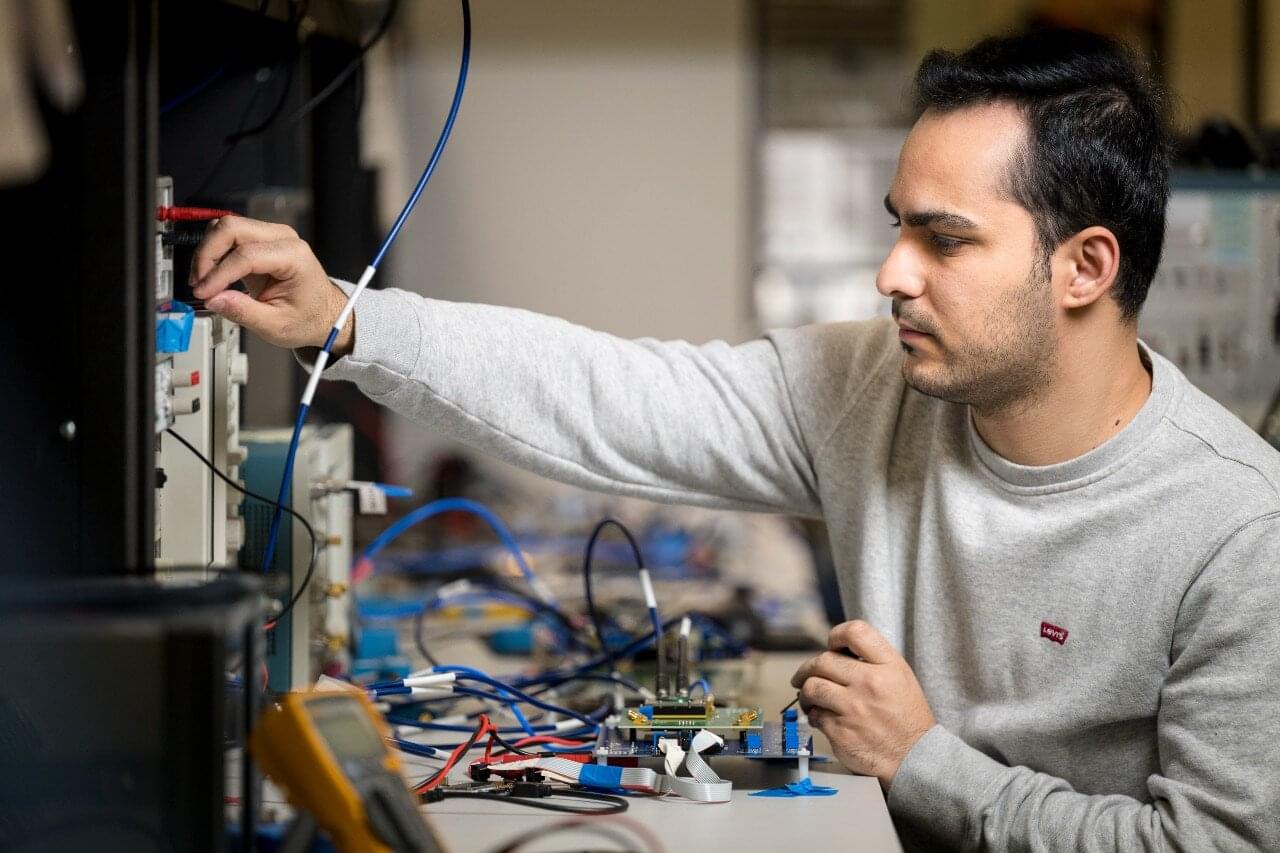
Oregon State University College of Engineering researchers have developed a more efficient chip as an antidote to the vast amounts of electricity consumed by large-language-model artificial intelligence applications like Gemini and GPT-4.
“We have designed and fabricated a new chip that consumes half the energy compared to traditional designs,” said doctoral student Ramin Javadi, who, along with Tejasvi Anand, associate professor of electrical engineering, presented the technology at the IEEE Custom Integrated Circuits Conference in Boston.
“The problem is that the energy required to transmit a single bit is not being reduced at the same rate as the data rate demand is increasing,” said Anand, who directs the Mixed Signal Circuits and Systems Lab at OSU. “That’s what is causing data centers to use so much power.”

Brighter with Herbert