Toggle light / dark theme

Using stories to teach human values to artificial agents

DARPA’s efforts to teach AI “Empathy & Ethics”


The rapid pace of artificial intelligence (AI) has raised fears about whether robots could act unethically or soon choose to harm humans. Some are calling for bans on robotics research; others are calling for more research to understand how AI might be constrained. But how can robots learn ethical behavior if there is no “user manual” for being human?

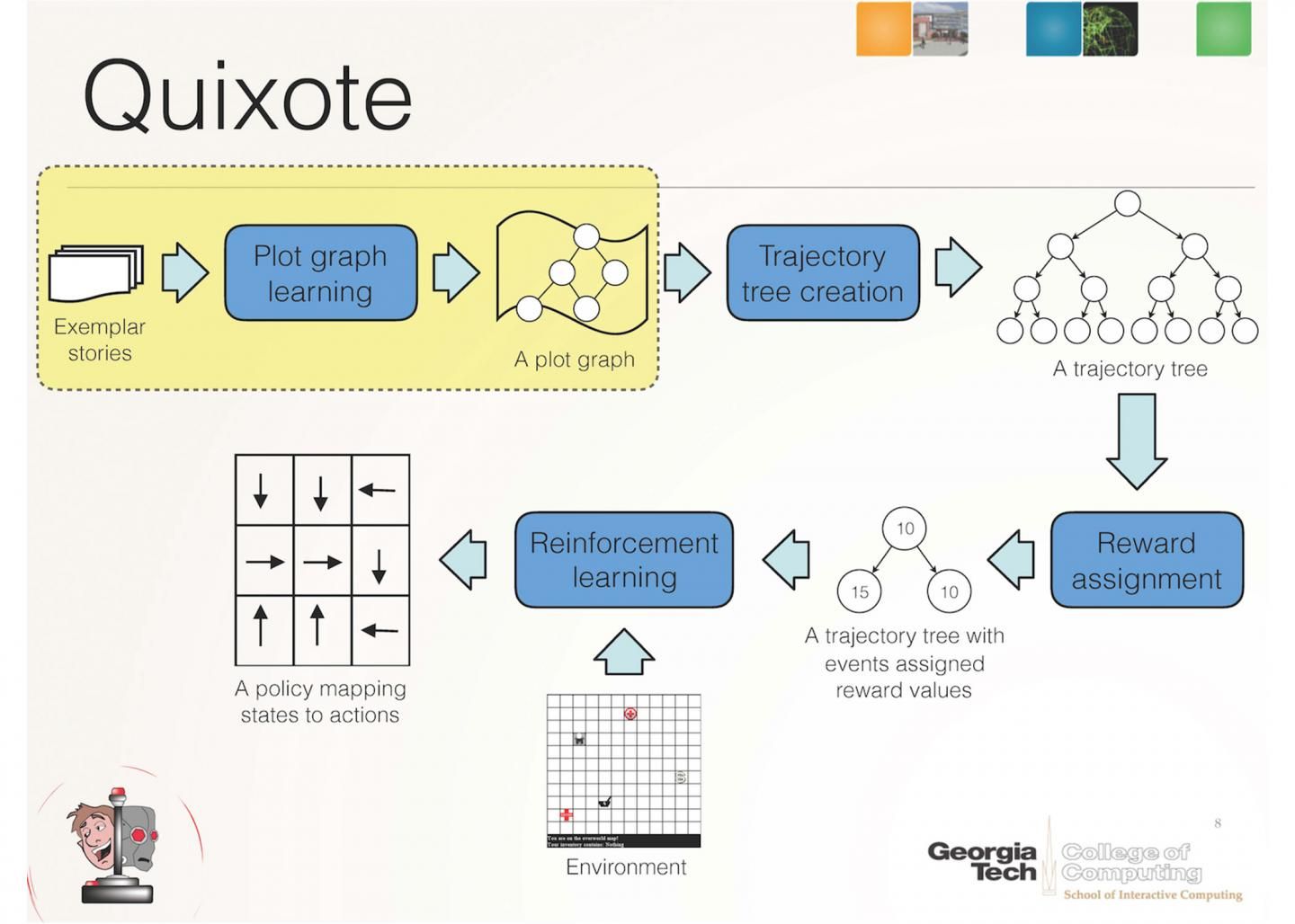
Researchers Mark Riedl and Brent Harrison from the School of Interactive Computing at the Georgia Institute of Technology believe the answer lies in “Quixote” — to be unveiled at the AAAI-16 Conference in Phoenix, Ariz. (Feb. 12 — 17, 2016). Quixote teaches “value alignment” to robots by training them to read stories, learn acceptable sequences of events and understand successful ways to behave in human societies.

“The collected stories of different cultures teach children how to behave in socially acceptable ways with examples of proper and improper behavior in fables, novels and other literature,” says Riedl, associate professor and director of the Entertainment Intelligence Lab. “We believe story comprehension in robots can eliminate psychotic-appearing behavior and reinforce choices that won’t harm humans and still achieve the intended purpose.”

Read more

Faster Than Thought: DARPA, Artificial Intelligence, & The Third Offset Strategy

ARLINGTON: The Defense Advanced Research Projects Agency (DARPA) is developing artificial intelligence that can help humans understand the floods of data they unleashed 50 years ago with the Internet and make better decisions, even in the heat of battle. Such “human-machine collaboration” — informally known as the centaur model — is the high-tech holy grail of the Defense Department’s plan to counter Russian and Chinese advances, known as the Third Offset Strategy.

“We’ve had some great conversations with the deputy,” said DARPA director Arati Prabhakar, referring to the chief architect of Offset, Deputy Defense Secretary Bob Work. “In many of our programs you’ll see some of the technology components” of the strategy. But it’s more than specific technologies, however exotic: It’s about a new approach to technology.

Read more

Mannequins of the Future Are Headless Robots

Here is a thought; could we see a future where runway models are robots? What about the Victoria Secret fashion show? Or, could all models (men and women) be replaced for the perfect robot? Maxim has already been known for using artificial models in print.


Shape-shifting dummies, the mannequins of the future, could change garment fitting in a big way.

Read more