I see articles and reports like the following about military actually considering fully autonomous missals, drones with missals, etc. I have to ask myself what happened to the logical thinking.
A former Pentagon official is warning that autonomous weapons would likely be uncontrollable in real-world situations thanks to design failures, hacking, and external manipulation. The answer, he says, is to always keep humans “in the loop.”
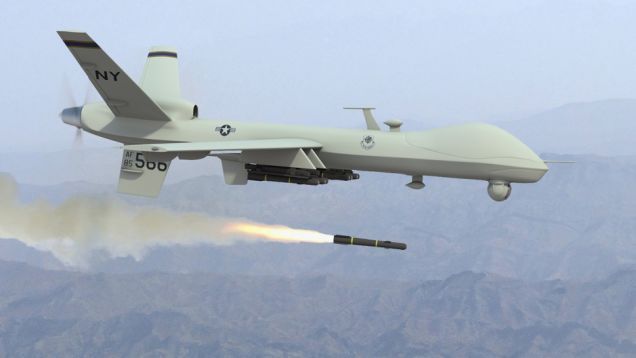
The new report, titled “ Autonomous Weapons and Operational Risk,” was written by Paul Scharre, a director at the Center for a New American Security. Scharre used to work at the office of the Secretary of Defense where he helped the US military craft its policy on the use of unmanned and autonomous weapons. Once deployed, these future weapons would be capable of choosing and engaging targets of their own choosing, raising a host of legal, ethical, and moral questions. But as Scharre points out in the new report, “They also raise critically important considerations regarding safety and risk.”
As Scharre is careful to point out, there’s a difference between semi-autonomous and fully autonomous weapons. With semi-autonomous weapons, a human controller would stay “in the loop,” monitoring the activity of the weapon or weapons system. Should it begin to fail, the controller would just hit the kill switch. But with autonomous weapons, the damage that be could be inflicted before a human is capable of intervening is significantly greater. Scharre worries that these systems are prone to design failures, hacking, spoofing, and manipulation by the enemy.