
A top Google researcher talks about computers that learn.
Category: robotics/AI – Page 2,988
DARPA developing robots to fix and maintain satellites that are one tenth of the distance to the moon
The traditional process of designing, developing, building and deploying space systems is long, expensive and complex. These difficulties apply especially to the increasing number of expensive, mission-critical satellites launched every year into geosynchronous Earth orbit (GEO), approximately 22,000 miles above the Earth. Unlike objects in low Earth orbit (LEO), such as the Hubble Space Telescope, satellites in GEO are essentially unreachable with current technology.
DARPA’s Phoenix program seeks to change this paradigm and reduce the cost of space-based systems by developing and demonstrating new satellite assembly architectures and delivery systems. Phoenix is currently focusing on two primary technical areas of research:
Understanding Machine Learning [INFOGRAPHIC]
Machines are now able to learn and evolve without human intervention. Here’s how it works, and what it means for the future of humanity.

Quantum Computers Could Crush Today’s Top Encryption in 15 Years
I believe we’re really looking at less than 10yrs given the speed of evolution of QC to date. Instead of two new QC discoveries each year to advance QC; we’re now seeing 2 new discoveries every 2 months now not to mention China and US advancements on networking and communications and scalable QC for devices which Google plans to release their QC device in 2017.
Quantum computers could bring about a quantum leap in processing power, with countless benefits for fields like data science and AI. But there’s also a dark side: this extra power will make it simple to crack the encryption keeping everything from our emails to our online banking secure.
A recent report from the Global Risk Institute predicted that there is a one in seven chance vital cryptography tools will be rendered useless by 2026, rising to a 50% chance by 2031. In the meantime, hackers and spies can hoover up data encrypted using current approaches and simply wait until quantum computers powerful enough to crack the code have been developed.
Artificial Brains For Artificial Intelligence
Scientists are trying to create an artificial brain to learn artificial intelligence.

Google Is in a Fierce Global Race for Scarce AI Talent
Google is trying to get its hooks into the world’s top deep learning talent before its competitors do.
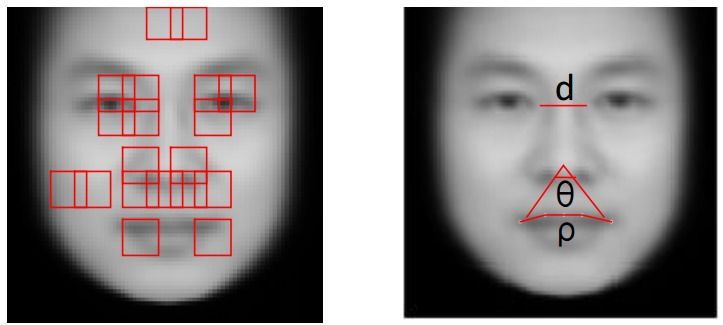
A deep-learning machine was trained to spot criminals
The effort aimed at identifying criminals from their mugshots raises serious ethical issues about how we should use artificial intelligence.
‘Shazam for shoes’ shows how AI could transform your style
Shoegazer, a prototype sneaker-spotting app, demonstrates the ways artificial intelligence could change how we shop.

What are Molecular Machines?
Machines lace almost all social, political cultural and economic issues currently being discussed. Why, you ask? Clearly, because we live in a world that has all its modern economies and demographic trends pivoting around machines and factories at all scales.
We have reached the stage in the evolution of our civilization where we cannot fathom a day without the presence of machines or automated processes. Machines are not only used in sectors of manufacturing or agriculture but also in basic applications like healthcare, electronics and other areas of research. Although, machines of varying types had entered the industrial landscape long ago, technologies like nanotechnology, the Internet of Things, Big Data have altered the scenario in an unprecedented manner.
The fusion of nanotechnology with conventional mechanical concepts gives rise to the perception of ‘molecular machines’. Foreseen to be a stepping stone into nano-sized industrial revolution, these microscopic machines are molecules designed with movable parts that behave in a way that our regular machines operate in. A nano-scale motor that spins in a given direction in presence of directed heat and light would be an example of a molecular machine.