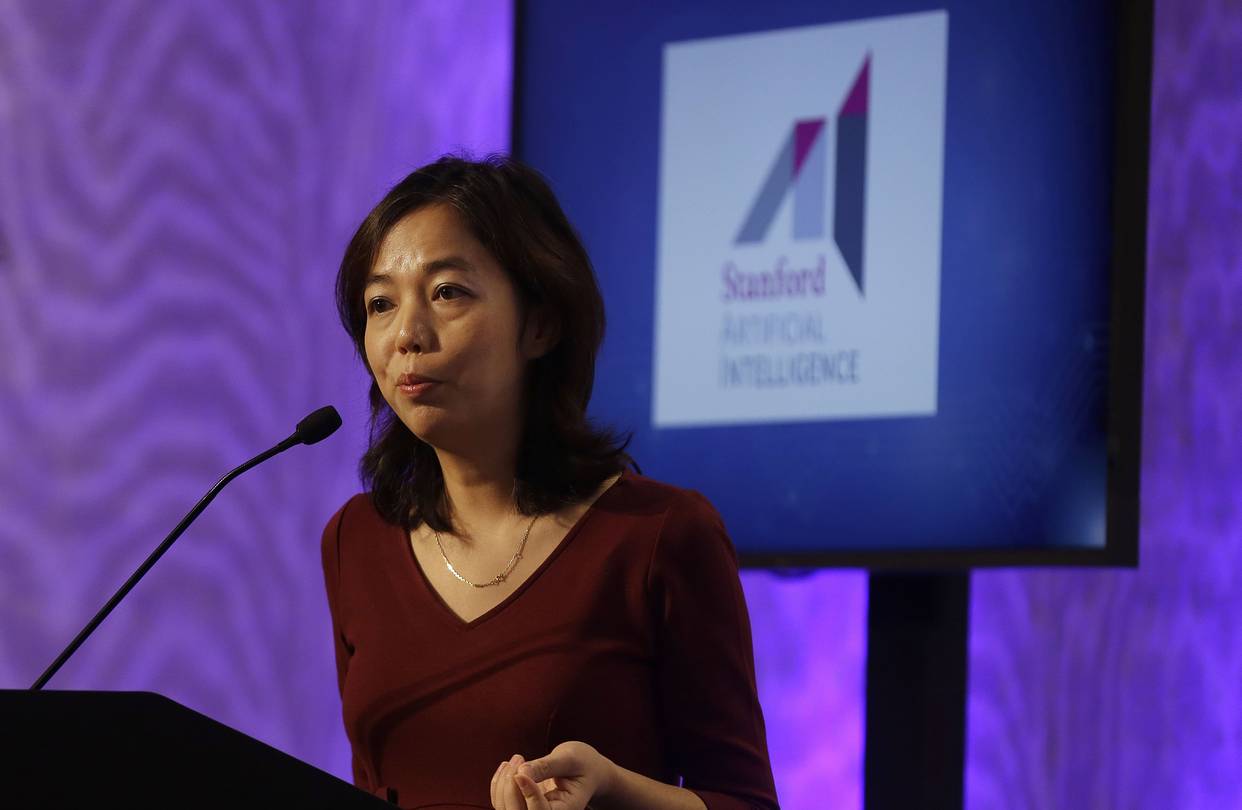
“Alphabet Inc.’s Google division last week hired the director of Stanford University’s artificial intelligence lab to lead a new AI unit, the latest in a long line of academic stars in artificial intelligence lured away by tech giants.”
Category: robotics/AI – Page 2,978
Quantum Computers Could Crush Today’s Top Encryption in 15 Years
I believe we’re really looking at less than 10yrs given the speed of evolution of QC to date. Instead of two new QC discoveries each year to advance QC; we’re now seeing 2 new discoveries every 2 months now not to mention China and US advancements on networking and communications and scalable QC for devices which Google plans to release their QC device in 2017.
Quantum computers could bring about a quantum leap in processing power, with countless benefits for fields like data science and AI. But there’s also a dark side: this extra power will make it simple to crack the encryption keeping everything from our emails to our online banking secure.
A recent report from the Global Risk Institute predicted that there is a one in seven chance vital cryptography tools will be rendered useless by 2026, rising to a 50% chance by 2031. In the meantime, hackers and spies can hoover up data encrypted using current approaches and simply wait until quantum computers powerful enough to crack the code have been developed.
Artificial Brains For Artificial Intelligence
Scientists are trying to create an artificial brain to learn artificial intelligence.

Google Is in a Fierce Global Race for Scarce AI Talent
Google is trying to get its hooks into the world’s top deep learning talent before its competitors do.
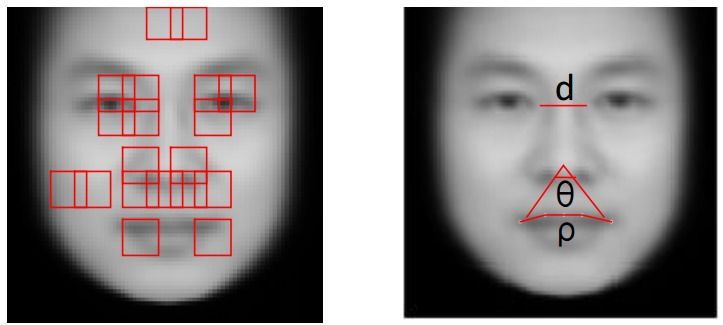
A deep-learning machine was trained to spot criminals
The effort aimed at identifying criminals from their mugshots raises serious ethical issues about how we should use artificial intelligence.
‘Shazam for shoes’ shows how AI could transform your style
Shoegazer, a prototype sneaker-spotting app, demonstrates the ways artificial intelligence could change how we shop.

What are Molecular Machines?
Machines lace almost all social, political cultural and economic issues currently being discussed. Why, you ask? Clearly, because we live in a world that has all its modern economies and demographic trends pivoting around machines and factories at all scales.
We have reached the stage in the evolution of our civilization where we cannot fathom a day without the presence of machines or automated processes. Machines are not only used in sectors of manufacturing or agriculture but also in basic applications like healthcare, electronics and other areas of research. Although, machines of varying types had entered the industrial landscape long ago, technologies like nanotechnology, the Internet of Things, Big Data have altered the scenario in an unprecedented manner.
The fusion of nanotechnology with conventional mechanical concepts gives rise to the perception of ‘molecular machines’. Foreseen to be a stepping stone into nano-sized industrial revolution, these microscopic machines are molecules designed with movable parts that behave in a way that our regular machines operate in. A nano-scale motor that spins in a given direction in presence of directed heat and light would be an example of a molecular machine.

BGRF scientists publish seminal paper and announce project to develop biomarkers of aging
New biomarkers for aging is good news for researchers!
“Given the high volume of data being generated in the life sciences, there is a huge need for tools that make sense of that data. As such, this new method will have widespread applications in unraveling the molecular basis of age-related diseases and in revealing biomarkers that can be used in research and in clinical settings. In addition, tools that help reduce the complexity of biology and identify important players in disease processes are vital not only to better understand the underlying mechanisms of age-related disease but also to facilitate a personalized medicine approach. The future of medicine is in targeting diseases in a more specific and personalized fashion to improve clinical outcomes, and tools like iPANDA are essential for this emerging paradigm,” said João Pedro de Magalhães, PhD, a trustee of the Biogerontology Research Foundation.
The algorithm, iPANDA, applies deep learning algorithms to complex gene expression data sets and signal pathway activation data for the purposes of analysis and integration, and their proof of concept article demonstrates that the system is capable of significantly reducing noise and dimensionality of transcriptomic data sets and of identifying patient-specific pathway signatures associated with breast cancer patients that characterize their response to Toxicol-based neoadjuvant therapy.
The system represents a substantially new approach to the analysis of microarray data sets, especially as it pertains to data obtained from multiple sources, and appears to be more scalable and robust than other current approaches to the analysis of transcriptomic, metabolomic and signalomic data obtained from different sources. The system also has applications in rapid biomarker development and drug discovery, discrimination between distinct biological and clinical conditions, and the identification of functional pathways relevant to disease diagnosis and treatment, and ultimately in the development of personalized treatments for age-related diseases.

How scientists will use artificial intelligence to find aliens
To find habitable worlds in a sea of space data, we need computers that can think fast.

Artificial intelligence can lip-read better than a trained professional
A pair of new studies show that a machine can understand what you’re saying without hearing a sound.