With rates of lung cancer climbing among non-smokers, new strategies are needed to detect lung cancer earlier. Drs. Sequist and Fintelmann at Mass General Brigham are discovering how AI can be used to address this growing concern.
Category: robotics/AI – Page 296
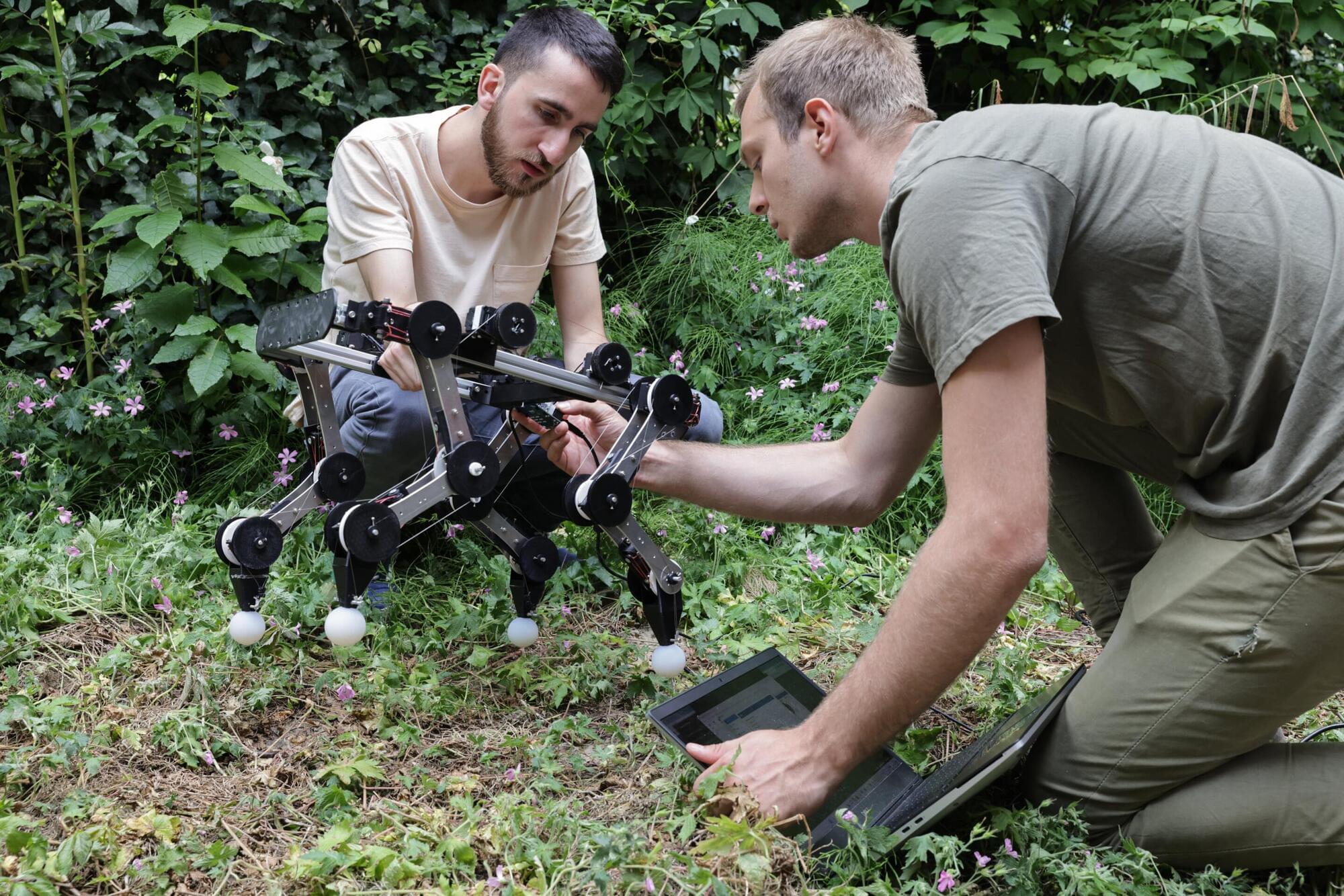
PAWS: Four-legged robot can reproduce animal movement with fewer actuators
Many of the robotic systems developed in the past decades are inspired by four-legged (i.e., quadruped) animals, such as dogs, cheetahs and horses. By replicating the agile movements of these animals, quadruped robots could move swiftly on the ground, crossing long distances on various terrains and rapidly completing missions.
Yet realistically and robustly replicating the fluid motions observed in animals using robotic systems can be very challenging. While some existing four-legged robots were found to be very agile and responsive to changes in their environment, these systems typically integrate advanced actuators and computational components that consume a lot of energy.
Researchers at EPFL’s CREATE Lab and Delft University of Technology (TU Delft) recently developed a new four-legged robot called PAWS (Passive Automata With Synergies), which could reproduce the fluid and adaptive movements of animals using fewer actuators. This robot, introduced in a paper in Nature Machine Intelligence, leverages so-called motor synergies, which are coordinated patterns of muscle activation that allow animals to perform agile motions consuming less energy.


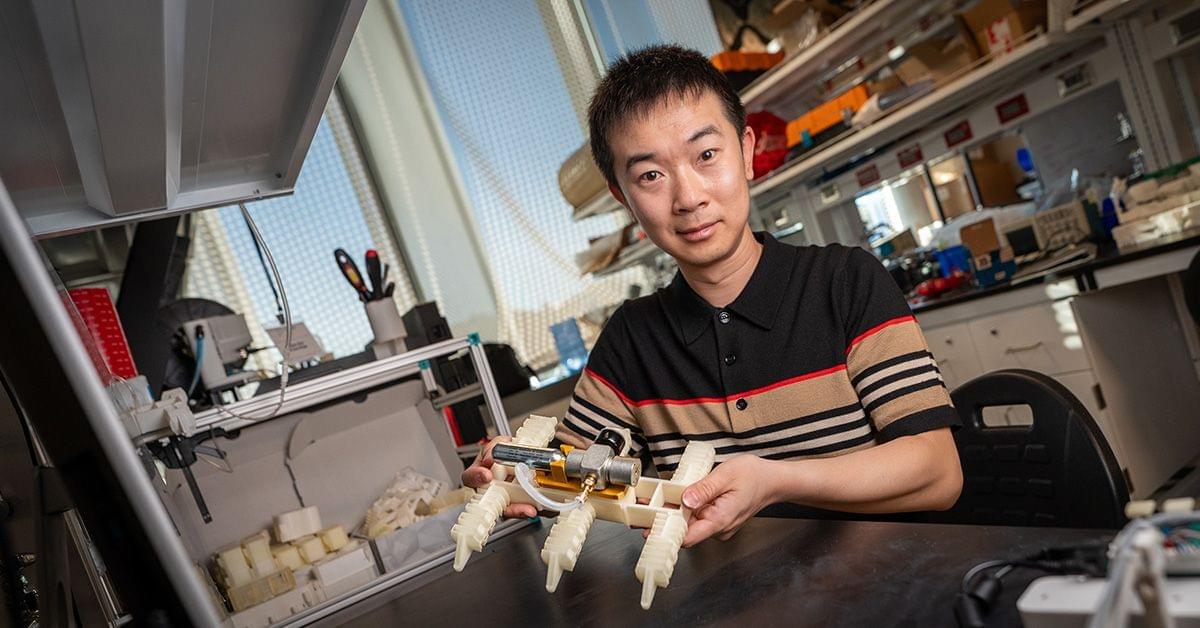
These Electronics-free Robots Can Walk Right Off the 3D-Printer
Imagine a robot that can walk, without electronics, and only with the addition of a cartridge of compressed gas, right off the 3D-printer. It can also be printed in one go, from one material.
That is exactly what roboticists have achieved in robots developed by the Bioinspired Robotics Laboratory at the University of California San Diego. They describe their work in an advanced online publication in the journal Advanced Intelligent Systems.
To achieve this feat, researchers aimed to use the simplest technology available: a desktop 3D-printer and an off-the-shelf printing material. This design approach is not only robust, it is also cheap—each robot costs about $20 to manufacture.
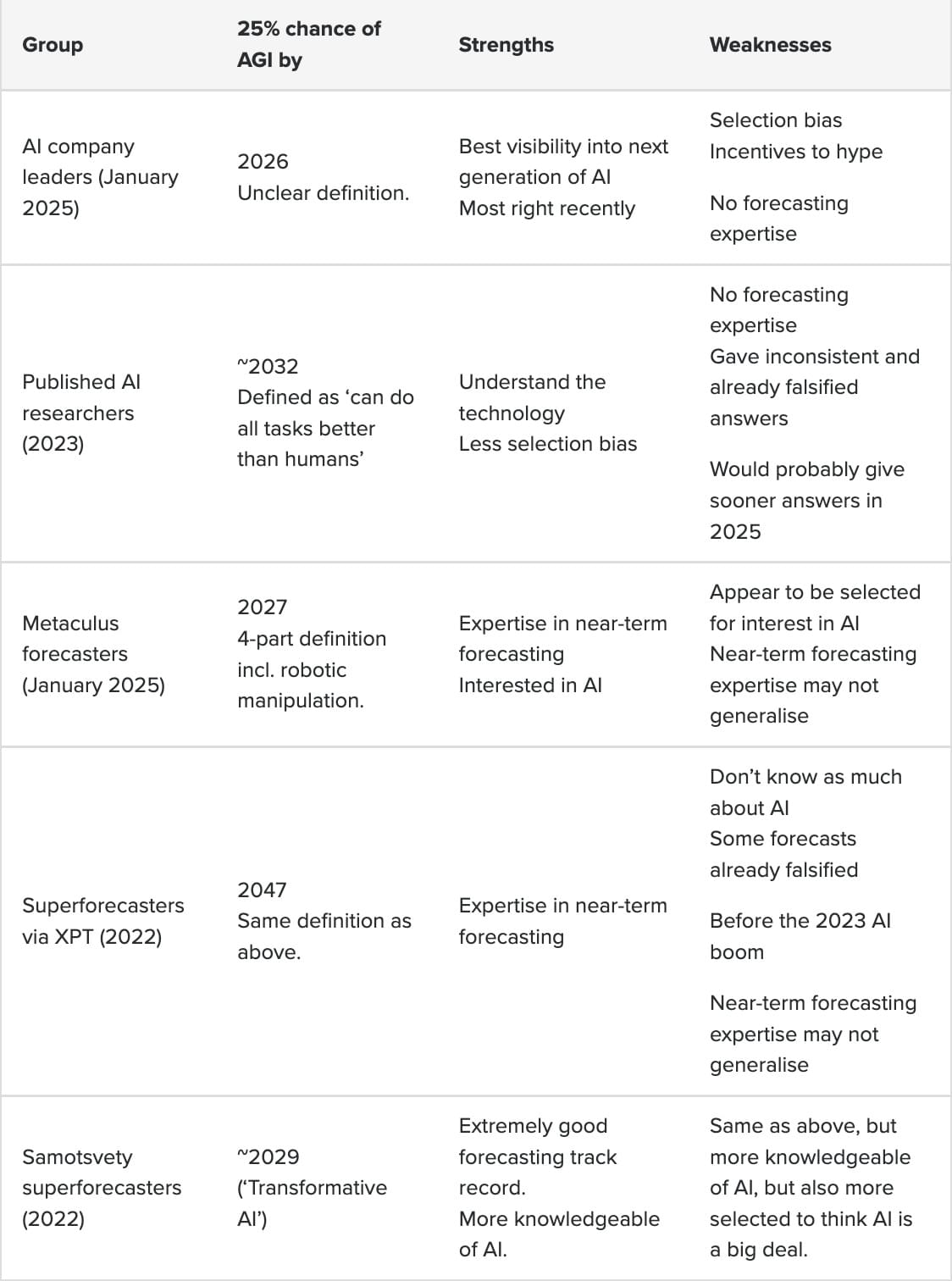
When do experts expect AGI to arrive?
I’ve argued elsewhere that it’s plausible AGI arrives before 2030. That’s a big claim.
As a non-expert, it would be great if there were experts who could tell us what to think.
Unfortunately, there aren’t.
Robots In Space: Future Visions author Allen Crowley
Explore the fascinating intersection of resistance, permanence, and future technology with renowned OmniFuturist and author Allen Crowley. In this thought-pr…