Toggle light / dark theme

DARPA Seeking Private Partners for In-Orbit Servicing Program

Looking for partners.


[Via Satellite 03-28-2016] The U.S. Defense Advanced Research Projects Agency (DARPA) is reviving its in-orbit servicing efforts through a new public-private partnership program called Robotic Servicing of Geosynchronous Satellites (RSGS). Under the RSGS vision, the partners would join a DARPA-developed modular toolkit, including hardware and software, to a privately developed spacecraft to create a commercially owned and operated Robotic Servicing Vehicle (RSV). DARPA would contribute the robotics technology, such as the previously developed Front End Robotic Enabling Near-Term Demonstration (FREND) robotic arm, expertise, and a government-provided launch. The commercial partner would contribute the satellite to carry the robotic payload, integration of the payload, and the mission operations center and staff.

DARPA seeks to develop and demonstrate the RSV on orbit within the next five years. The agency’s goals include demonstrating safe, reliable, useful and efficient operations in or near Geostationary Earth Orbit (GEO), demonstrating on live GEO satellites in collaboration with commercial and U.S. government spacecraft operators, and supporting the development of a servicer spacecraft with sufficient propellant and payload robustness to enable dozens of missions over several years.

DARPA plans to kick off the public-private partnership via a program solicitation in the near future. Shortly thereafter, DARPA will host a proposers day to provide potential partners with further details about the RSGS program. The agency plans to share the solicitation along with the date and location of the proposers day on the Federal Business Opportunities (FBO) website in the future.

IBM wants to accelerate AI learning with new processor tech

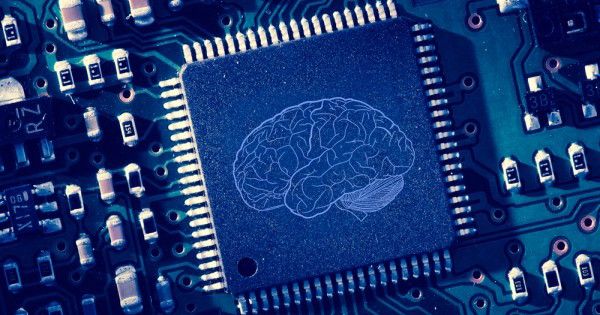
Deep neural networks (DNNs) can be taught nearly anything, including how to beat us at our own games. The problem is that training AI systems ties up big-ticket supercomputers or data centers for days at a time. Scientists from IBM’s T.J. Watson Research Center think they can cut the horsepower and learning times drastically using “resistive processing units,” theoretical chips that combine CPU and non-volatile memory. Those could accelerate data speeds exponentially, resulting in systems that can do tasks like “natural speech recognition and translation between all world languages,” according to the team.

So why does it take so much computing power and time to teach AI? The problem is that modern neural networks like Google’s DeepMind or IBM Watson must perform billions of tasks in in parallel. That requires numerous CPU memory calls, which quickly adds up over billions of cycles. The researchers debated using new storage tech like resistive RAM that can permanently store data with DRAM-like speeds. However, they eventually came up with the idea for a new type of chip called a resistive processing unit (RPU) that puts large amounts of resistive RAM directly onto a CPU.

U.S. Says 7 Million Drones Will Take to Skies Annually

Annual sales of drones in the U.S. will hit 2.5 million this year and swell to 7 million by 2020, according to a projection from the Federal Aviation Administration.

Unmanned aircraft purchases are growing both for hobbyists and for commercial ventures that perform inspections, assist farmers, and survey construction sites, according to the agency’s annual forecast of aviation activity, released on Thursday.

Robots are coming for your job

Companies that sell personal data should pay a percentage of the resulting revenue into a Data Mining Royalty Fund that would provide annual payments to U.S. citizens, much as the Alaska Permanent Fund distributes oil revenues to Alaskans.


A viral video released in February showed Boston Dynamics’ new bipedal robot, Atlas, performing human-like tasks: opening doors, tromping about in the snow, lifting and stacking boxes. Tech geeks cheered and Silicon Valley investors salivated at the potential end to human manual labor.

Shortly thereafter, White House economists released a forecast that calculated more precisely whom Atlas and other forms of automation are going to put out of work. Most occupations that pay less than $20 an hour are likely to be, in the words of the report, “automated into obsolescence.”

Massive Robots Keep Docks Shipshape

They are pushing for fully automated robot Cargo ships. Now, we have robots to load and unload cargo ships. In a few years there probably wont be a single person left working on a dock.


TraPac LLC’s Los Angeles shipping terminal offers a window to how coming global trade will move: using highly automated systems and machinery to handle a flood of goods amid new free-trade accords.

Alphabet’s ‘Moonshots’ Head Astro Teller: Fear Of AI And Robots Is Wildly Overblown

(Photo credit: AP Photo/Jack Plunkett, File)

Astro Teller is tired of the paranoia surrounding artificial intelligence and robotics. The famous computer scientist’s sensitivity around the topic may be understandable considering he bears the brunt of some of that skepticism as the head of X, the Alphabet (and formerly Google) moonshot factory working on many of the company’s futuristic AI and robotics projects.

This past weekend, Teller, whose official title is “captain of moonshots,” took to the stage at the inaugural Silicon Valley Comic Con hoping to dispel some of these misconceptions around AI. His physician wife, Danielle Teller, presented alongside him on some of the fear mongering associated with genetic engineering in humans. After their presentation, the Tellers sat down with FORBES to go deeper on the issue to explain what they hoped to accomplish with their talk.

/* */