In Brief Universal Basic Income is being touted by experts as the only way for humanity to survive in the coming age of automation. There are various experiments being conducted this year that could pave the way for the practice in the future.
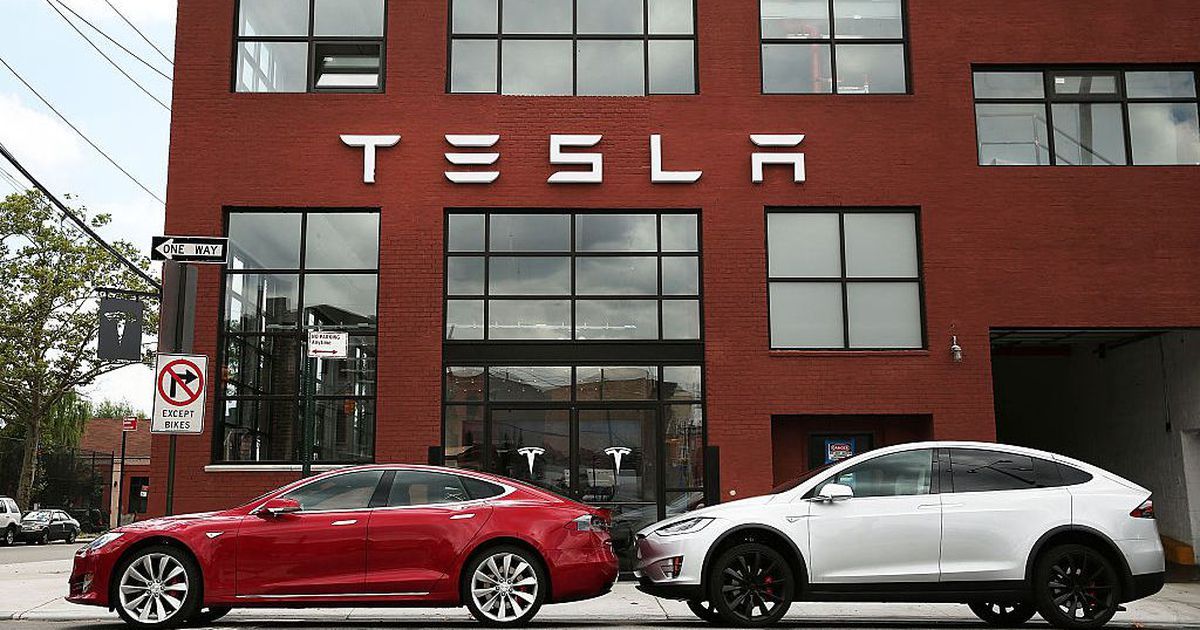
In the self-driving future envisioned by Tesla CEO Elon Musk, car owners might be saying “goodbye” to a whole lot more than steering wheels.
Musk is so sure of the safety features bundled into Tesla vehicles that his company has begun offering some customers a lifetime insurance and maintenance package at the time of purchase.
No more monthly insurance bills. No more unexpected repair costs.
Like all great programmers I get most of my code from StackOverflow questions. Can’t figure out how to add authentication to Flask? Easy. Want to shut down sendmail? Boom. Now, thanks to all the code on the Internet, a robot can be as smart as a $180,000 coder.
The system, called DeepCoder, basically searches a corpus of code to build a project that works to spec. It’s been used to complete programming competitions and could be pointed at a larger set of data to build more complex products.
From the paper:
Uber Technologies’ Gary Marcus said he is stepping down from his post as head of AI Labs, four months after the unit was created.
Gary Marcus, head of the recently launched AI Labs, said in a Facebook post on Wednesday that he is stepping down and will serve as a special advisor to AI Labs.
The ride-hailing app created AI Labs last year and also acquired Geometric Intelligence to form the initial AI Labs team.
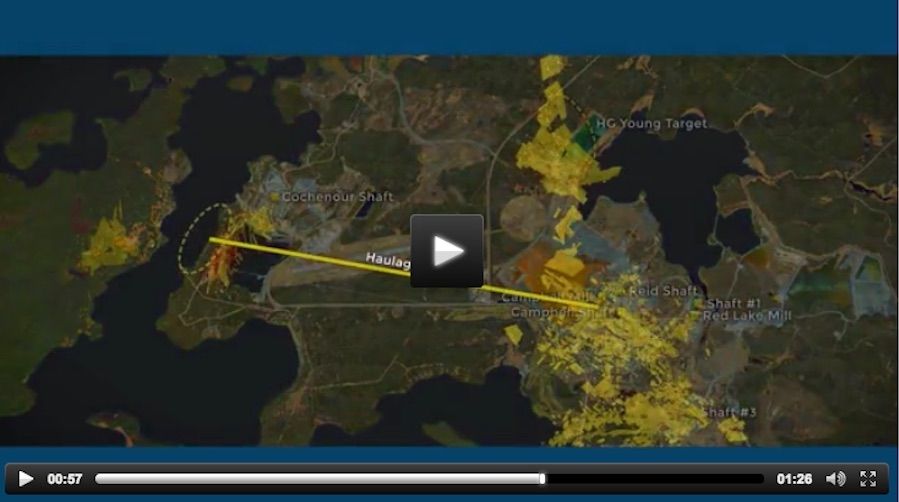
Goldcorp (NYSE: GG, TSX: G) is teaming up with one of the world’s largest computer companies to help it find more gold at its storied Red Lake mine in Ontario.
Vancouver-based Goldcorp announced on March 3 it is bringing IBM Watson technology to Canadian mining for the first time. Named after IBM’s founder, Thomas J. Watson, Watson is a supercomputer that combines artificial intelligence with analytical software. According to WhatIs, IBM Watson replicates the human ability to answer questions by accessing 90 servers with a combines data storage of 200 million pages of information. Yet it can squeeze into a space that would fit 10 refrigerators. The supercomputer memorized the “urban dictionary” in 2013.
While the High Grade Zone (HGZ) has been the backbone of the Red Lake operation, with an average gold grade over two ounces per tonne, HGZ is expected to be depleted by 2020. Thus the need for more exploration to keep the mine going.

The Google-owned star British artificial intelligence company DeepMind is in talks with the National Grid about a potential partnership, with the possibility of using the technology to make the supply of energy across the UK more efficient.
“There’s huge potential for predictive machine learning technology to help energy systems reduce their environmental impact,” said a spokesperson for the company.

A big fan of robo-burgers 😊.
Would your burger taste as delicious if it was made by a robot?
You’ll soon be able to find out at CaliBurger restaurants in the US and worldwide.
Cali Group partnered with Miso Robotics to develop Flippy the burger robot, which made its debut this week at the Pasadena, California CaliBurger.
It costs $80k to send a Nano- Satellite into space! To send the materials to build a lunar base is going to be expensive!
This week it was announced that NASA found a forgotten satellite in Lunar Orbit, which got me thinking about an idea to recycle existing Space Junk in the construction of an International Lunar Base with cost savings. We could use a modified version of my Google Deepmind NEO tracker to source the Space Junk and the ideas listed below to capture and redirect the Space Junk.
https://github.com/Agilebrett/AI-Deepmind-vs-Near-Earth-Objects

“We will implement a comprehensive plan to boost strategic emerging industries,” said Premier Li Keqiang in his delivery at the annual parliamentary session in Beijing over the weekend.
“We will accelerate research & development (R&D) on, and the commercialisation of new materials, artificial intelligence (AI), integrated circuits, bio-pharmacy, 5G mobile communications, and other technologies.”
One analyst now projecting industry in China to grow by more than 50 per cent in value to US$5.5 billion by 2018.
PUBLISHED : Thursday, 09 March, 2017, 5:36pm.
UPDATED : Thursday, 09 March, 2017, 10:59pm.