The race to build up artificial intelligence is driving software companies to roll their own silicon.

The robot is building a tesseract. He motions at a glowing cube floating before him, and an identical cube emerges. He drags it to the left, but the two cubes stay connected, strung together by glowing lines radiating from their corners. The robot lowers its hands, and the cubes coalesce into a single shape—with 24 square faces, 16 vertices, and eight connected cubes existing in four dimensions. A tesseract.
This isn’t a video game. It’s a classroom. And the robot is Brian Greene, a physicist at Columbia University and bestselling author of several popular science books. His robot avatar teaches a semicircle of student robots, each wearing a shoulder badge of their home country’s flag. The classroom is outer space: Greene and the arc of student-robots orbit Earth. After he shows the students the tesseract, Greene directs his class to try making four, five, even six dimension objects. This is a virtual reality course on string theory; the lesson happens to be about objects with more than three dimensions.
In real life, Greene is wearing a dark blue shirt, black jeans, and boots, and his normal, non-hovering chair is sitting in a concrete-floored VR business called Step Into the Light planted firmly on Earth’s surface—Manhattan’s Lower East Side. An HTC Vive headset covers his face, and he gestures effusively—he’s a New York native—with the controllers.
Of all the topics I’ve written about, this one scares me the most.
Yes, artificial intelligence, one of humanity’s greatest achievements, can also unleash the seeds of our own destruction. Weaponized A.I. will range from relatively minor weapons designed to change a specific action to nation-vs-nation full-blown A.I. wars.

A Future Scenario by Shubham Sawant
Las Vegas: February 10, 2027
I woke up with the pleasing sound of alarm followed by a sweet voice came, “Good morning. It’s 7:00 am. You have reached at MGM, Las Vegas.” I was sound asleep for the last 8 hours in my car while it was driving me from San Francisco to Las Vegas. I got out with my luggage and the car zoomed away to pick-up another passenger. Everything has changed in the last 10 years. It is like a dream come true scenario for motorist. The roads are super clean with no honking, no speeding tickets, no angry words or smoke. Every vehicle on the road is communicating with every other vehicle and the traffic is always moving in complete synchronization.
The biggest change happed in last few years is people stopped buying cars. Big companies established their network of taxi services. With the push of a button on cell phone the car arrives wherever you are. The technology is so advanced that the car nearest to you finds your request. You enter the destination and the algorithm works to find the fastest most economical path to your destination and you are on your way.
Most of the parking spaces are gone under restructuring. People have converted their parking garages into recreational rooms or extra bedrooms or what not. The entire look and feel of cities has gone under transformation. The accident rates are almost negligible and car insurance industry is almost brink of extinction. Similarly oil industry stocks are at the bottom and renewable energy is booming. The science fiction has become reality.
Shubham Sawant is a Junior at the University of Houston as a Mechanical Engineering Technology Major. This scenario was part of a project he completed for the course TECH 1313-Impact of Modern Technology on Society.
Shubham says: “I have been very fascinated with the future and how it will be like. Every year, new and new people come up with amazing ideas and products that help us further think about how the future will be. I love to read and I almost always try to read anything that relates to the future. Since I was 4, I have grown to love automotive culture. You will see me talking about cars in a conversation. I love sports like soccer, swimming and cycling. I plan to work in the automotive industry and hopefully get a career to design and manufacture automobiles!”
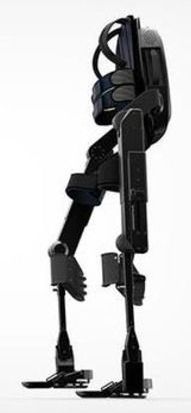
It’s one thing to be wowed by Amazon’s Alexa and her ability to turn off Katy Perry, or turn on the lights. But what if the voice-activated artificial intelligence could help control a robotic device designed to help people walk?
That’s the hope of Bionik Laboratories, which announced Tuesday that it has integrated Alexa into its ARKE lower body exoskeleton. The product is in clinical development, and the future goal is for individuals who have suffered a spinal cord injury or are otherwise severely impaired in their lower body to gain mobility such as standing and walking.
Transhumanists are curiosity addicts. If it’s new, different, untouched, or even despised, we’re probably interested in it. If it involves a revolution or a possible paradigm shift in human experience, you have our full attention. We are obsessed with the mysteries of existence, and we spend our time using the scientific method to explore anything we can find about the evolving universe and our tiny place in it.
Obsessive curiosity is a strange bedfellow. It stems from a profound sense of wanting something better in life—of not being satisfied. It makes one search, ponder, and strive for just about everything and anything that might improve existence. In the 21st century, that leads one right into transhumanism. That’s where I’ve landed right now: A journalist and activist in the transhumanist movement. I’m also currently a Libertarian candidate for California Governor. I advocate for science and tech-themed policies that give everyone the opportunity to live indefinitely in perfect health and freedom.
Politics aside, transhumanism is the international movement of using science and technology to radically change the human being and experience. Its primary goal is to deliver and embrace a utopian techno-optimistic world—a world that consists of biohackers, cyborgists, roboticists, life extension advocates, cryonicists, Singularitarians, and other science-devoted people.
Transhumanism was formally started in 1980’s by philosophers in California. For decades it remained low key, mostly discussed in science fiction novels and unknown academic conferences. Lately, however, transhumanism seems to be surging in popularity. What once was a smallish band of fringe people discussing how science and technology can solve all humanity’s problems has now become a burgeoning social mission of millions around the planet.

Are U.S. killer drones headed to the Philippines? There are already U.S. special operators fighting ISIS there. There could soon be American drones carrying out airstrikes there, too, according to a plan under consideration inside the Pentagon, NBC News reported Monday. “The authority to strike ISIS targets as part of collective self-defense could be granted as part of an official military operation that may be named as early as Tuesday, said the officials. The strikes would likely be conducted by armed drones.”
SecState Rex Tillerson gave the pitch some momentum Monday in Manila when he said the U.S. was providing the Philippine government “some recent transfers of a couple of Cessnas and a couple of UAVs (drones) to allow to them to have better information with which to conduct the fight down there.”
And in a bid to cut off concerns over working even more closely with alleged human rights abuser Philippine President Rodrigo Duterte, Tillerson said that’s pretty much just not an issue right now: “I see no conflict at all in our helping them with that situation and our views of other human rights concerns we have with respect to how they carry out their counternarcotics activities.” More from NBC News, here.
Just weeks after one research team appeared to put words in a leader’s mouth, here comes a new tool that can check questionable video for a pulse.
A recent demonstration showing how easy it is to spoof video of a world leader recently made headlines, foretelling a future where robot-created videos cause political and financial havoc. But now comes word of an antidote. On Monday, a group of computer scientists from Carnegie Mellon University’s Software Engineering Institute published new research showing how algorithms can tell whether the person on-screen has a human heartbeat. The technique will help future intelligence analysts, journalists, or just scared television viewers detect the difference between spoofed video and the real thing.
In case you missed the original news about AI –created fake video, last month a team of researchers at the University of Washington revealed a tool that can change footage of someone’s face to match an audio clip, making it look like the person is saying things they aren’t.
A Chinese garment company is partnering with American robotics to use Sewbots in manufacturing. How many people will this new innovation put out of work?