
Elon Musk, the head of SpaceX and Tesla, came to SXSW this week and gave a grave talk about the future of humanity, warning about the dangers of nuclear war, climate, change, and runaway AI and telling the audience that the only way to keep humanity alive is to colonize the Solar System.
Category: robotics/AI – Page 2,796
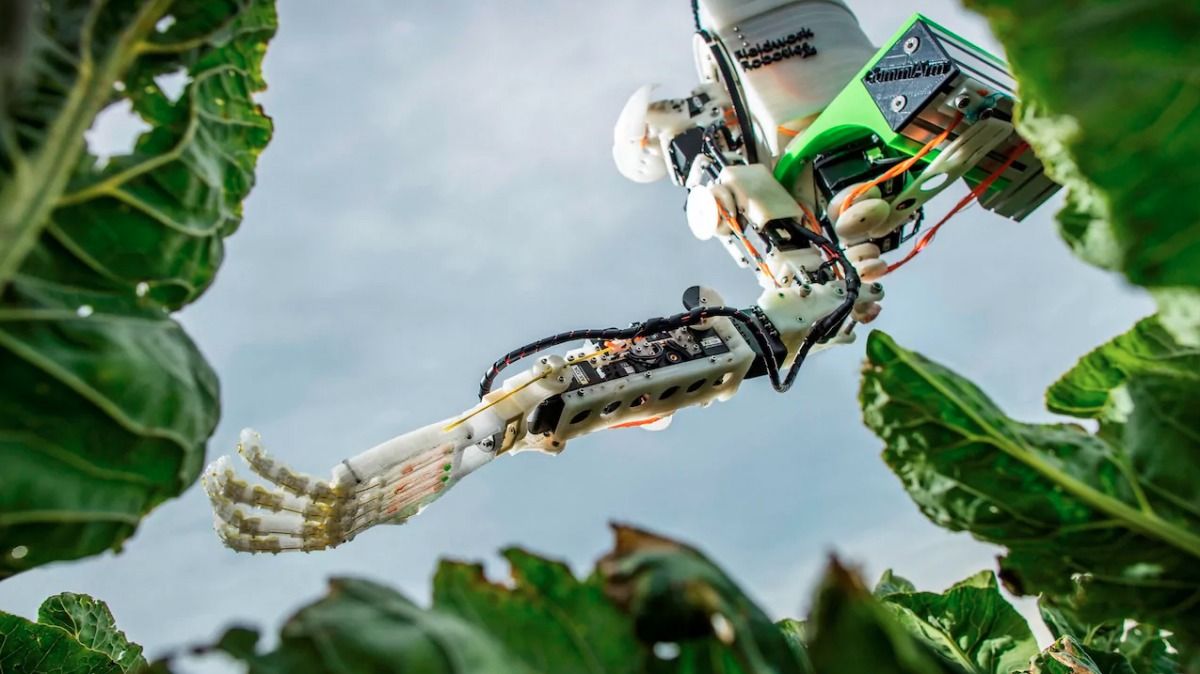
This cauliflower-picking robot aims to make up for a shortage of human labor in the UK
Meet GummiArm, the soft-handed robot that could fill in for a lack of human crop pickers—if British farmers can afford the cost.
The problem: The Telegraph notes that 40 percent of the growing costs for cauliflower, and similar crops like cabbage and broccoli, comes from harvesting in the UK. And that could rise, as crop-picking labor supply is set to decline in the country following Brexit.
Robots could help: University of Plymouth researchers say their GummiArm bot can pick up the slack. Computer vision allows it to work out which vegetable it should try to pick, while its hand can become more or less stiff to gently pick brassicas from their stems. It’s currently being tested in fields in southwestern England.
We need to improve the accuracy of AI accuracy discussions
Reading the tech press, you would be forgiven for believing that AI is going to eat pretty much every industry and job. Not a day goes by without another reporter breathlessly reporting some new machine learning product that is going to trounce human intelligence. That surfeit of enthusiasm doesn’t originate just with journalists though — they are merely channeling the wild optimism of researchers and startup founders alike.
There has been an explosion of interest in artificial intelligence and machine learning over the past few years, as the hype around deep learning and other techniques has increased. Tens of thousands of research papers in AI are published yearly, and AngelList’s startup directory for AI companies includes more than four thousands startups.
After being battered by story after story of AI’s coming domination — the singularity, if you will — it shouldn’t be surprising that 58% of Americans today are worried about losing their jobs to “new technology” like automation and artificial intelligence according to a newly released Northeastern University / Gallup poll. That fear outranks immigration and outsourcing by a large factor.
After Six Years, We Finally Found the Melted Uranium at Fukushima
Six years after the Fukushima nuclear meltdown, a specialized robot has been able to capture images of melted uranium fuel from the site for the first time.
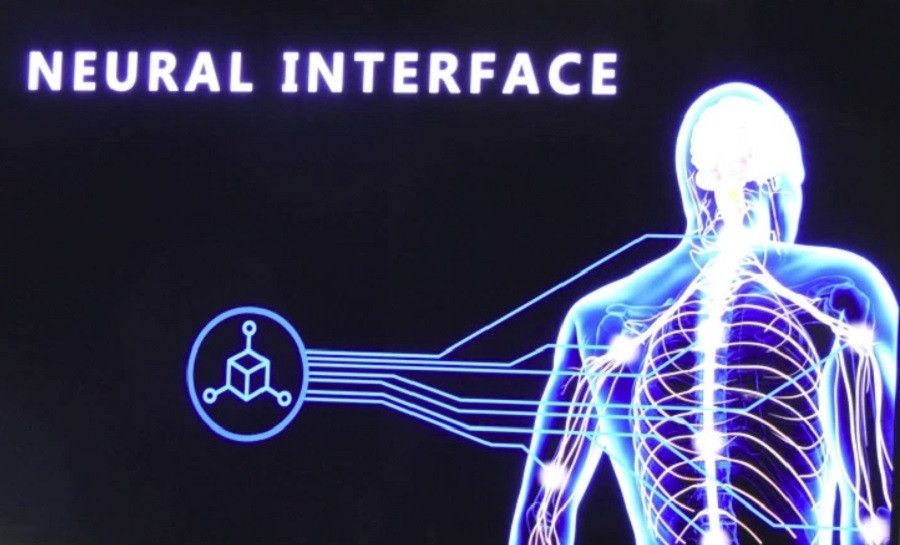
Nvidia Inception’s AI health care startups cover neural interfaces to better MRI
More than 200 artificial intelligence startups applied for Nvidia’s Inception contest, which seeks to identify the best AI startups. The company created the program to find new uses for its graphics processing units (GPUs), but it’s also hoping these startups will change the world.
So far, the company has identified more than 2,800 AI startups over the years through Inception. I listened to pitches from 12 finalists in a Shark Tank styled judging event last week. Each is competing to be one of three finalists to share the $1 million prize pool.
“We’re trying to enable our ecosystem of deep learning neural networks,” said Nvidia CEO Jensen Huang, as he introduced a panel of four judges. The 12 semi-finalists gave their 8-minute pitches, six finalists were selected, and the final winners will be picked at the company’s GPU Technology Conference on March 27 in San Jose, California. They ranged from AI for bionic arms to faster, cheaper, and more accurate magnetic resonance imaging (MRI) scans.

YouPorn used AI to predict the porn searches of the future and, um, brace yourselves
Online pornography is going to some new and very bizarre places, according to the neural network YouPorn used to predict future porn searches.

The Transformer of Autonomous Farmbots Can Do 100 Jobs on Its Own
The multitalented Dot Power Platform could raise crop yields 70 percent by 2050.
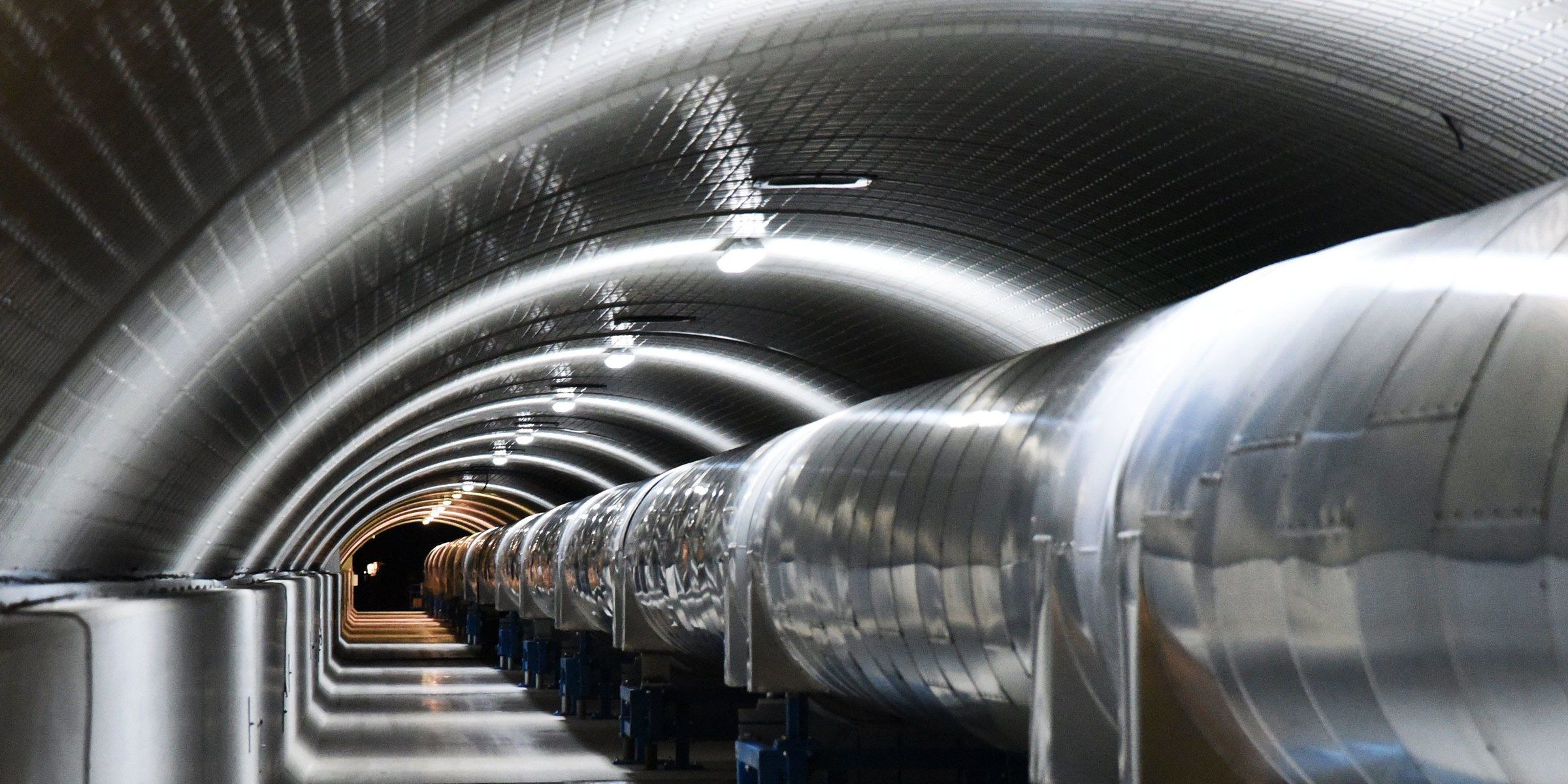
How Fast Can Gravitational Wave Detection Get?
With machine learning and other algorithmic approaches, researchers are increasing the speed at which they detect the undulations of spacetime.
VICE on HBO, Full Episode
Everyone is worried about robots stealing manufacturing jobs, but the real value (and threat) in robots may lie in whether they can become smart enough to actually think on their own.
One of the major milestones in creating human level intelligence is for machines to attain self-awareness. And Columbia University’s Creative Machines Lab may have already done it. “These robots learn overtime, to stimulate themselves in a future situation they haven’t actually experienced.” said Dr. Hod Lipson, the mechanical engineering professor leading the lab’s push to create self-aware robots.
“In other words, they don’t have to learn by doing,” Lipson told VICE News. “They can learn by thinking.”
The robotics department at UC Berkley has made similar advancements with their self-teaching robot BRETT. Using trial and error, BRETT can learn how to fold laundry, assemble LEGO blocks and fit pegs into a hole.
From a technological standpoint, these advancements are exciting, but they raise an important philosophical question: If humans create machines whose intelligence surpasses our own, will we be able to control them?
VICE’s Hamilton Morris explores how robotics and the computers that power them are poised for an extraordinary leap forward with the emergence of artificial intelligence, and how humanity can reconcile the huge risks and possibilities that will follow.