Category: robotics/AI – Page 2,783
Saudi Arabia grants citizenship to robot Sophia
(Revised post)
Arab News, the official outlet of the Royal Saudis, proudly reported of Saudi Arabia being “the first country to grant a robot citizenship”. Below is a more sober account of this publicity stunt.
It is ironic for a country ruled by fundamentalist zealots to equate a machine to humans. What ‘citizenship’ means in an absolute monarchy which executes more of its human ‘citizens’ than ISIS and where women aren’t allowed to walk alone? Very little. That may be why the Saudi royals could afford pull such a stunt without considering the resulting legal and moral quagmire.

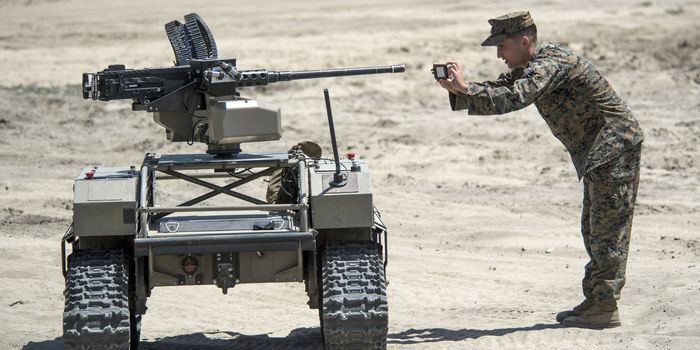
Amazon Is Quietly Building the Robots of Sci-Fi—Piece
Science fiction is the siren song of hard science. How many innocent young students have been lured into complex, abstract science, technology, engineering, or mathematics because of a reckless and irresponsible exposure to Arthur Clarke at a tender age? Yet Arthur Clarke has a very famous quote: “Any sufficiently advanced technology is indistinguishable from magic.”
It’s the prospect of making that… ahem… magic leap that entices so many people into STEM in the first place. A magic leap that would change the world. How about, for example, having humanoid robots? They could match us in dexterity and speed, perceive the world around them as we do, and be programmed to do, well, more or less anything we can do.
Such a technology would change the world forever.
The New Religions Obsessed with A.I
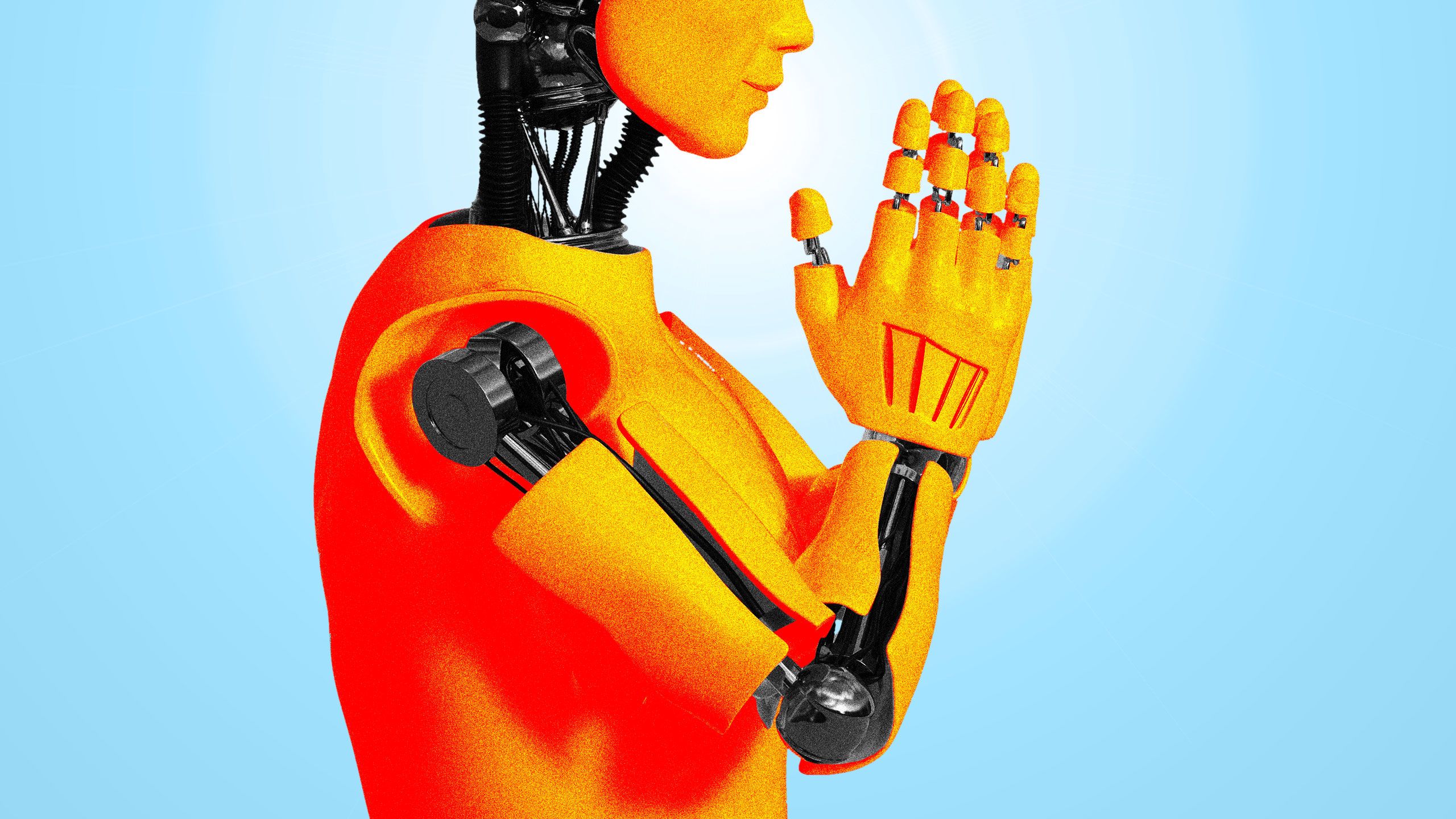
How far should we integrate human physiology with technology? What do we do with self-aware androids—like Blade Runner’s replicants—and self-aware supercomputers? Or the merging of our brains with them? If Ray Kurzweil’s famous singularity—a future in which the exponential growth of technology turns into a runaway train—becomes a reality, does religion have something to offer in response?
Yes, not only is A.I. potentially taking all of our jobs, but it’s also changing religion.

OFFSET Program Calls for Participants in Swarm Sprints
DARPA’s OFFensive Swarm-Enabled Tactics (OFFSET) program envisions future small-unit infantry forces using small unmanned aircraft systems (UASs) and/or small unmanned ground systems (UGSs) in swarms of 250 robots or more to accomplish diverse missions in complex urban environments. By leveraging and combining emerging technologies in swarm autonomy and human-swarm teaming, the program seeks to enable rapid development and deployment of breakthrough capabilities to the field.
To augment enhance OFFSET’s potential contributions to the warfighter, DARPA aims to engage with a wider developer and user audience through rapid technology-development and integration efforts called swarm sprints. Participants in these experiments—“sprinters”—can work with one or both integration teams and each other to create and test their own novel swarm tactics and enabling technologies.
For more information, visit www.darpa.mil.


Nanobots will live in our brains in the 2030s, says Google boss
Ray Kurzweil is director of engineering at Google but he is better known for writing best-selling books outlining the future of artificial intelligence.
He has made 147 predictions on the future of technology including the ubiquity of wearable devices and the move from desktops and laptops to smartphones and tablets. In fact, his prediction rate has been rated 86 per cent accurate.
With this in mind, fans were excited to see Kurzweil answer their questions in a live streaming interview session last week where he elaborated on his predictions.
Could drone that can deliver cargo to islets in South China Sea secure presence in disputed waters?
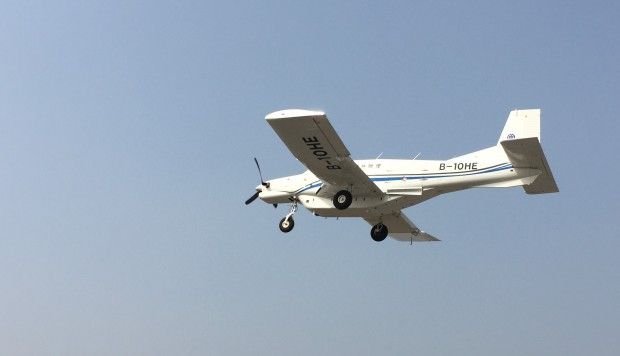
China has carried out a test flight of an unmanned aerial vehicle, or drone, that could provide rapid cargo delivery to remote islets in the South China Sea without airstrips, in Beijing’s latest move to secure its presence in the disputed waters.
The drone – built from a modified low-cost fixed-wing plane – can carry 1.5 tonnes of cargo and land on a runway of just 200 metres, according to the Institute of Engineering Thermophysics at the Chinese Academy of Sciences in Beijing, which led the project.
It can also use a dirt track or grass field for take off and landing at military facilities that do not have an airfield, the institute said on its website on Friday.