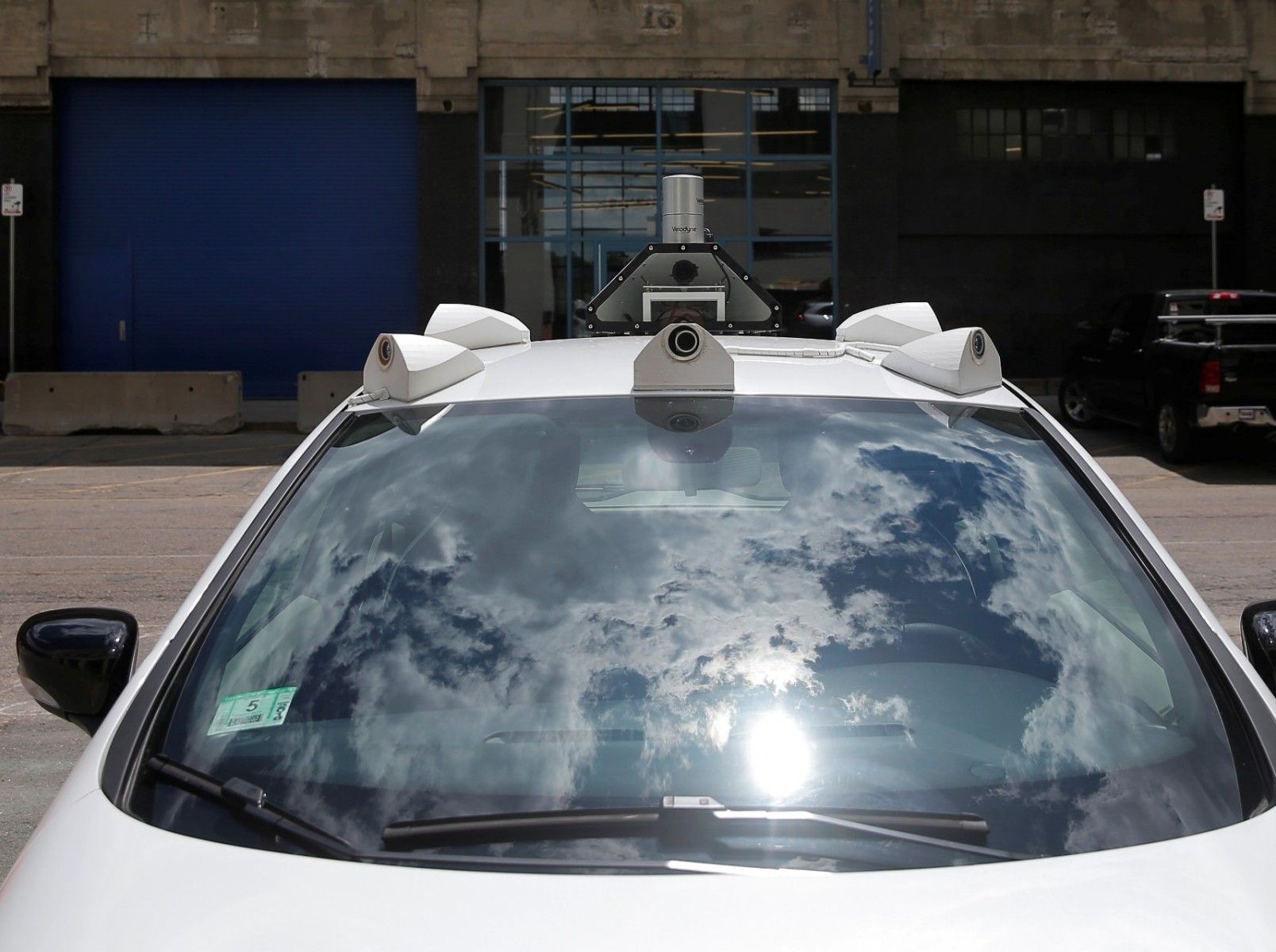
The agency wants ideas for turning computers into lifelong learners.

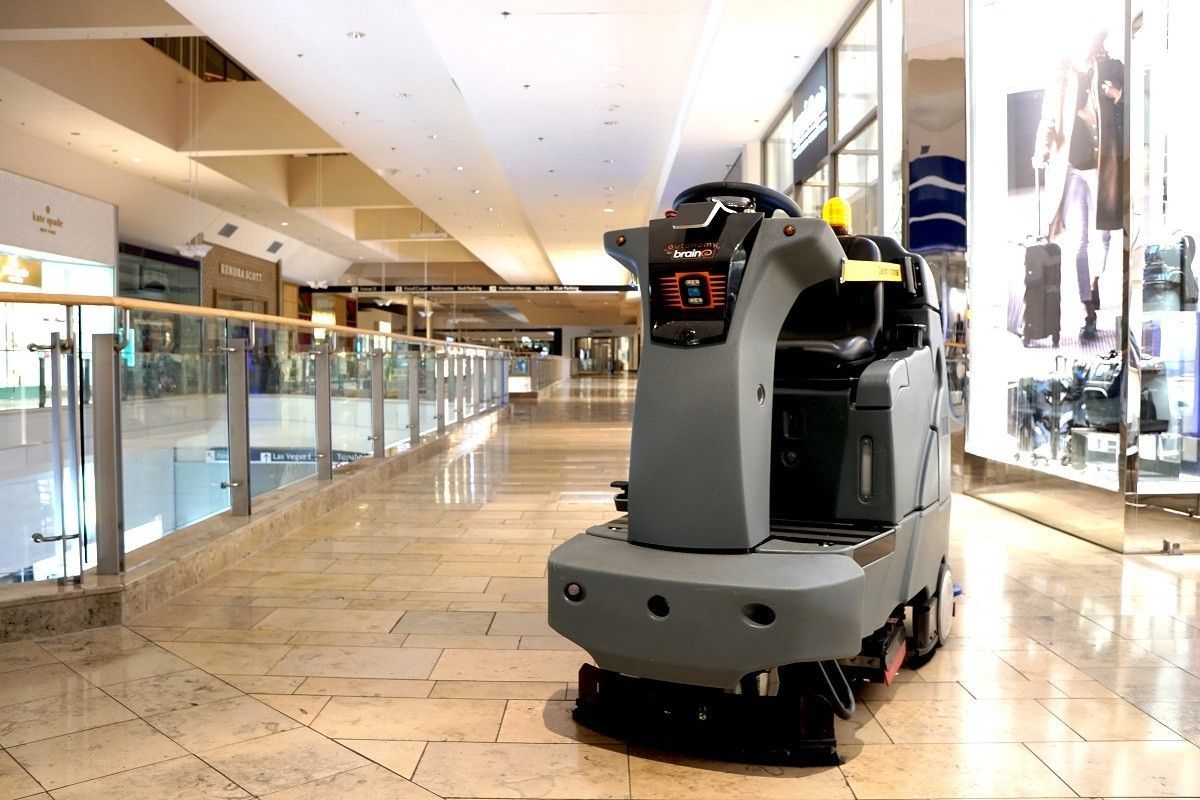
Planning to try and automate the entire store.
Walmart (WMT) has been quietly testing out autonomous floor scrubbers during the overnight shifts in five store locations near the company’s headquarters in Bentonville, Arkansas.
Continue Reading Below
A spokesperson for Walmart told FOX Business that the move, which was first reported by LinkedIn, is a “very small proof of concept pilot that we are running” and that the company still has a lot more to learn about how this technology “might work best in our different retail locations.”
But can it backflip?
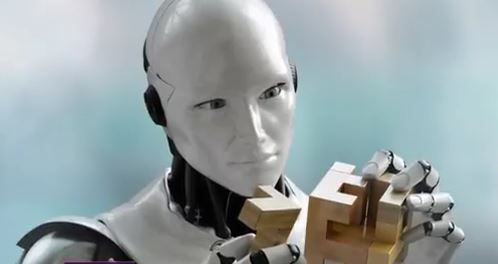
In a recent article, I began to unpack Rodney Brooks’ October 2017 essay “The Seven Deadly Sins of AI Predictions.” Now I continue my analysis by looking into the faulty atheistic thinking that motivates the AI salvation preached by futurists such as Google’s Ray Kurzweil. Although Brooks does not address this worldview dimension, his critique of AI predictive sins provides a great opportunity for just that.
Brooks is a pioneer of robotic artificial intelligence (AI) and is MIT Panasonic Professor of Robotics Emeritus. He is also the founder and chief technology officer of Rethink Robotics, which makes cobots—robots designed to collaborate with humans in a shared industrial workspace.
Previously I discussed Brooks’ remark that “all the evidence that I see says we have no real idea yet how to build” the superintelligent devices that Kurzweil and like-minded singularity advocates imagine.
Millimeter waves, massive MIMO, full duplex, beamforming, and small cells are just a few of the technologies that could enable ultrafast 5G networks.
Today’s mobile users want faster data speeds and more reliable service. The next generation of wireless networks—5G—promises to deliver that, and much more. With 5G, users should be able to download a high-definition film in under a second (a task that could take 10 minutes on 4G LTE). And wireless engineers say these networks will boost the development of other new technologies, too, such as autonomous vehicles, virtual reality, and the Internet of Things.
If all goes well, telecommunications companies hope to debut the first commercial 5G networks in the early 2020s. Right now, though, 5G is still in the planning stages, and companies and industry groups are working together to figure out exactly what it will be. But they all agree on one matter: As the number of mobile users and their demand for data rises, 5G must handle far more traffic at much higher speeds than the base stations that make up today’s cellular networks.

Furthermore, with advancements in quantum computing and machine learning, many notable public figures, including Stephen Hawking and Elon Musk, have indicated a growing concern with the imminent threat of AI surpassing human intelligence (Gosset, 2017). For instance, Darrell M. West, a political scientist, has proposed a protectionist framework that appeals to transhumanism, in which he restructures socioeconomic policy to account for changes in technology-induced unemployment. In particular, he posits that “Separating the dispersion of health care, disability, and pension benefits outside of employment offers workers with limited skills social benefits on a universal basis” (West, 2015). Expounding upon this equivocation, a more viable solution to potential unemployment is the realization of a multi-faceted policy which advocates the improvement of STEM-related education on a broad economic base, with habituation programs for the unskilled workforce. That is, with the implementation of appropriate and reformatory policies concerning the future development of AI technologies, this sector provides an economic incentive for new job creation, compatible with industrial development.
Prompt: What are the political implications of artificial intelligence technology and how should policy makers ensure this technology will benefit diverse sectors of society?
In recent years, the rapid development and mass proliferation of artificial intelligence have had various sociopolitical implications. It is a commonly held belief that the emergence of this technology will have an unprecedented impact on policies and political agendas. However, such discourse often lacks a geopolitical and social dimension, which limits the breadth of analysis. Further, little consideration has been given to potential employment and public policy reform. Growing concerns have been raised regarding the potential risk inherent in the evolution of strong AI, which provides the basis for transhumanism, whereby it is conjectured that AI will eventually be able to surpass human intelligence. As such, it is incumbent upon the upcoming generation of policymakers to implement and adopt necessary measures, which will provide a careful, multilateral framework, ultimately achieving market-oriented technological advancement with respect to employment and public policy.
Machine learning, the interplay of computer science and neuroscience, is a rapidly developing field that has been a source of much political controversy in recent years. While emerging technologies have significantly improved production quality and efficiency across industries, they have also raised concerns such as job displacement and other unfavourable socioeconomic implications (Karsten & West, 2015). In particular, the growing shortage of job opportunities has furnished increasing levels of unemployment and has, in various instances, lead to unwanted economic stagnation. On the subject of potential future unemployment, many policymakers have proposed an increase in Earned Income Tax Credit, which provides a collateral basic income and encourages profit-sharing (West, 2015).
Do you want to change our world by sending humans to another one?
Now is the time.
At Lockheed Martin Space, we’ve been robotically exploring the solar system for decades. We’ve been on Mars for over 40 years starting with Viking, and we’re the only company in the world that has helped NASA visit as many planets, moon, and asteroids.
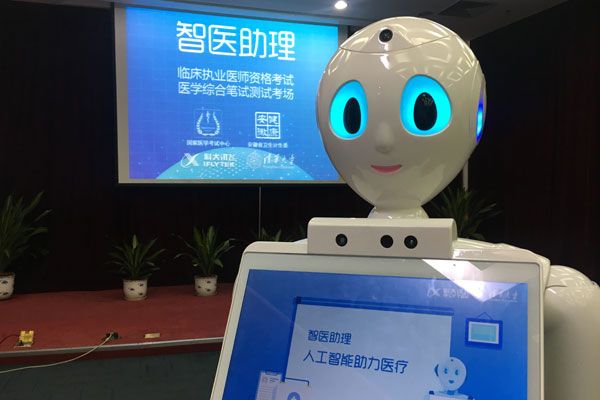
Its developer iFlytek Co Ltd, a leading Chinese artificial intelligence company, said on Thursday that the robot scored 456 points, 96 points higher than the required marks.
The artificial-intelligence-enabled robot can automatically capture and analyze patient information and make initial diagnosis. It will be used to assist doctors to improve efficiency in future treatments, iFlytek said.
This is part of broader efforts by China to accelerate the application of AI in healthcare, consumer electronics, and other industries.
And with an apparently adequate battery too! None of the power lines are visible anymore!
Welcome to the NINJA-singularity!
So wax on.
Then wax off! wink
A new disaster robot has amazing human-like capabilities.