Toggle light / dark theme

A neural network tried to write a 9th Harry Potter book, and the results are hilarious

Do you remember that memorable scene in the Harry Potter books when a person seeking revenge on Ron turns out to be Dumbledore hiding behind a cream cake?

If you don’t, that’s probably because you read the version of Harry Potter written by J.K. Rowling instead of an LSTM recurrent neural network — trained to generate new Hogwarts-related stories using a data set consisting of the series’ first four books.

“I’ve been experimenting with deep learning over the past few weeks, and the Harry Potter story is the result of one of those experiments,” creator Max Deutsch tells Digital Trends. “Beyond just looking for a fun way to practice what I’ve been learning, the Harry Potter project was an attempt to make something enjoyable to read.”

The Threats That Artificial Intelligence Researchers Actually Worry About

Slate summary of the debate on AI Safety:

Fears about A.I. take a very different form depending on whom you ask.

Some researchers think that the benefits of developing an A.G.I. far outweighv the risks, and the question of control is a moot point. Intelligent systems will be developed by humans and controlled by humans, so there is nothing to worry about.

A.I. safety researchers strongly disagree: There is no reason to believe that we will be able to control generally intelligent, let alone superintelligent, systems. In fact, we have no idea of what a world with (super)intelligent machines would be like. But we have at least a good idea of potentially harmful scenarios—like, say, an A.I. gaining unilateral control of all resources—so the earlier we start thinking about it, the better.

Robot mower distracting Seattle drivers

Although this article is 1 month old; still is too interesting not to share.


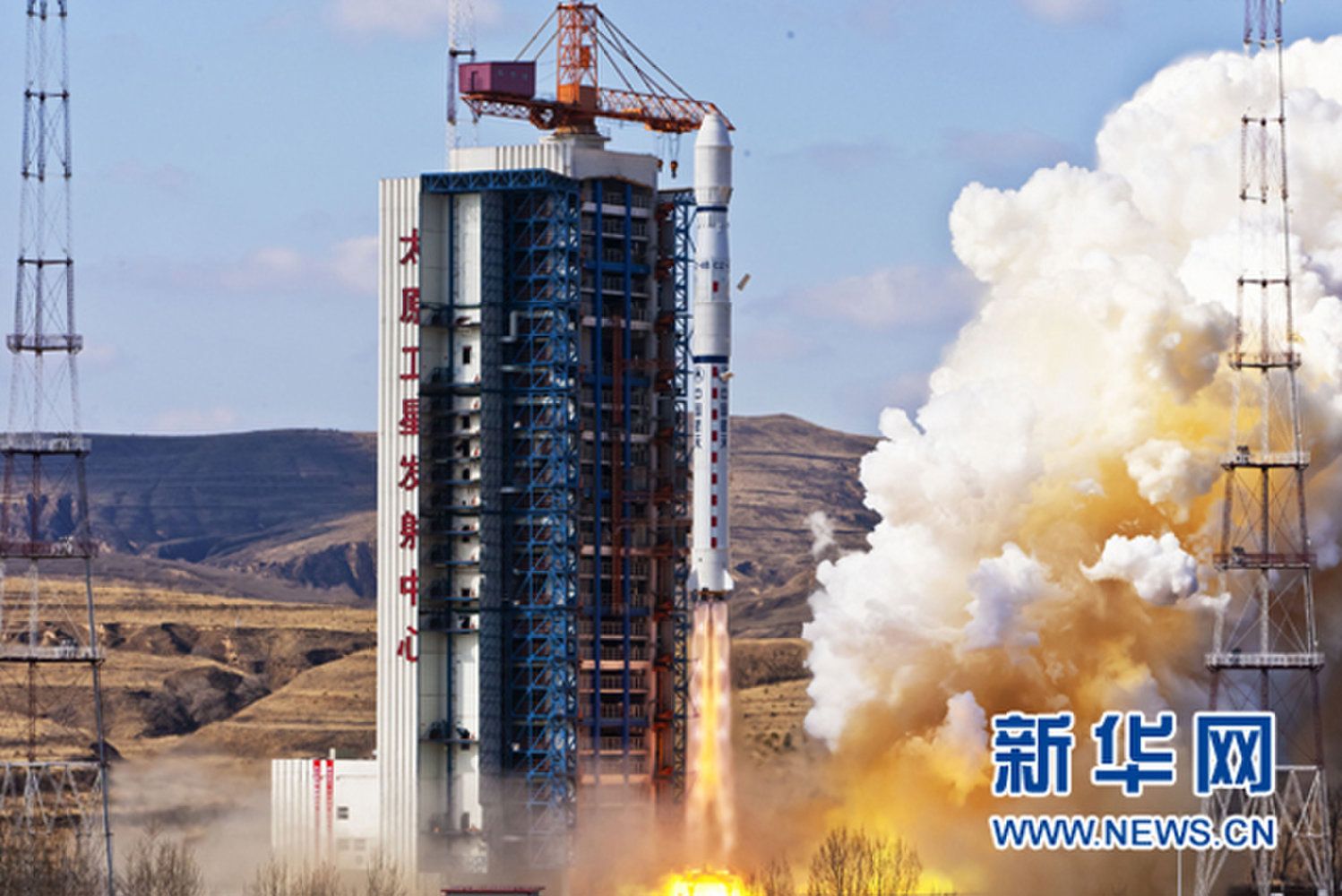
SEATTLE — If you happen to see a driverless lawnmower on the side of the road, WSDOT would rather you keep your eyes on the road.

Crews now use a driverless slope mower to clear hard to reach areas that are too dangerous for an operator to sit on a riding mower. It’s proving to be an efficient, safe tool for WSDOT.

But operator Paul Julian says he’s seeing too many close calls by distracted drivers.

New concept would have an assembly robot build an extremely large telescope in space

Enhancing astronomers’ ability to peer ever more deeply into the cosmos may hinge on developing larger space-based telescopes. A new concept in space telescope design makes use of a modular structure and an assembly robot to build an extremely large telescope in space, performing tasks in which astronaut fatigue would be a problem.

The robotically assembled modular space telescope (RAMST) design is described by Nicolas Lee and his colleagues at the California Institute of Technology and the Jet Propulsion Laboratory in an article published this week by SPIE, the international society for optics and photonics, in the Journal of Astronomical Telescopes, Instruments, and Systems (JATIS).

Ground-based telescopes are limited by atmospheric effects and by their fixed location on the Earth.

PARC Develops Vanishing Autonomous Air Vehicles through Funds from DARPA

PARC is a Xerox company that has received funds from the Defense Advanced Research Projects Agency (DARPA) through its Inbound, Controlled, Air-Releasable, Unrecoverable Systems (ICARUS) program.

The ICARUS program aims at creating a prototype air vehicle that has the potential to deliver small payloads in an autonomous manner to targeted locations and then disappears after the task it completed. PARC in cooperation with AeroVironment Inc. plans to produce particular materials and the air delivery system that can be made to disappear through a project within ICARUS that is referred to as On-Target Delivery and Disintegration Upon Stress-release Trigger (ONLY-DUST).

The project focuses on producing complex structures that are majorly firm during flight and storage, and at the same time permits reliable on-demand transience. It is possible to potentially scale up the DoD applications of the demonstration system because of its association with AeroVironment Inc., a leading company in unmanned, small aerial vehicles.

/* */