In a big step on the journey to our robot-laden future, California is moving to permit companies that are developing self-driving cars to test them in the state with no human safety driver at the wheel.
The state that’s home to the biggest concentration of autonomous vehicles is poised to take a big step to help advance the technology — and fend off efforts by other states to attract test programs.
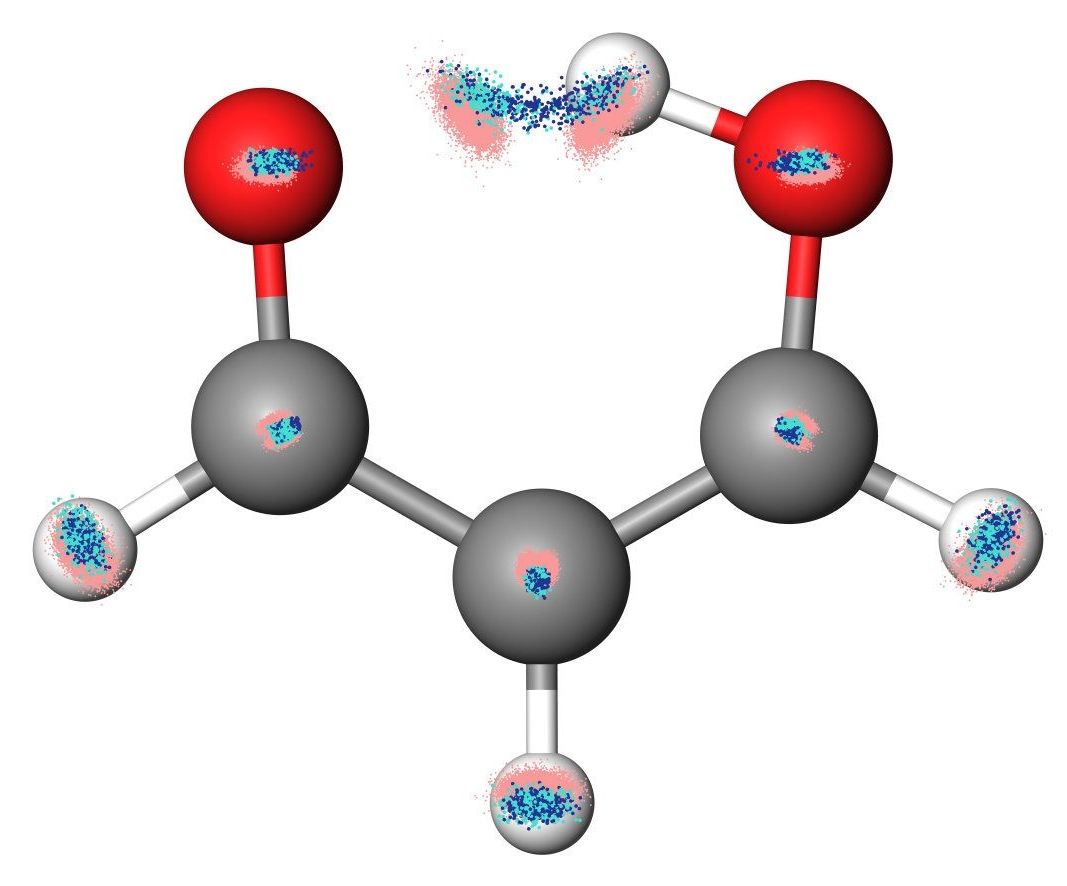
An international, interdisciplinary research team of scientists has come up with a machine-learning method that predicts molecular behavior, a breakthrough that can aid in the development of pharmaceuticals and the design of new molecules that can be used to enhance the performance of emerging battery technologies, solar cells, and digital displays.
The work appears in the journal Nature Communications.
“By identifying patterns in molecular behavior, the learning algorithm or ‘machine’ we created builds a knowledge base about atomic interactions within a molecule and then draws on that information to predict new phenomena,” explains New York University’s Mark Tuckerman, a professor of chemistry and mathematics and one of the paper’s primary authors.
This week, Neill Blomkamp, the Academy Award-nominated director of District 9, unveiled a short film that he made with the Unity Technologies game engine. At Unity’s event in Austin, Texas, Blomkamp’s Oats Studios showed off Adam: The Mirror, a 6-minute film that was a sequel to Adam, a short film that Unity built as an internally produced showcase demo last year.
Evoking the theme of transhumanism, or the notion that we can live beyond our physical bodies, the film shows an android coming to life and realizing that it was a human trapped in a robot’s body. The film was meant to show off the power of the Unity engine when it comes to making high-quality 3D graphics. But to Blomkamp, it’s also an example of how a game engine can help democratize film, making life easier for independent film makers just as Unity has done for indie game developers.
Oats Studios in Vancouver will release a second film, Adam: The Prophet, also built with Unity. And if all goes well, then Blomkamp might be able to get financing for a larger Adam movie, since he has already created a backstory and script for the project. Blomkamp said the game engine helps because it allows him to shoot one scene and then put it into a digital form, like a “3D sandbox.” He shot some scenes in the desert for Adam: The Mirror. And if he needs to re-use that desert scenery, he can do so very easily because it exists in a digital format. So he only has to go out to the desert once to shoot actors.
Building a house by hand can be both time-consuming and expensive. Numerous homebuilders have chosen to automate part of the construction (i.e., by printing the home’s parts) instead.
A new Ukrainian homebuilding startup called PassivDom uses a 3D printing robot that can print parts for tiny houses. The machine can print the walls, roof, and floor of PassivDom’s 380-square-foot model in about eight hours. The windows, doors, plumbing, and electrical systems are then added by a human worker.
When complete, the homes are autonomous and mobile, meaning they don’t need to connect to external electrical and plumbing systems. Solar energy is stored in a battery connected to the houses, and water is collected and filtered from humidity in the air (or you can pour water into the system yourself). The houses also feature an independent sewage system.
How the tech giant is trying to leverage the science of breakthroughs and resurrect the lost art of invention
A snake-robot designer, a balloon scientist, a liquid-crystals technologist, an extradimensional physicist, a psychology geek, an electronic-materials wrangler, and a journalist walk into a room. The journalist turns to the assembled crowd and asks: Should we build houses on the ocean?
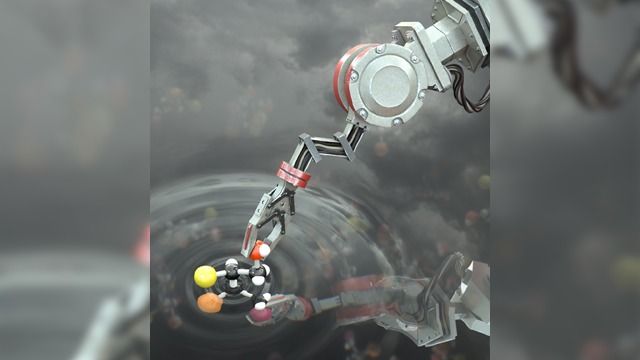
Scientists at The University of Manchester have created the world’s first ‘molecular robot’ that is capable of performing basic tasks including building other molecules.
The tiny robots, which are a millionth of a millimetre in size, can be programmed to move and build molecular cargo, using a tiny robotic arm.
Each individual robot is capable of manipulating a single molecule and is made up of just 150 carbon, hydrogen, oxygen and nitrogen atoms. To put that size into context, a pile of a billion billion of these robots would still only be the same size (volume/weight) as a few grains of salt.