The new technique, dubbed “deep image reconstruction,” moves beyond binary pixels, giving researchers the ability to decode images that have multiple layers of color and structure.
Category: robotics/AI – Page 2,756
Garry Kasparov on Artificial Intelligence, Technology and Politics, and AlphaZero Chess
Former world chess champion and human rights activist Garry Kasparov discusses artificial intelligence and the political and social implications of it.
Drawing on his recent book “Deep Thinking,” Kasparov outlines what he considers the potential of new technologies built on “machine learning.” Kasparov explains why free societies must prioritize technological progress and embrace the challenges associated with innovation. Finally, Kasparov considers the new artificial intelligence chess program, AlphaZero—what we can learn from it about chess, as well as the relationship between humans and machines.

8 Top Videos On the Future of Medicine (Best of 2017)
8 top videos of the future of medicine from 2017.
Summary: a review of the eight top videos on the future of medicine reported in 2017. [This article first appeared on the LongevityFacts.com website. Author: Brady Hartman.]
Throughout 2017, a new breed of researchers called geroscientists were working on revolutionary medical advances, including cancer-seeking bacteriobots, lab-grown organs, soft robots that help an ailing heart to beat, weaponized killer T-cells, plans for radical life extension, advancements in CRISPR gene editing, and the emergence of the microbiome in human health.
These videos came from many sources including Kurzsegat, Popular Science, and the journal Nature. Here’s a look back at the 8 videos in 2017 that shows us the coming revolutionary advances in healthcare.

Bio-inspired robots come closer to reality
A tissue-based soft robot that mimics the biomechanics of a stingray has been developed, which could lead to advances in bio-inspired robotics, regenerative medicine and medical diagnostics.
The simple body design of stingrays, specifically, a flattened body shape and side fins that start at the head and end at the base of their tail, makes them ideal to model bio-electromechanical systems on.
The 10-millimeter long robot is made up of four layers: tissue composed of live heart cells, two distinct types of specialized biomaterials for structural support, and flexible electrodes. Imitating nature, the robotic stingray is even able to “flap” its fins when the electrodes contract the heart cells on the biomaterial scaffold.
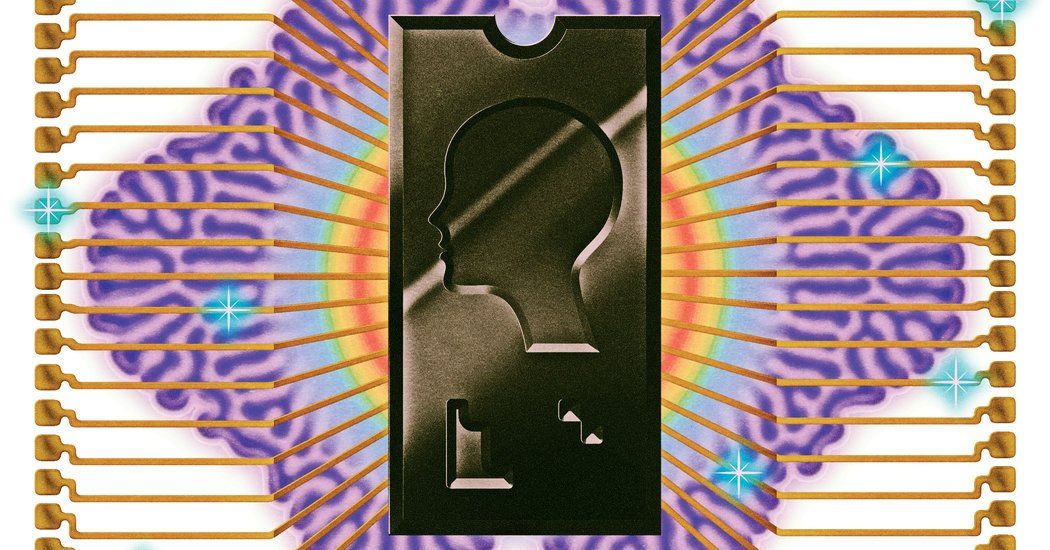
Big Bets on A.I. Open a New Frontier for Chip Start-Ups, Too
Today, at least 45 start-ups are working on chips that can power tasks like speech and self-driving cars, and at least five of them have raised more than $100 million from investors. Venture capitalists invested more than $1.5 billion in chip start-ups last year, nearly doubling the investments made two years ago, according to the research firm CB Insights.
SAN FRANCISCO — For years, tech industry financiers showed little interest in start-up companies that made computer chips.
How on earth could a start-up compete with a goliath like Intel, which made the chips that ran more than 80 percent of the world’s personal computers? Even in the areas where Intel didn’t dominate, like smartphones and gaming devices, there were companies like Qualcomm and Nvidia that could squash an upstart.
But then came the tech industry’s latest big thing — artificial intelligence. A.I., it turned out, works better with new kinds of computer chips. Suddenly, venture capitalists forgot all those forbidding roadblocks to success for a young chip company.
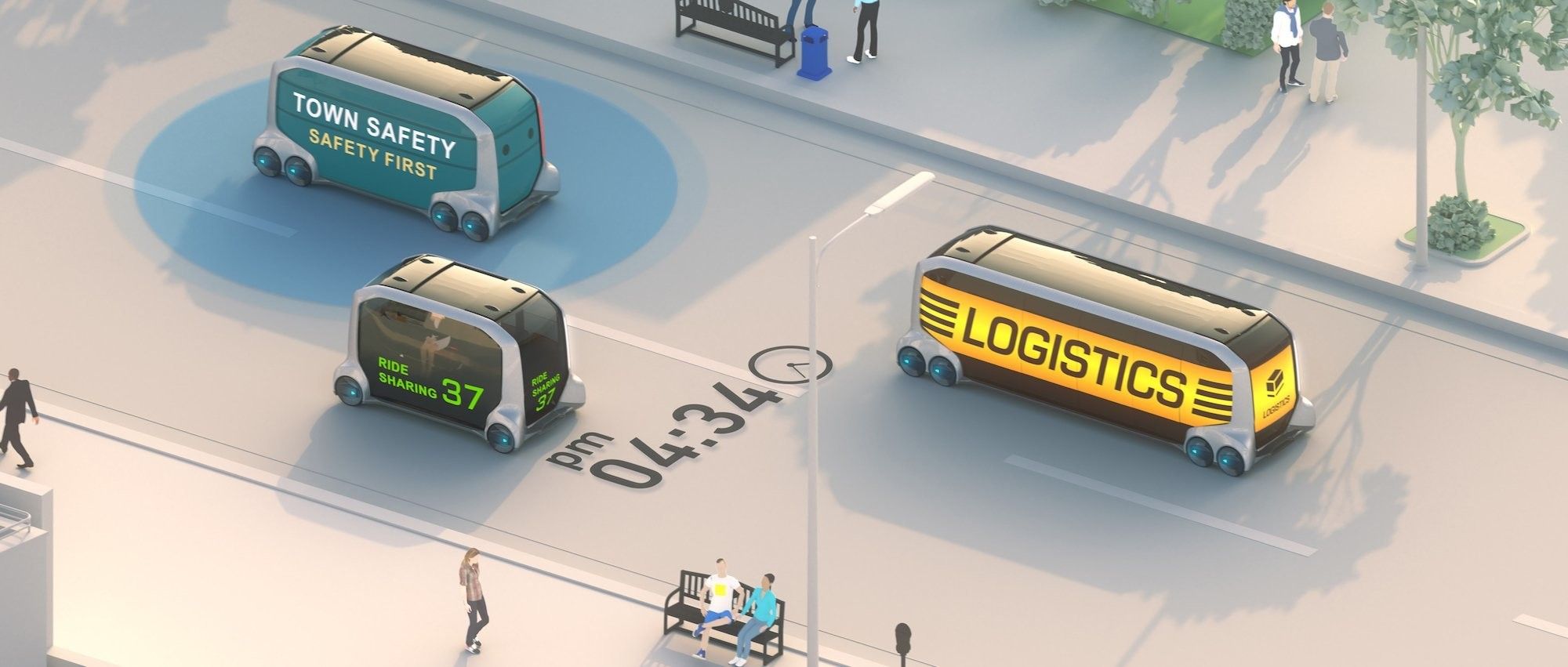
Toyota has unveiled a crazy self-driving vehicle
Toyota revealed a self-driving concept vehicle, the e-Palette, at the International Consumer Electronics Show (CES) in Las Vegas on Monday.
The electric, box-shaped vehicle will come in three sizes. The largest will be around the size of a bus and be able to haul freight and make large deliveries, while the smallest will be compact enough to travel on sidewalks. Toyota envisions the e-Palette will serve a variety of potential uses, allowing businesses to deliver goods, transport people, or use the vehicle as a mobile storefront or office.
Boeing’s prototype cargo drone can haul 500-pound loads
In the future, autonomy won’t just mean you can relax in the passenger seat on your drive home from work. Driverless vehicles of all kinds are set to revolutionize the cargo industry, too, from delivering a pizza or dropping off an Amazon package, to hauling much larger shipments across continents and the high seas. Naturally, Boeing is one of many companies investing in cargo planes of tomorrow, and is keen to show off some of its early work in the form of a huge octocopter capable of carrying loads of up to 500 pounds (over 250kg). In less than three months, engineers at Boeing built and carried out successful test flights of the all-electric prototype, possibly (but unofficially) breaking a Guinness world record in the process.
The rough-and-ready concoction of metal and batteries measures 15 feet long, 18 feet wide and 4 feet tall, weighing in at 747 pounds (nearly 339kg). In other words, it dwarfs the consumer DJI drone you got for Christmas. Obviously Boeing’s prototype is far from a commercial product, but the firm says it’ll be used “as a flying test bed to mature the building blocks of autonomous technology for future applications.”
Meet the robo-MANTIS unveiled for the first time at CES
MotivRobotics, which is also responsible for creating the robotic arms for NASA’s next Mars rover, debuted the robot for the first time at CES in Las Vegas. The mantis is semi-autonomous.