Toggle light / dark theme

Artificial Intelligence Chair At Singularity University On How AI Will Augment Human Capability

Good write up by Peter on Neil Jacobstein’s perspective on AI. Peter never disappoints in his articles.


Singularity University is part business incubator and part think tank founded by Peter Diamandis and Ray Kurzweil in 2008 in the NASA Research Park in Silicon Valley. Among the topics that have risen in prominence in the curriculum of the University is artificial intelligence.

Neil Jacobstein is a former President of Singularity University, and currently he chairs the Artificial Intelligence and Robotics Track at Singularity University on the NASA Research Park campus in Mountain View California. We recently spoke, and the conversation covered his thoughts on how AI can be used to augment current human capability, strategies technology executives should use to think about AI, the role the government should play in helping mitigate the potential job losses from AI, his perspectives on the dangers of artificial intelligence that have been expressed by major thought leaders, advice on how to train workers to be prepared for the coming wave of AI, and a variety of other topics.

(To listen to an unabridged audio version of this interview, please click this link. This is the sixth interview in my artificial intelligence series. Please visit these links to interviews with Mike Rhodin of IBM Watson, Sebastian Thrun of Udacity, Scott Phoenix of Vicarious, Antoine Blondeau of Sentient Technologies, Greg Brockman of OpenAI, and Oren Etzioni of the Allen Institute for Artificial Intelligence.)

NASA wants astronauts to have 3D printed pizza, and this startup is building a printer to make it happen

This needs to be on the commercial carriers especially for those 4+ hour flights.


An Austin, Texas company, whose founders were commissioned by NASA to develop palatable foods for astronauts’ deep space mission to Mars, has built a device that can 3D-print pizza.

The company –known as BeeHex — boasts that its machine is efficient, clean, and capable of churning out a delicious pizza in less than half the time it takes a typical human chef. The tech is being developed for astronauts, but since NASA’s manned mission to the Red Planet isn’t planned until the 2030s, us Earthbound eaters may be able to enjoy a 3D-printed pizza at theme parks, shopping malls, or concert halls by early 2017.

Related: MIT student designs gardening robots that could grow produce for astronauts on Mars.

The Singularity Controversy

In this London Futurists event, Amnon Eden, lead editor of the volume “Singularity Hypotheses” which was published three years ago, provided an update on the controversies about the Technological Singularity. Topics covered include:

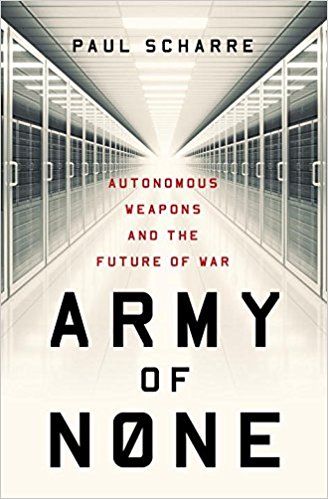
Luddites, Philistines, and Starry-Eyed: The War over Killer Robots

AI (Artificial Intelligence) vs. IA (Intelligence Augmentation)

definition, sufficient and necessary conditions.

perennial fallacies, debunked and re-debunked.

Amnon was joined on stage by Mark Bishop, Professor of Cognitive Computing from Goldsmiths, University of London.

Computers may be evolving but are they intelligent?

Has anyone ever run the numbers on just how many people hours and $ spent on AI since 1950? Think about it for a minute; and how little we have advance v. the enhancement of people since the 1990 with BMI technology, bionics, etc. and it’s cost. My guess is Mr. Elon Musk understands the ROI extremely well between AI/ Robots v. human enhancement technology especially where there is a larger return and repeat business opportunity.


Computing has been getting much smarter since the idea of artificial intelligent was first thought of 60 years ago. But are computers intelligent?

Nick Bostrom: ‘We are like small children playing with a bomb’

Some truth to this if the engineering team and designers are not reflective of the broader world population. Good example, is the super race research of the Nazis and attempts to make it happen. Today, AI in the hands of a N. Korea for example could be bad for the world. However, the larger threat that I see with AI is still the hacking of AI, and stolen AI by criminals to use against society.


Sentient machines are a greater threat to human existence than climate change, according to the Oxford philosopher Nick Bostrom.

/* */