I keep reminding folks it is a must to have a very diverse team when we look at robotics and Biocomputing/ tech of any sort.
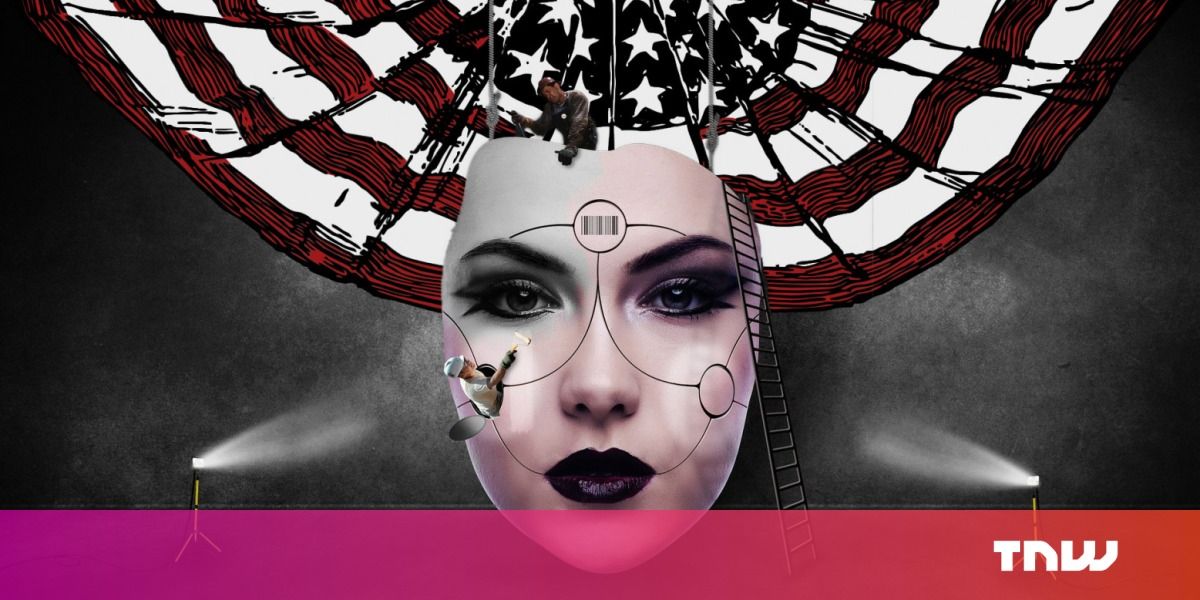
A black researcher had to wear a white mask to test her own project.
Facial recognition programs don’t recognize minorities as often as they do Caucasian faces — and here is why.
Daniela Rus loves Singapore. As the MIT professor sits down in her Frank Gehry-designed office in Cambridge, Massachusetts, to talk about her research conducted in Singapore, her face starts to relax in a big smile.
Her story with Singapore started in the summer of 2010, when she made her first visit to one of the most futuristic and forward-looking cities in the world. “It was love at first sight,” says the Andrew (1956) and Erna Viterbi Professor of Electrical Engineering and Computer Science and the director of MIT’s Computer Science and Artificial Intelligence Laboratory (CSAIL). That summer, she came to Singapore to join the Singapore-MIT Alliance for Research and Technology (SMART) as the first principal investigator in residence for the Future of Urban Mobility Research Program.
“In 2010, nobody was talking about autonomous driving. We were pioneers in developing and deploying the first mobility on demand for people with self-driving golf buggies,” says Rus. “And look where we stand today! Every single car maker is investing millions of dollars to advance autonomous driving. Singapore did not hesitate to provide us, at an early stage, with all the financial, logistical, and transportation resources to facilitate our work.”
Computer boffins Juan Echeverria and Shi Zhou at University College London have chanced across a dormant Twitter botnet made up of more than 350,000 accounts with a fondness for quoting Star Wars novels.
Twitter bots have been accused of warping the tone of the 2016 election. They also can be used for entertainment, marketing, spamming, manipulating Twitter’s trending topics list and public opinion, trolling, fake followers, malware distribution, and data set pollution, among other things.
In a recently published research paper, the two computer scientists recount how a random sampling of 1 per cent of English-speaking Twitter accounts – about 6 million accounts – led to their discovery.
Over the past half year, bots have been a widely discussed topic. Experts and the media heavily discussed all the possible benefits, the future, and the value bots could create for businesses and consumers. Arguably, the tipping point was Facebook’s F8 conference in April. Since then, many developers and consumers have massively experimented with bots and tested their limits to find the most suitable use cases for bots.
During this trend, the U.S. market has proven to be highly interested in bots. Several published surveys are showing strong U.S. bot companies, as you can see in VentureBeat’s Bots Landscape. But Europe is not far behind.
In Brief:
As the world of medicine is increasingly changed by biology, technology, communications, genetics, and robotics, predicting the outlook of the next few decades of medicine becomes harder. But that is exactly what Melanie Walker of the World Economic Forum does, and she predicts a bright new future for healthcare.
Tesla and SpaceX founder Elon Musk told CNBC on Friday that economies would most likely need a form of ‘universal basic income’ as more and more industries become automated.
» Subscribe to CNBC: http://cnb.cx/SubscribeCNBC
About CNBC: From ‘Wall Street’ to ‘Main Street’ to award winning original documentaries and Reality TV series, CNBC has you covered. Experience special sneak peeks of your favorite shows, exclusive video and more.
Connect with CNBC News Online
Get the latest news: http://www.cnbc.com/
Find CNBC News on Facebook: http://cnb.cx/LikeCNBC
Follow CNBC News on Twitter: http://cnb.cx/FollowCNBC
Follow CNBC News on Google+: http://cnb.cx/PlusCNBC
Follow CNBC News on Instagram: http://cnb.cx/InstagramCNBC
Elon musk: moving toward universal basic income due to automation | CNBC
Back in June, China debuted the world’s fastest supercomputer, the Sunway TaihuLight (pictured), with a Linpack benchmark result of 93 petaflop/s. That machine contains 40,960 locally developed ShenWei processors, each with 260 cores and roughly comparable with Intel’s Knight’s Landing Xeon Phi CPU. China also developed a 136GB/sec memory controller and custom interconnect that delivers 16GB/sec of peak bandwidth between nodes.
Now China is working on a prototype exascale (1,000-petaflop) system that it aims to complete by the end of this year, according to state media. An exascale computer is capable of a quintillion calculations per second, and could deliver vast dividends in deep learning and big data across a variety of disciplines as varied as nuclear test research, code breaking, and weather forecasting.
“A complete computing system of the exascale supercomputer and its applications can only be expected in 2020, and will be 200 times more powerful than the country’s first petaflop computer Tianhe-1, recognized as the world’s fastest in 2010,” said Zhang Ting, an application engineer at Tianjin’s National Super Computer Center, to Xinhua news agency (via AFP).