Toggle light / dark theme

This Robot Barista Is Faster Than a Human, and It Just Started Work in San Fran

Carla Rivas Schab


Gordon is a robotic arm that serves coffee in a San Francisco shopping complex. It’s the first robotic barista in the U.S., and it could serve about 120 coffees in an hour. “A lot of us spend a lot of time in line waiting for coffee,” Henry Hu, CEO of Cafe X Technologies, the local start-up that created the robot, tells USA Today. “And we decided to do something about it.”

Cafe X Technologies built a toll-booth sized stall to house Gordon, and customers can approach the stall or order via a mobile app. Gordon can serve seven drinks, including espressos and cafe lattes, for about $2.25 to $2.95 per 8-ounce cup. This system won’t get your name wrong, either. After choosing their type of drink, flavor, and intensity of flavor, customers enter a mobile number to get a four-digit code and then pay. When their drink is ready, they receive a text message.

Two Americans Aim to Plug Into the ‘Matrix’ through Black Market Brain Implants

Various transhumanism stories newly out or reshared:

https://mysteriousearth.net/2017/02/23/two-americans-aim-to-…-implants/ &

http://3dpromote.com/zoltan-istvan-nick-bostrom-and-the-anti…-atlantic/ &

http://www.hashtagy.net/en/news/zoltan-istvan-ran-for-presid…ork-times/


According to The Mirror, the two men are looking for a doctor who is skilled enough and willing to propel them into the matrix. The procedure itself has a high risk of failing, since the technology at hand hasn’t been tested before (at least on humans).

If they come out of this alive, the two men will be able to establish a direct communication route with the first forms of artificial intelligence that’s currently available. This “cranial chip” may provide the first step towards creating “the matrix.” If this proves to be successful, the unprecedented advantages will probably tempt others to undergo the same surgery, and eventually have the entire population plugged into this new reality.

‘Who’s in control?’ Scientists gather to discuss AI doomsday scenarios

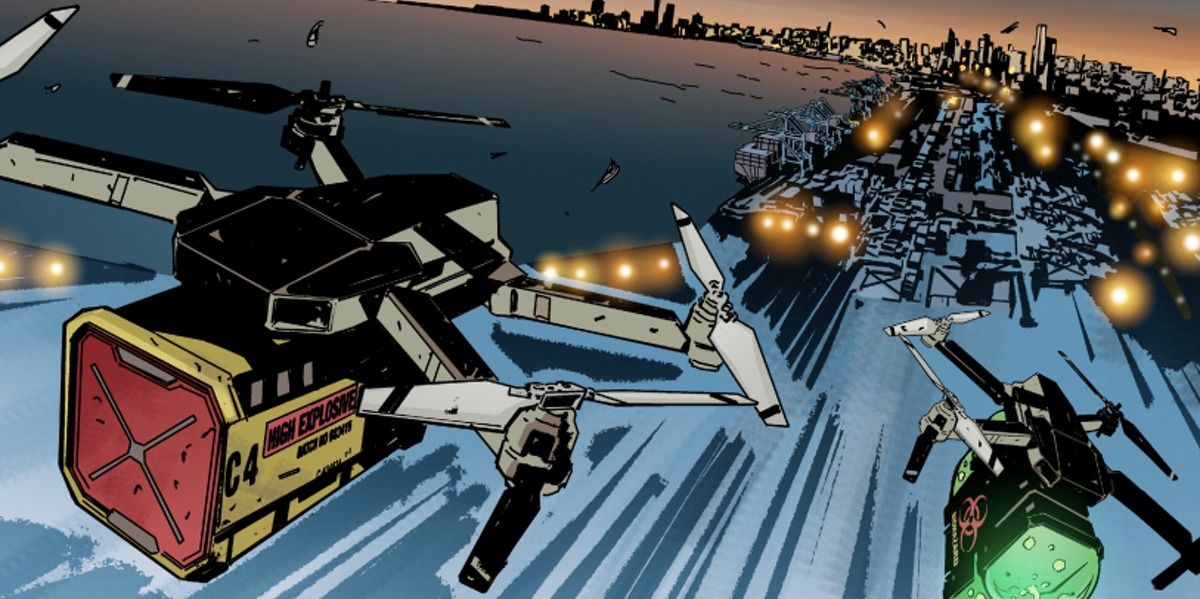
Artificial intelligence has the capability to transform the world — but not necessarily for the better. A group of scientists gathered to discuss doomsday scenarios, addressing the possibility that AI could become a serious threat.

The event, ‘Great Debate: The Future of Artificial Intelligence — Who’s in Control?’, took place at Arizona State University (ASU) over the weekend.

“Like any new technology, artificial intelligence holds great promise to help humans shape their future, and it also holds great danger in that it could eventually lead to the rise of machines over humanity, according to some futurists. So which course will it be for AI and what can be done now to help shape its trajectory?” ASU wrote in a press release.

AI Scientists Gather to Plot Doomsday Scenarios (and Solutions)

Artificial intelligence boosters predict a brave new world of flying cars and cancer cures. Detractors worry about a future where humans are enslaved to an evil race of robot overlords. Veteran AI scientist Eric Horvitz and Doomsday Clock guru Lawrence Krauss, seeking a middle ground, gathered a group of experts in the Arizona desert to discuss the worst that could possibly happen — and how to stop it.

Their workshop took place last weekend at Arizona State University with funding from Tesla Inc. co-founder Elon Musk and Skype co-founder Jaan Tallinn. Officially dubbed “Envisioning and Addressing Adverse AI Outcomes,” it was a kind of AI doomsday games that organized some 40 scientists, cyber-security experts and policy wonks into groups of attackers — the red team — and defenders — blue team — playing out AI-gone-very-wrong scenarios, ranging from stock-market manipulation to global warfare.

Horvitz is optimistic — a good thing because machine intelligence is his life’s work — but some other, more dystopian-minded backers of the project seemed to find his outlook too positive when plans for this event started about two years ago, said Krauss, a theoretical physicist who directs ASU’s Origins Project, the program running the workshop. Yet Horvitz said that for these technologies to move forward successfully and to earn broad public confidence, all concerns must be fully aired and addressed.

Google Deep Learning system diagnoses cancer better than a pathologist with unlimited time

Google has been working on advanced image-recognition systems for several years through its GoogLeNet projects. The project was, in part, aimed at the company’s autonomous car project, teaching self-driving cars to recognize everything from road layouts to stop signs.

The company has now applied GoogLeNet tech to cancer diagnosis, and reports that the system was already delivering good results straight out of the box, but says that tweaking the system has delivered stunning performance.

Pathologists have always faced a huge data problem in order to obtain an accurate diagnosis. A massive amount of information — slides containing cells from tissue biopsies, thinly sliced and stained — must be scanned in search of any abnormal cells. And time is of the essence.

Transhumanism: More Nightmare Than Dream?

A new well written but not very favorable write-up on #transhumanism. Despite this, more and more publications are tackling describing the movement and its science. My work is featured a bit.


On the eve of the 20th century, an obscure Russian man who had refused to publish any of his works began to finalize his ideas about resurrecting the dead and living forever. A friend of Leo Tolstoy’s, this enigmatic Russian, whose name was Nikolai Fyodorovich Fyodorov, had grand ideas about not only how to reanimate the dead but about the ethics of doing so, as well as about the moral and religious consequences of living outside of Death’s shadow. He was animated by a utopian desire: to unite all of humanity and to create a biblical paradise on Earth, where we would live on, spurred on by love. He was an immortalist: one who desired to conquer death through scientific means.

Despite the religious zeal of his notions—which a number of later Christian philosophers unsurprisingly deemed blasphemy—Fyodorov’s ideas were underpinned by a faith in something material: the ability of humans to redevelop and redefine themselves through science, eventually becoming so powerfully modified that they would defeat death itself. Unfortunately for him, Fyodorov—who had worked as a librarian, then later in the archives of Ministry of Foreign Affairs—did not live to see his project enacted, as he died in 1903.

Fyodorov may be classified as an early transhumanist. Transhumanism is, broadly, a set of ideas about how to technologically refine and redesign humans, such that we will eventually be able to escape death itself. This desire to live forever is strongly tied to human history and art; indeed, what may be the earliest of all epics, the Sumerian Epic of Gilgamesh, portrays a character who seeks a sacred plant in the black depths of the sea that will grant him immortality. Today, however, immortality is the stuff of religions and transhumanism, and how these two are different is not always clear to outsiders.

Contemporary schemes to beat death usually entail being able to “upload” our minds into computers, then downloading our minds into new, better bodies, cyborg or robot bodies immune to the weaknesses that so often define us in our current prisons of mere flesh and blood. The transhumanist movement—which is many movements under one umbrella—is understandably controversial; in 2004 in a special issue of Foreign Policy devoted to deadly ideas, Francis Fukuyama famously dubbed transhumanism one of the most dangerous ideas in human history. And many, myself included, have a natural tendency to feel a kind of alienation from, if not repulsion towards, the idea of having our bodies—after our hearts stop—flushed free of blood and filled with cryonic nitrogen, suspending us, supposedly, until our minds can be uploaded into a new, likely robotic, body—one harder, better, and faster, as Daft Punk might have put it.

10 Million Self-Driving Cars Will Hit The Road By 2020 — Here’s How To Profit

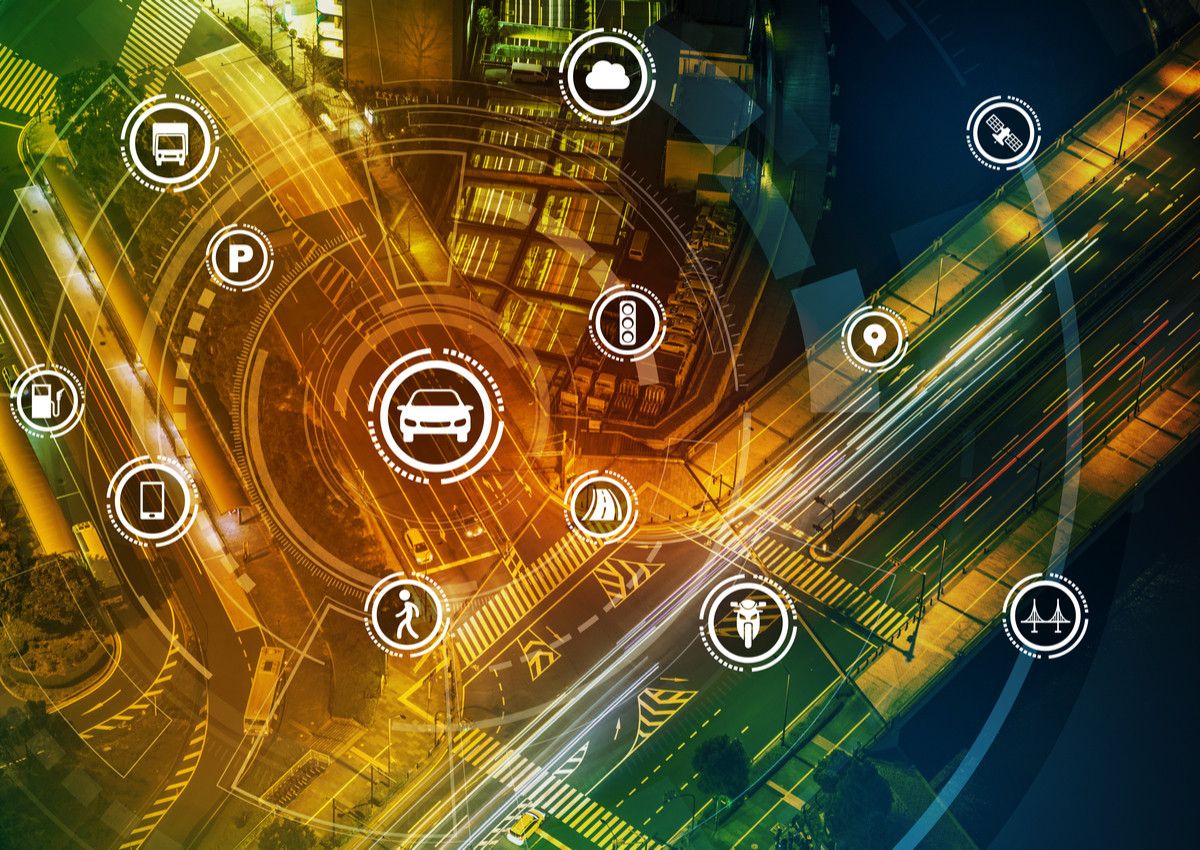
Given the advanced state of driverless technologies and the amount of money being poured into the sector, there is little question—make that, no question at all—that within 10 years, driverless cars will be the norm.

The implications are immense and widespread.

There are currently about 1.4 billion cars on the road. Many of those cars, and eventually all, are going to be replaced by self-driving vehicles.

/* */