Toggle light / dark theme

Elon Musk is kicking off an automated low-carbon future with the merger of Tesla and SolarCity

Elon Musk is today set to merge Tesla Motors and SolarCity, Reuters is reporting, kicking off part two of his master plan to transform our cities and suburbs into environmentally friendly automated wonderlands.

In July Musk wrote of his plan to merge the two companies in a blog post entitled Master Plan, Part Deux, saying it was essential to “create a smoothly integrated and beautiful solar-roof-with-battery product that just works, empowering the individual as their own utility, and then scale that throughout the world.

“We can’t do this well if Tesla and SolarCity are different companies, which is why we need to combine and break down the barriers inherent to being separate companies. Now that Tesla is ready to scale Powerwall and SolarCity is ready to provide highly differentiated solar, the time has come to bring them together.”

Artificial Intelligence May Soon Drive Your Car — And Keep You Company at the Same Time

Honda said in a press release that the AI will use conversations with the driver and other data it gathers ‘both to perceive the emotions of the driver and to engage in dialogue with the driver based on the vehicle’s own emotions.’ The just-announced partnership works toward application of the ‘emotion engine,’ which is ‘a set of AI technologies developed by cocoro SB Corp., which enable machines to artificially generate their own emotions.’


Image source: Getty Images.

Continue Reading Below.

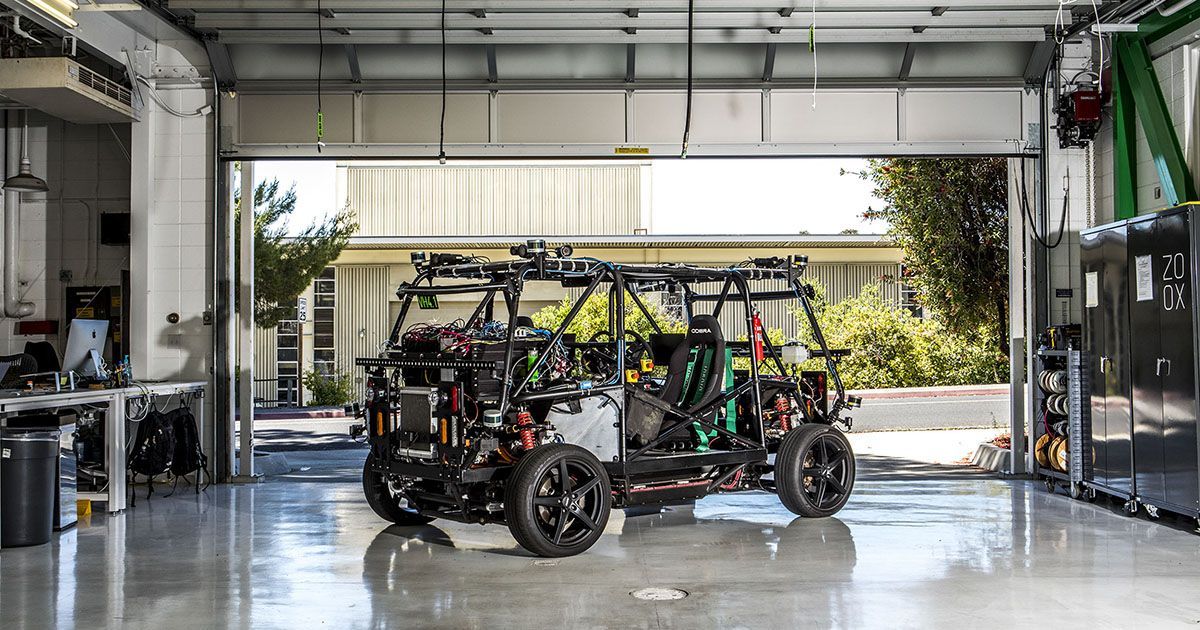
Driverless cars are already being developed by nearly every automaker. And despite the recent Tesla Model S crash in which a driver was killed while using the car’s semi-autonomous Autopilot feature, they’re typically much safer than human drivers, and they’re getting better all of the time.

Smart bricks would enable walls capable of generating electricity, clean water and oxygen

A lot of things are becoming “smart” these days, but bricks might not be something you’d expect to be added to the list. On the way to buildings that act like “large-scale living organisms,” scientists at the University of the West of England (UWE Bristol) are developing smart bricks that would make use of microbes to recycle wastewater, generate electricity and produce oxygen.

Microbial fuel cells (MFCs), which will be embedded in the bricks to give them their “smart” capabilities, have proven handy in the past, with researchers demonstrating how they can be used to generate electricity from human urine, dead flies or just plain old mud.

“Microbial fuel cells are energy transducers that exploit the metabolic activity of the constituent microbes to break down organic waste and generate electricity,” says Ioannis Ieropoulos, professor at UWE Bristol’s Robotics Laboratory. “This is a novel application for MFC modules to be made into actuating building blocks as part of wall structures. This will allow us to explore the possibility of treating household waste, generating useful levels of electricity, and have ‘active programmable’ walls within our living environments.”

Demonetized Cost of Living

People are concerned about how AI and robotics are taking jobs and destroying livelihoods… reducing our earning capacity, and subsequently destroying the economy.

In anticipation, countries like Canada, India and Finland are running experiments to pilot the idea of “universal basic income” — the unconditional provision of a regular sum of money from the government to support livelihood independent of employment.

But what people aren’t talking about, and what’s getting my attention, is a forthcoming rapid demonetization of the cost of living.

How the most connected hospitals will use chatbots

Sure, chatbots are useful for service industries like hospitality and food delivery, but in health care? Some groups are testing the use of chatbots to retrieve medical information from within a messaging app. At first glance, that seems a bit impersonal, but a closer look reveals a wide range of use cases where bots could make your next visit to the hospital, doctor’s office, or pharmacy faster and more effective.

Let’s run this back a bit. If you’re not familiar with bots, here’s a brief explanation. Bots are software applications that run automated tasks or scripts that serve as shortcuts for completing a certain job, but they do it faster (a lot faster) and with verve. And in health care, we spend a lot of time spent generating and retrieving information.

By putting a trained army of bots inside an application — smartphone, desktop, whatever-top — health care workers can rapidly improve throughput by simply cutting out a bunch of steps. That’s something most care providers today would welcome, especially with millions of new people entering the system as a result of the Affordable Care Act and the aging of baby boomers. With the crush of increased data entry and new regulations, costs and rote work are skyrocketing.

/* */