Toggle light / dark theme

The robot bodyguard is coming — and you’ll want one

My new story for VentureBeat on the coming of robot bodyguards. I’ll be speaking about this next week at RoboBusiness 2016, a major robotics conference in San Jose:


I recently consulted with the US Navy on all things “transhuman.” In those conversations about how science and technology can help the human race evolve beyond its natural limits, it was clear that military is keen on replacing human soldiers with both fighting and peacekeeping machines so American military lives never have to come under fire or be in harm’s way.

However, it’s the peacekeeping technology that is particularly interesting for many civilians. While you wouldn’t want an armed Terminator in your home, you might like a robot that travels with you and offers personal protection, like a bodyguard. In a survey by Travelzoo of 6,000 participants, nearly 80 percent of people said they expect robots to be a significant part of their lives by 2020 — and that those robots might even join them on holidays.

The robotics industry is already considering this, and recently debuted some security models. A few months ago China came out with its Anbot, which can taser people and be used for riot control. And South Korea already uses mobile robot guards in its prisons. Even in San Francisco, you can rent out robot guards to protect your businesses and property. However, the rent-a-robot company, Knightscope, recently came under fire for accidentally running over a toddler at the Stanford Shopping Center.

Needless to say, problems are expected as the burgeoning field of robot-human interaction evolves. The good news is, there’s already years of information to draw on. Human-robot interaction and protection have been here in the form of robotic dogs for nearly a decade. There are dozens of different brands and models available — some of which offer motion detector warnings to protect against burglars and can be programmed to bark at intruders. While some will say robot pets are no more efficient than well-placed cameras, microphones, or speakers, they do offer genuine and personal protection for consumers – not to mention a sense of novelty and enjoyment.
Nvidia links up with Foxconn, Quanta on AI servers

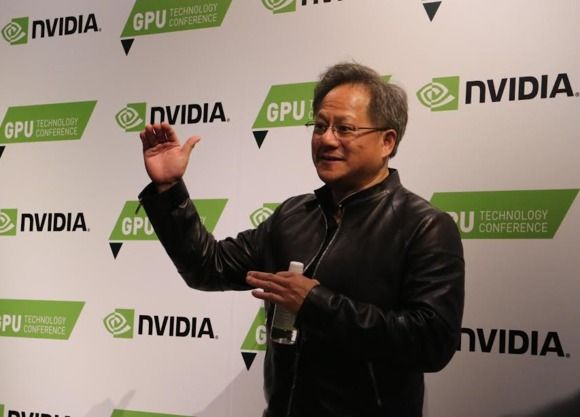
TAIPEI — Leading graphics chip designer Nvidia said on Wednesday that it had formed a partnership with Foxconn Technology Group and Quanta Computer to develop servers that offer artificial intelligence capabilities.

“In the long term, artificial intelligence computing has the largest market potential, as every data center in the future will have artificial intelligence,” Chief Executive Jen-Hsun Huang told an audience at a tech forum in Taipei on Wednesday.

The development of next-generation technologies including connected devices, driverless cars and smart cities require servers that can handle massive amounts of data, images and videos.

UPS testing drones for use in its package delivery system

One of the world’s largest package delivery companies is stepping up efforts to integrate drones into its system.

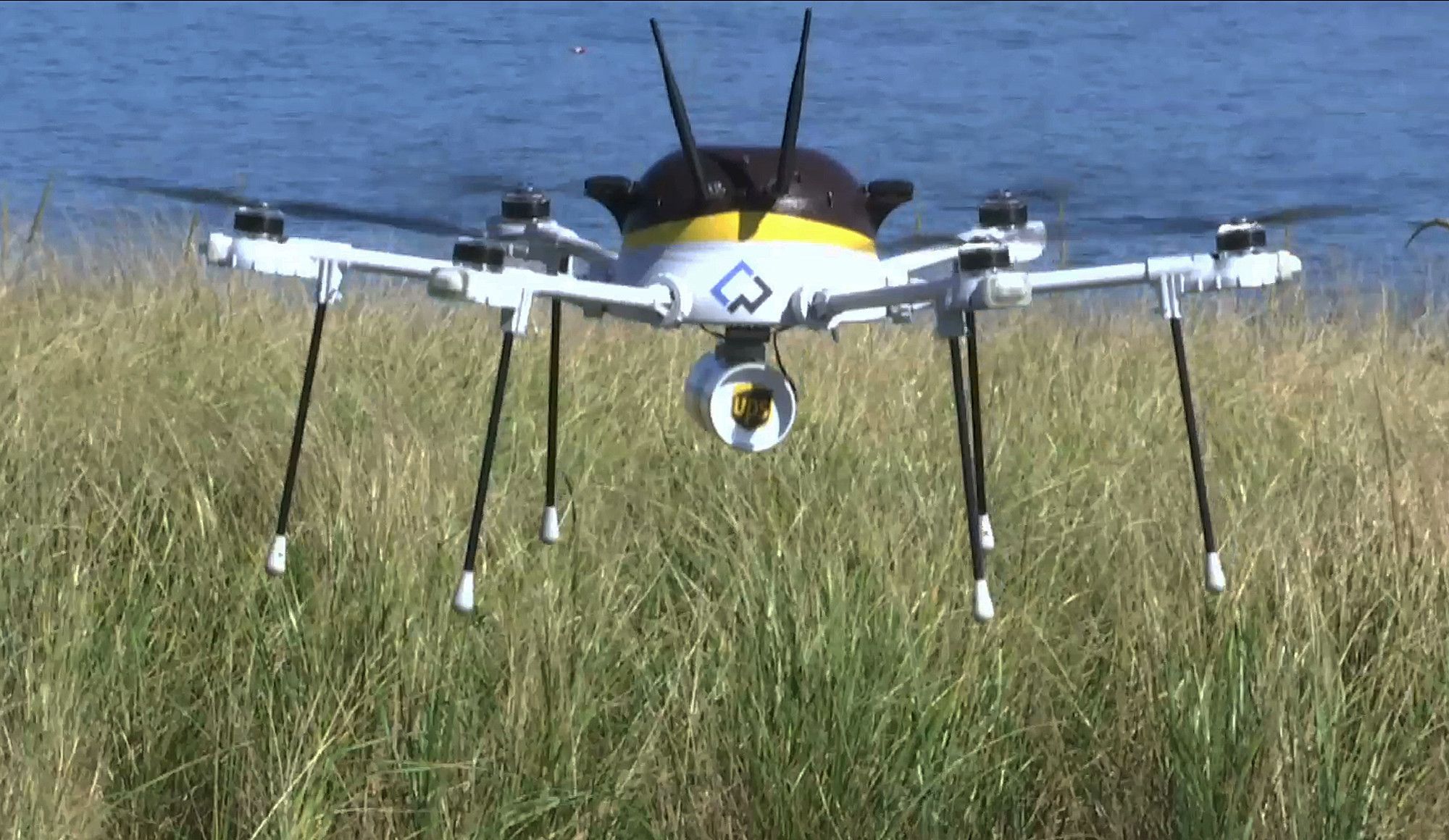
UPS has partnered with robot-maker CyPhy Works to test the use of drones to make commercial deliveries to remote or difficult-to-access locations.

The companies began testing the drones on Thursday, when they launched one from the seaside town of Marblehead. The drone flew on a programmed route for 3 miles over the Atlantic Ocean to deliver an inhaler at Children’s Island.

How the government plans to make your self-driving car safer

A self-driving car may someday have to decide between your life and the lives of others. But how should the car choose? If you don’t know how to make that decision, that’s okay — Washington doesn’t either.

That’s one big takeaway in a new, lengthy document from the Department of Transportation that lays out options to make autonomous vehicles safer–and represents the most public sign of the attention self-driving cars are getting from politicians despite their inability to vote.

Get Ready For Freeways That Ban Human Drivers

New rules of the road for robot cars coming out of Washington this week could lead to the eventual extinction of one of the defining archetypes of the past century: the human driver.

While banning people from driving may seem like something from a Kurt Vonnegut short story, it’s the logical endgame of a technology that could dramatically reduce — or even eliminate — the 1.25 million road deaths a year globally. Human error is the cause of 94 percent of roadway fatalities, U.S. safety regulators say, and robot drivers never get drunk, sleepy or distracted.

Autonomous cars already have “superhuman intelligence” that allows them to see around corners and avoid crashes, said Danny Shapiro, senior director of automotive at Nvidia Corp., a maker of high-speed processors for self-driving cars.

Femtotechnology: A technology that is Beyond Nanotechnology

Nanotechnology has reshaped the technological discoveries in the recent times. Nanotechnology has enabled the creation and invention of numerous things with wide potentialities. Every field is subject to constant evolution, nanotechnology is no exception. Researchers and scientists who are engaged with nanotechnology have now come up with femtotechnology.

Femtotechnology is widely defined as, “Hypothetical term used in reference to structuring of matter on the scale of a femtometer, which is 10^−15m. This is a smaller scale in comparison to nanotechnology and picotechnology which refer to 10^−9m and 10^−12m respectively.”

Hugo de Garis, an Australian AI researcher, wrote a few years ago in Humanity Plus Magazine on the power of the femtotechnology: “If ever a femtotech comes into being, it will be a trillion trillion times more “performant” than nanotech, for the following obvious reason. In terms of component density, a femtoteched block of nucleons or quarks would be a million cubed times denser than a nanotech block. Since the femtoteched components are a million times closer to each other than the nanotech components, signals between them, traveling at the speed of light, would arrive a million times faster. The total performance per second of a unit volume of femtoteched matter would thus be a million times a million times a million = a trillion trillion= 1024.”

Ray Kurzweil: We Can Control AI Before It Controls Us

Over time, technology offers solutions to old problems while creating new issues in the process. The more powerful the technology, the greater its potential to do good and harm. Artificial intelligence is no exception, and as AI has advanced, worry about its risks has grown too.

Technology’s dual identity isn’t new, Ray Kurzweil said in a Q&A at Singularity University.

“Technology has actually been a double-edged sword since fire, which has kept us warm and cooked our food but also burned down our villages,” he said.

/* */