Announcing DeepMind’s collaboration with Blizzard Entertainment to open up StarCraft II to AI and ML researchers around the world.
In Brief
According to the World Health Organization, an estimated 285 million people are visually impaired, with 39 million living with blindness and the other 246 million having low vision.
In a world of modern technological advancements, visual impairment has been the subject of much medical research. Perhaps the most notable among these are those that use artificial intelligence (AI), specifically through machine learning. Google’s DeepMind has been working with the UK’s National Health Service to do ophthalmology research.
Transparent, self-healing, conducting artificial muscle could power robots of the future…
December 23, 2016: Researchers create a self-healing, transparent, highly stretchable material that can be electrically activated and used to improve batteries, electronic devices, and robots.
In Brief
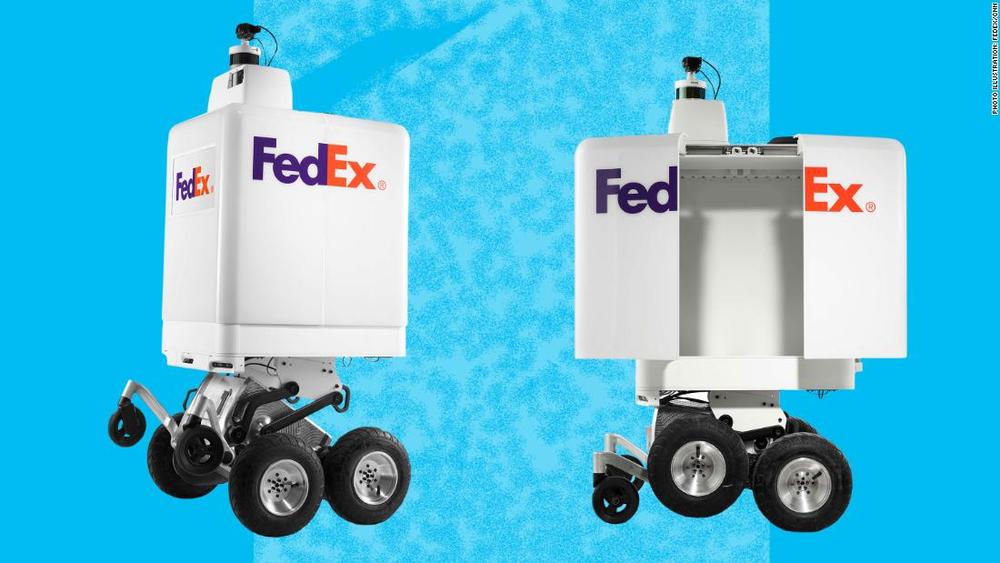
Foxconn Electronics, the Taiwanese manufacturing company behind some of the biggest electronic brands’ devices, including Apple’s iPhone, has announced that it will ramp up automation processes at its Chinese factories. The goal is to eventually achieve full automation.
In an article published in Digitimes, General Manager Dai Jia-peng of Foxconn’s Automation Technology Development Committee explains that the process will unfold in three phases.
After 15 years of development, an Israeli tech firm is optimistic it will finally get its 1,500 kilogramme (1.5 tonne) passenger carrying drone off the ground and into the market by 2020.
The Cormorant, billed as a flying car, is capable of transporting 500 kilogrammes (around half a tonne) of weight and travelling at 185 kilometres per hour. It completed its first automated solo flight over terrain in November. Its total price is estimated at $14 million.
Developers Urban Aeronautics believe the dark green drone, which uses internal rotors rather than helicopter propellers, could evacuate people from hostile environments and/or allow military forces safe access.
N” A boom in consumer drone sales has spawned a counter-industry of start-ups aiming to stop drones flying where they shouldn’t, by disabling them or knocking them out of the sky.
Dozens of start-up firms are developing techniques — from deploying birds of prey to firing gas through a bazooka — to take on unmanned aerial vehicles (UAVs) that are being used to smuggle drugs, drop bombs, spy on enemy lines or buzz public spaces.
The arms race is fed in part by the slow pace of government regulation for drones.
In Brief
As developments are made in neural computing, we can continue to push artificial intelligence further. A fairly recent technology, neural networks have been taking over the world of data processing, giving machines advanced capabilities such as object recognition, face recognition, natural language processing, and machine translation.
These sound like simple things, but they were way out of reach for processors until scientists began to find way to make machines behave more like human brains in the way they learned and handled data. To do this, scientists have been focusing on building neuromorphic chips, circuits that operate in a similar fashion to neurons.
There is no written rule-book to follow when it comes to career survival. The “Future of Work” is about making ourselves employable in a workforce where the priority of business leaders is to invest in automation and digital technology, more than training and developing their own workforces.
As our soon-to-be-released State of Operations and Outsourcing 2017 study, conducted in conjunction with KPMG across 454 major enterprise buyers globally, shows a dramatic shift in priorities from senior managers (SVPs and above), where 43% are earmarking significant investment in robotic automation of processes, compared with only 28% placing a similar emphasis on training and change management. In fact, the same number of senior managers are as focused on cognitive computing as their own people … yes, folks, this is the singularity of enterprise operations, where cognitive computing now equals employees’ brains when it comes to investment!