Toggle light / dark theme

10 Million Self-Driving Cars Will Hit The Road By 2020 — Here’s How To Profit

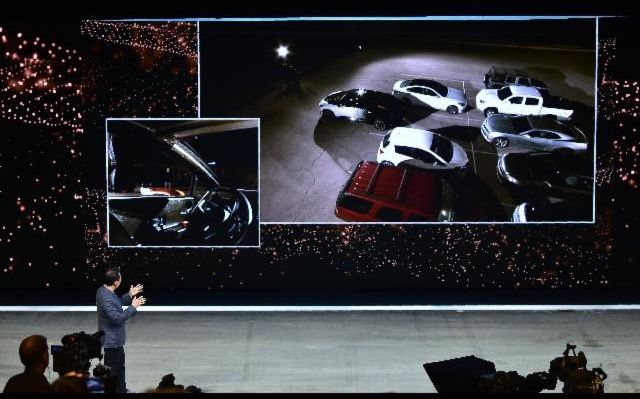
Given the advanced state of driverless technologies and the amount of money being poured into the sector, there is little question—make that, no question at all—that within 10 years, driverless cars will be the norm.

The implications are immense and widespread.

There are currently about 1.4 billion cars on the road. Many of those cars, and eventually all, are going to be replaced by self-driving vehicles.

Growing tissue grafts on humanoid robots: A future strategy in regenerative medicine?

Humanoid robots may enhance growth of musculoskeletal tissue grafts for tissue transplant applications.

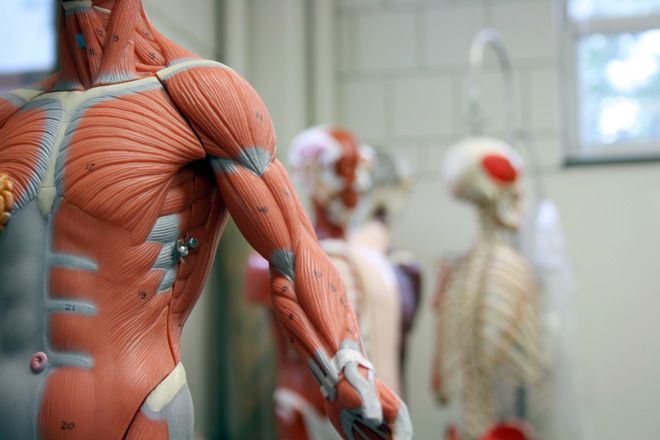
Over the past decade, exciting progress has been made in the development of humanoid robots. The significant potential future value of humanoids includes applications ranging from personal assistance to medicine and space exploration. In particular, musculoskeletal humanoids (such as Kenshiro and Eccerobot) were developed to interact with humans in a safer and more natural way (1, 2). They aim to closely replicate the detailed anatomy of the human musculoskeletal system including muscles, tendons, and bones.

With their structures activated by artificial muscles, musculoskeletal humanoids have the ability to mimic more accurately the multiple degrees of freedom and the normal range of forces observed in human joints. As a result, it is not surprising that they offer new opportunities in science and medicine. Here, we suggest that musculoskeletal robots may assist in the growth of musculoskeletal tissue grafts for tissue transplant applications.

Space Mining: Luxembourg and lunar robotic company ispace shoot for the moon

(sth/T.L.) – Luxembourg’s government and Tokyo-based space lunar robotic exploration company ispace Inc. on Thursday signed a Memorandum of Understanding (MoU) in the context of the SpaceResources.lu initiative with focus on developing miniaturized technology to discover, map, and utilize resources on the Moon.

Japanese start-up ispace was created by Hakuto, a finalist team of Google’s prestigious innovation competition Google Lunar XPRIZE. The company already works together with the Luxembourg Institute of Science and Technology (LIST) and will continue to do so.

Within the framework of this MoU, ispace intends to focus, through its new European office based in Luxembourg, on business development, R&D and on several key technical services, including payload development, engineering and integration.

Will Democracy Survive Big Data and Artificial Intelligence?

One thing is clear: the way in which we organize the economy and society will change fundamentally. We are experiencing the largest transformation since the end of the Second World War; after the automation of production and the creation of self-driving cars the automation of society is next. With this, society is at a crossroads, which promises great opportunities, but also considerable risks. If we take the wrong decisions it could threaten our greatest historical achievements.


We are in the middle of a technological upheaval that will transform the way society is organized. We must make the right decisions now.

Poker-playing AI beats pros using ‘intuition,’ study finds

Computer researchers are betting they can take on the house after designing a new artificial intelligence program that has beat professional poker players.

Researchers from University of Alberta, Czech Technical University and Charles University in Prague developed the “DeepStack” program as a way to build artificial intelligence capable of playing a complex kind of poker. Creating an AI program that can win against a human player in a no-limit poker game has long been a goal of researchers due to the complexity of the game.

Michael Bowling, a professor in the Department of Computing Science in the University of Alberta, explained that computers have been able to win at “perfect” games such as chess or Go, in which all the information is available to both players, but that “imperfect” games like poker have been much harder to program for.

Robots won’t just take our jobs – they’ll make the rich even richer

These dystopias may sound like science fiction, but they’re perfectly plausible given our current trajectory. The technology around robotics and artificial intelligence will continue to improve – but without substantive political change, the outcome will range from bad to apocalyptic for most people. That’s why the recent rumblings about a robot tax are worth taking seriously. They offer an opportunity to develop the political response to mass automation now, before it’s too late.

When I asked the prominent leftwing thinker Matt Bruenig for his thoughts, he explained that whatever we do, we shouldn’t try to discourage automation. “The problem with robots is not the manufacturing and application of them – that’s actually good for productivity,” he told me. “The problem is that they are owned by the wealthy, which means that the income that flows to the robots go out to a small slice of wealthy people.”

Job-killing robots are good, in other words, so long as the prosperity they produce is widely distributed. An Oxfam report released earlier this year revealed that the eight richest men in the world own as much wealth as half the human race. Imagine what those numbers will look like if automation accelerates. At some point, a handful of billionaires could control close to one hundred percent of society’s wealth. Then, perhaps, the idea that wealth should be owned by the many, rather than monopolized by the few, won’t seem so radical, and we can undertake a bit of sorely needed redistribution – before robot capitalism kills us all.
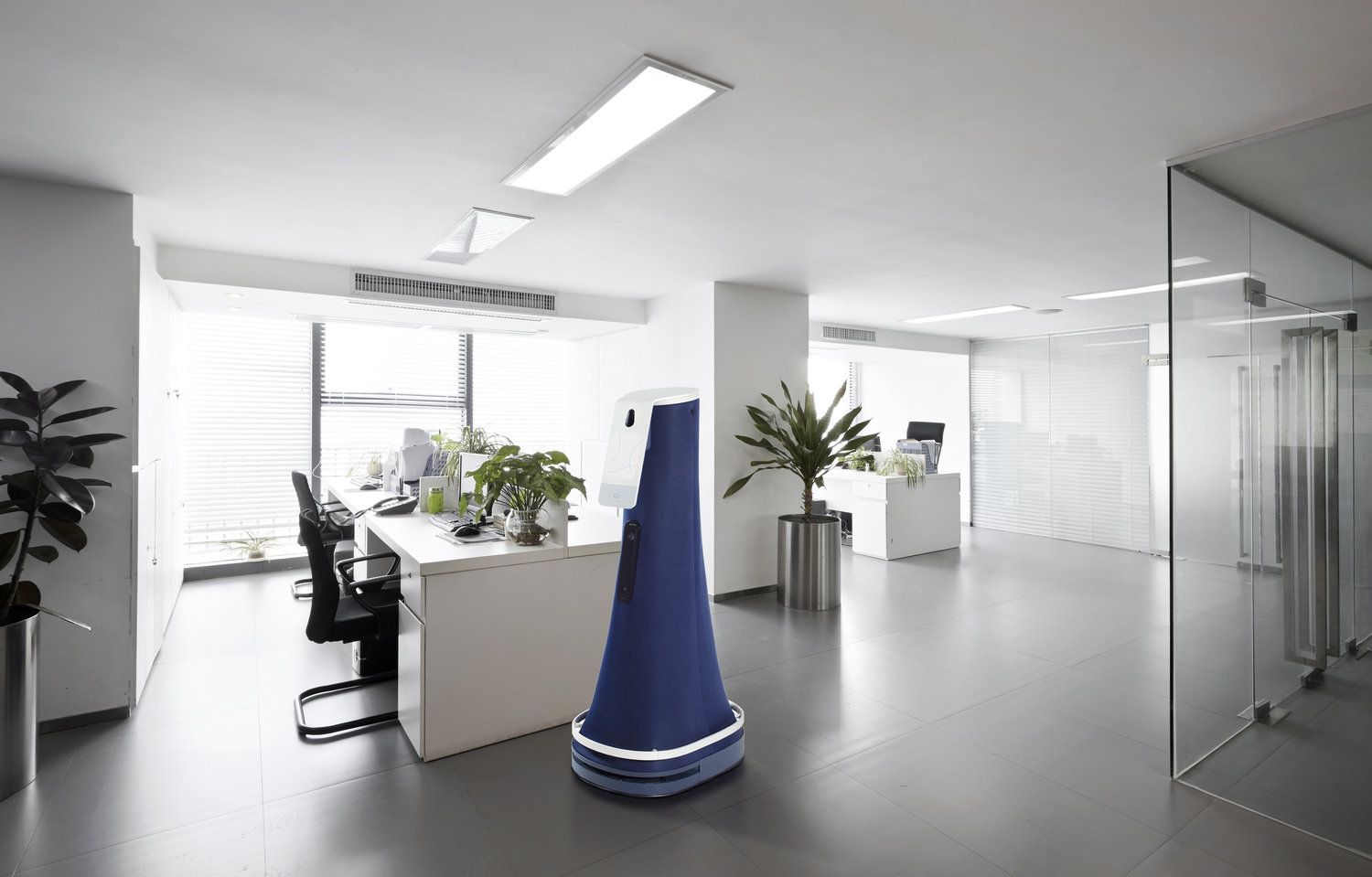
Indoor security robot reads badges, flags open doors and more

(Tech Xplore)—Can you picture indoor security robots strolling around your workplace tomorrow? You might balk at the idea of militaristic rolling machines making people feel uncomfortable as they hunt for thieves and blunderers. Well Cobalt Robotics has come up with a different kind of indoor security robot.

The robots made news this week when IEEE Spectrum posted a video on Wednesday to show what they look like and what they do.

These are mobile robots designed to work alongside human guards. “Cobalt’s robots gather data using sensors like cameras and lidar, and process the information using machine-learning algorithms to detect and flag anomalies,” said IEEE Spectrum.

/* */