The physicist and BBC presenter reveals why we shouldn’t be afraid of artificial intelligence. Interview by Alexander McNamara.

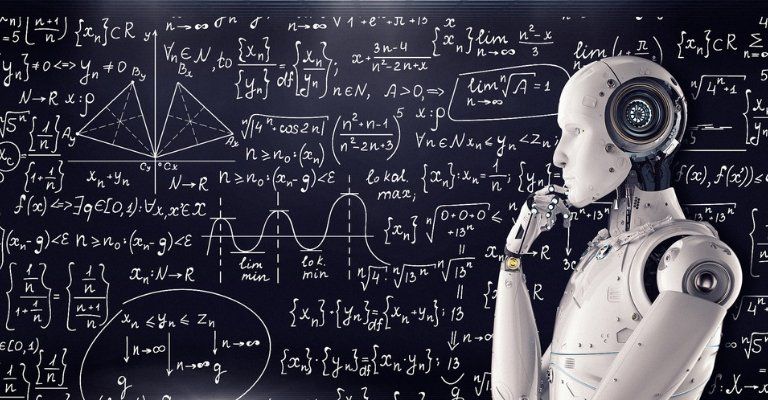
Recent research from Stanford and Google has made the worst nightmare of some concerned with artificial intelligence (AI) all the more real. A machine learning agent was caught cheating by hiding information in “a nearly imperceptible, high-frequency signal.”
Clever, but also creepy.
The agent was instructed to turn aerial images into street maps and back again as part of research to improve Google’s process of turning satellite images into the widely used and relied upon Google Maps. The process involves CycleGAN, “a neural network that learns to transform images of type X and Y into one another, as efficiently yet accurately as possible.” Though the agent was performing this task quite well, it quickly became apparent that it was performing the task too well.

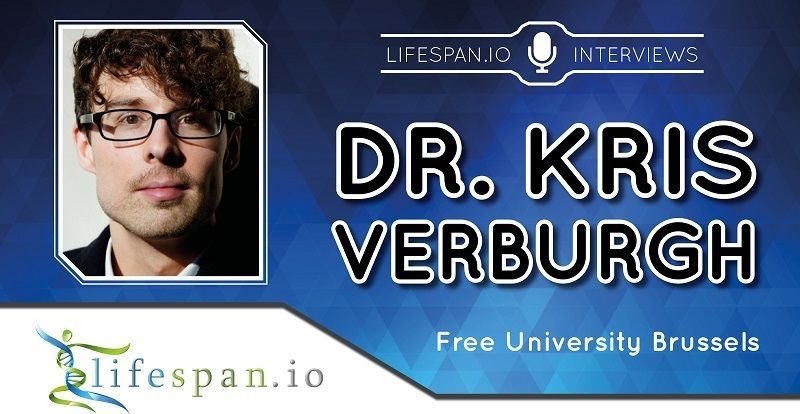
At the Fourth Eurosymposium on Healthy Ageing, which was held in Brussels last November, Elena and I met Dr. Kris Verburgh, a medical doctor who is especially interested in biogerontology and the potential of this field of study to turn medicine on its head.
Dr. Verburgh is only about 33 years old and has already written several science books—one of which, written when he was only 16, made him the youngest science author in Europe. Another prominent interest of his is nutrition, which he believes is one of the best, if not the best, ways we currently have to slow down the march of aging and buy ourselves more time to live until the rejuvenation age; his latest book, The Longevity Code, is centered around this topic.
Dr. Verburgh is also a strong supporter of the idea that AI will play a more and more important role in research, leading the way to a not-too-far age of personalized medicine—this was one of the theses he touched upon during the panel in which he participated at EHA.

Within days of each other back in 1998, two teams published the results of the first real-world quantum computations. But the first quantum computers weren’t computers at all. They were biochemistry equipment, relying on the same science as MRI machines.
You might think of quantum computing as a hyped-up race between computer companies to build a powerful processing device that will make more lifelike AI, revolutionize medicine, and crack the encryption that protects our data. And indeed, the prototype quantum computers of the late 1990s indirectly led to the quantum computers built by Google and IBM. But that’s not how it all began—it started with physicists tinkering with mathematics and biochemistry equipment for curiosity’s sake.

It’s true that this was a horrible year for many of the tech industry’s biggest companies. Amazon held a nationwide beauty pageant for its new headquarters, raising hopes that the company would help transform a struggling city, then picked the two places that needed it the least. Executives from Facebook, Google and Twitter got hauled before Congress to apologize for * gestures wildly in all directions*. One of Uber’s self-driving cars killed someone. And then there was Elon Musk.
But the tech sector is more than its giants.
Last year, I handed out “good tech” awards to a handful of companies, nonprofit organizations and people who used technology to help others in real, tangible ways. The goal was to shine a spotlight on a few less-heralded projects that may not get front-page headlines or billions of dollars in funding, but are actually trying to fulfill the tech industry’s stated goal of improving the world.
Your brain has an autopilot mode.
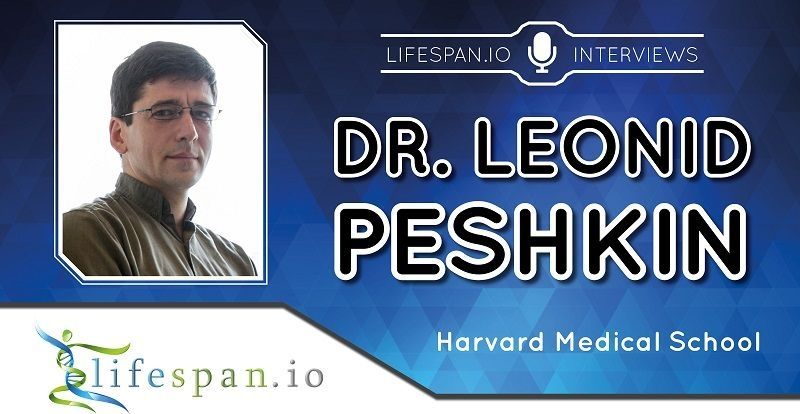
In this interview, Dr. Leonid Peshkin offers insights on aging, the pitfalls of excessive optimism, and the role of machine learning in studying age-related disease.
Determined but not complacent, grounded but hopeful, Dr. Leonid Peshkin is one of the scientists working on understanding aging so that it may one day be treated like we treat any other ailment.
As he revealed in an interview with the Boston Globe in mid-2018, the idea of having to lose oneself and one’s loved ones to aging never made any sense to him, and ever since he was a child, he has been preoccupied with aging and the fear that it might take away his father, who was almost 60 when Leon was 10 and, sadly, passed away in July 2018 at the age of 96.
Dr. Peshkin, a 48-year-old from Moscow, Russia, possesses a master’s degree in applied mathematics and a Ph.D. in machine learning. He currently works at the Systems Biology Department at Harvard Medical School; his primary interests are embryology, evolution, and aging, which he has studied for over a decade.
Coming soon to a construction site near you…
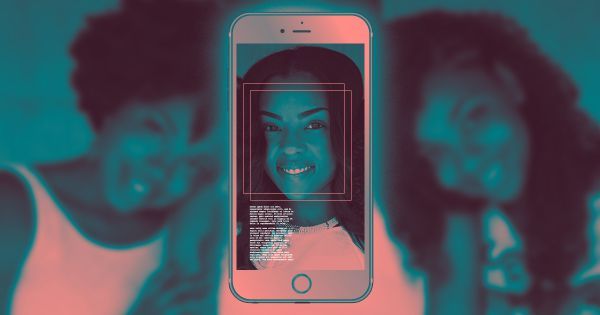
SocialRecall says it deletes obsolete user data on the event version of the app, and that data for the other version is only stored on a user’s phone.
But privacy experts are still concerned that the app represents a mainstream rollout of technology that could have profound implications for the future of public spaces — and that it’s difficult to adequately inform users about the long-term risks of a technology that’s still so new.
“The cost to everyone whom you are surveilling with this app is very, very high,” New York University law professor Jason Schultz told Scientific American, “and I don’t think it respects the consent politics involved with capturing people’s images.”