If we don’t know how AIs make decisions, how can we trust what they decide?
- By Shohini Kundu on July 3, 2019
Nanosized robots capable of crawling around on a person’s brain or underneath the skin may sound like a nightmare to some, but researchers suggest the mini machines could serve medical purposes such as gathering data on the brain or the spinal column.
Researchers at the University of Pennsylvania and Cornell University recently announced they have built nanosized, solar-powered robots made from silicon. One million such robots can fit on a 4-inch silicon wafer. “These robots are built massively in parallel, so I don’t build just one robot, I build a million robots, which is awesome,” declares Marc Miskin, an assistant professor of electrical and systems engineering at the University of Pennsylvania.
The microscopic machines can carry up to 30 times their own weight, travel at about the speed of biological cells, survive temperatures up to 400 degrees, live unscathed in battery acid or other harsh chemicals, and can be injected with a hypodermic needle.

You’d be hard-pressed to find more opposite opposites than jellyfish and robots. Jellyfish pump through the oceans with effortless grace, while robots struggle to not fall on their faces—and that’s when they’re not catching on fire.
Now, though, those two worlds are merging, with a tiny, exceedingly simple robot modeled after larval jellyfish that can scoot around untethered like the real thing. At less than a quarter inch across, the magnetically activated robot mimics the entrancing locomotion of a jellyfish and can use the resulting disruption of water flow to manipulate objects or burrow into the ground.
You’ve read your last complimentary article this month. To read the full article, SUBSCRIBE NOW. If you’re already a subscriber, please sign in and and verify your subscription.

The recent explosion of interest in artificial intelligence, machine learning, and deep learning has been mirrored by an explosion in book titles on these same topics. One of the best ways to decide which books could be useful for your career is to look at which books others are reading.
If you are searching for some best books to become more acquainted with the essentials of AI and Machine Learning, Here’s some books to help you to discover the best Artificial Intelligence & Machine Learning books of all time.
Robots like the Pointman Tactical Robot and the iRobot Negotiator are already capable of entering buildings, climbing stairs and moving over obstacles to search buildings. Future versions are more likely to be armed, have more advanced sensors, hold greater autonomy, and be classified.
More agile humanoid (or animal-like) versions of these robots could be used to clear buildings of booby traps and enemy fighters seeking to ambush troops.
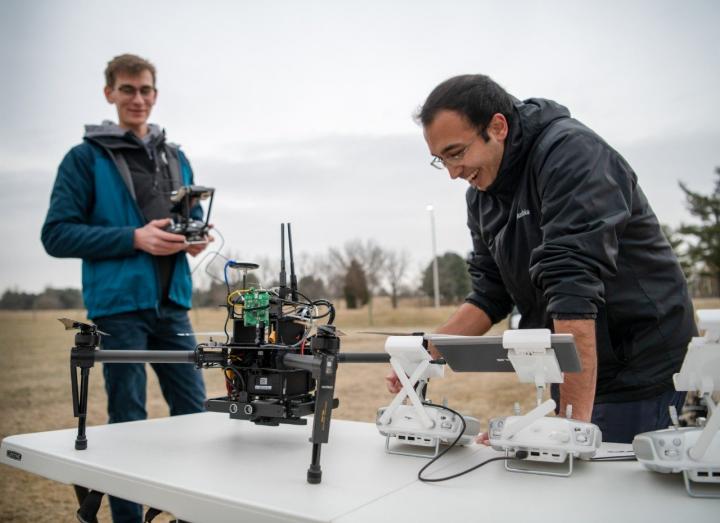
Thanks to a $1.5 million grant from the National Science Foundation, a group of Virginia Tech engineers hopes to redefine these search and rescue protocols by teaming up human searchers with unmanned aerial robots, or drones.
In efforts led by Ryan Williams, an assistant professor in the Bradley Department of Electrical and Computer Engineering within the College of Engineering, these drones will use autonomous algorithms and machine learning to complement search and rescue efforts from the air. The drones will also suggest tasks and send updated information to human searchers on the ground.
Using mathematical models based on historical data that reflect what lost people actually do combined with typical searcher behavior, the researchers hope this novel approach of balancing autonomy with human collaboration can make searches more effective. The team has received support from the Virginia Department of Emergency Management and will work closely with the local Black Diamond Search and Rescue Council throughout the project.
Oil spill cleanup technology is a surprisingly innovative field—we learned as much in the wake of the BP Gulf disaster, when everyone from conservation biologists to barbers to Kevin Costner rushed to sell the government on their wild, sometimes literally hairy oil-sucking solutions. We had rubber goop that turned oil solid, massive bags of hair, and MIT’s previous entry into the cleanup fray, robotic oil-eating submarines.
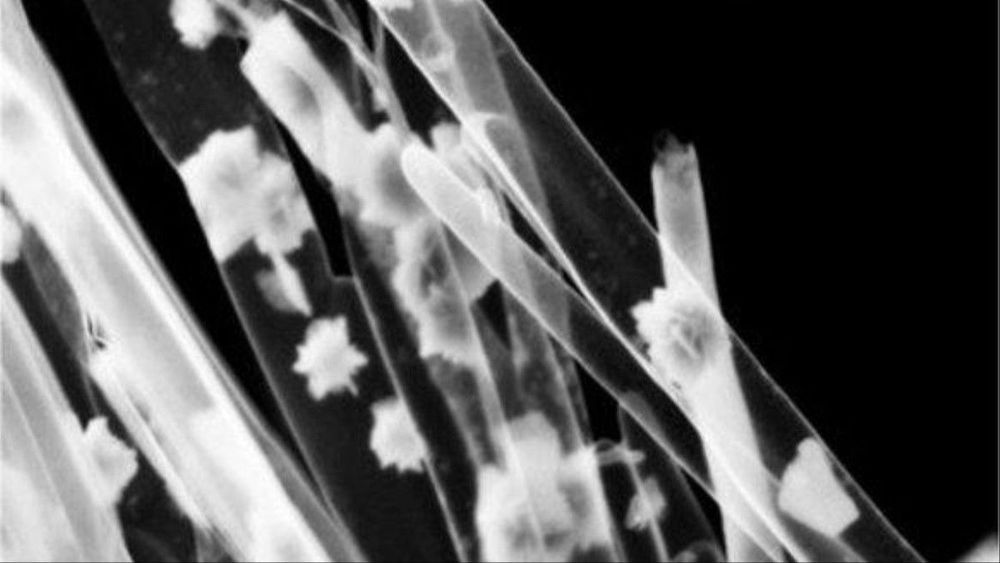
But now the renowned science lab has a better idea: nano-magnets.
MIT researchers have developed a new technique for magnetically separating oil and water that could be used to clean up oil spills. They believe that, with their technique, the oil could be recovered for use, offsetting much of the cost of cleanup.

For the first time, scientists have used artificial intelligence to create complex, three-dimensional simulations of the Universe. It’s called the Deep Density Displacement Model, or DM, and it’s so fast and so accurate that the astrophysicists who designed it don’t even know how it does what it does.
What it does is accurately simulate the way gravity shapes the Universe over billions of years. Each simulation takes just 30 milliseconds — compared to the minutes it takes other simulations.
And, even more fascinatingly, DM learnt from the 8,000 training simulations the team fed it — vastly extrapolating from and outperforming them, able to adjust parameters in which it had not even been trained.